Rafale F5 financing: how France angered the United Arab Emirates
Michel Cabirol
Published on April 2, 2026 at 04:00 AM
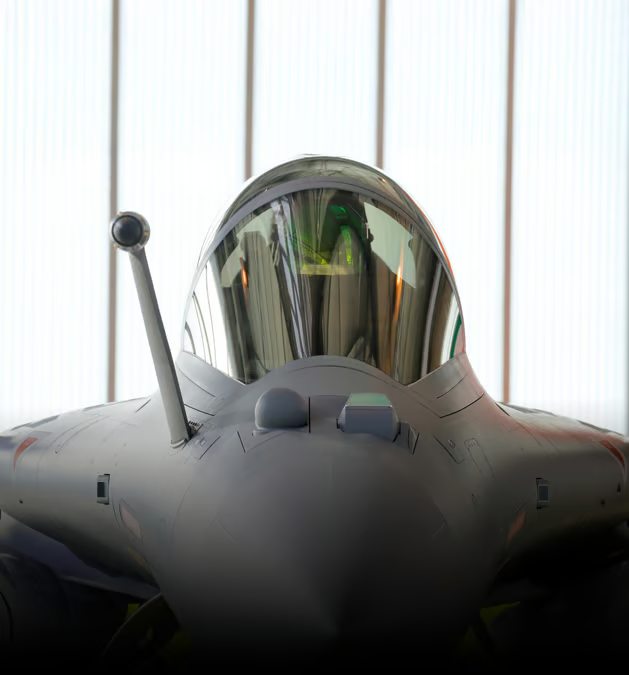
France had offered the United Arab Emirates a share of the Rafale F5 development costs in exchange for funding the program. However, Abu Dhabi ultimately ended up footing the bill without receiving any technological benefits. The break was finalized at the end of December. As a result, France will finance the Rafale F5 alone as part of the updated military spending law.
The crisis between France and the United Arab Emirates (UAE) ended several weeks ago, but it left its mark. Not between Sheikh Mohammed bin Zayed and Emmanuel Macron, who have always held each other in high esteem, but their relationship had cooled in late December following
the French president's visit to Abu Dhabi . With the situation in the Middle East, particularly the conflict in Iran, the relationship between the two countries, bound by defense agreements, has finally been restored thanks to the reliability and credibility demonstrated by Paris towards its Emirati partner by providing very concrete assistance, notably with the French Rafale fighter jets.
French Air Force pilots are doing an excellent job in Emirati airspace, neutralizing Iranian Shahed drones, in particular, which are striking the United Arab Emirates, located opposite Iran. The two countries are separated only by the Persian Gulf and are 55 km apart at the Strait of Hormuz. That's very little. And France, unlike many other European countries, provides concrete support to the UAE, which is very grateful, as well as to Qatar, which also has defense agreements with Paris.
The UAE will not finance the Rafale F5
The crisis has primarily left its mark on the defense budget, which will remain severely constrained despite the upcoming recapitalization of the military programming law (€36 billion). The updated military programming law is scheduled to be examined by the Council of Ministers on April 8th, following its review this week by the Council of State. What crisis are we talking about exactly? The financing of the Rafale F5.
At France's request, the UAE was prepared to finance the new standard of the fighter jet until the end of last year, to the tune of €3.5 billion, out of a total cost of approximately €5 billion that, as of the end of December, still remained to be secured.
After several months of deadlock in 2025 regarding the financing of the Rafale F5 fighter jet,
Emmanuel Macron's visit to Abu Dhabi was intended to clarify the two countries' expectations for the development of this cutting-edge technology-enhanced program. This was a point of great interest to the Emiratis, who are avid adopters of new technologies. Ultimately, the French president had to listen to the lengthy criticisms of Sheikh Mohammed bin Zayed, who was furious about the French proposals on this matter. The meeting between the two heads of state went very badly, as France and the UAE were clearly not on the same page.
To finance the Rafale F5, the Emiratis wanted to be as closely involved as possible in the development of the French fighter jet. The French, for their part, were not prepared to share the secrets of this development, particularly in optronics, after having considered it. Based on this observation and a suspicion of French arrogance, the UAE decided they would not foot the bill without receiving anything in return. Highly irritated by the way this shaky affair was unfolding, Emmanuel Macron relayed his frustration to the Ministry of the Armed Forces, specifically the Directorate General of Armaments (DGA) and the Joint Staff (EMA).
"Spreading jam on toast"
The conclusion of this story is that the Ministry of the Armed Forces must finance this bill alone as part of the updated Military Programming Law (LPM), resulting in what a source within the Ministry explains is
"spreading the buck." This clearly means that the financing of the Rafale F5 will be stretched out over time, with deliveries of Rafales upgraded to the F5 standard delayed. This is a long-standing practice within the armed forces to compensate for budget shortfalls.
Emirati funding would have allowed France to reduce the size of its "blanket" (too many programs relative to its budget) and also to confirm certain bets made regarding programmatic cooperation (SCAF, Rafale F5, Eurodrone, etc.) in the preparation of the 2024-2030 Military Programming Law (LPM). For over a month, the war in Iran has largely overshadowed this unfortunate episode, and France's support for the UAE has restored a temporarily damaged trust between the two countries. Several sources interviewed believe that it is also not certain that the UAE will return to the negotiating table to participate in the financing of the Rafale F5 after 2027.
And despite the additional €36 billion compared to the adopted Military Programming Law (€413 billion), this remains too little or insufficient given the new needs that have arisen with international crises. The sample-based model of French armed forces capabilities is crumbling in the face of the harsh reality of high-intensity conflicts, as illustrated by the overuse of MICA air-to-air missiles in the United Arab Emirates. Defined in 2013, the current armed forces structure was established within the framework of a different world, that of a prosperous globalization. History has swept it away. However, according to our information, the recapitalization of the Military Programming Law will not translate into an increase in force size either.


 winning is losing.


