Eight reported sightings of a creature believed to be extinct are forcing experts to wonder whether it could still be alive.
The Tasmanian tiger, a large striped marsupial carnivore with almost Loch Ness Monster status Down Under, was thought to have died out in 1936, when the last one known died in captivity.
But newly released Australian government documents show sightings have been reported as recently as two months ago.
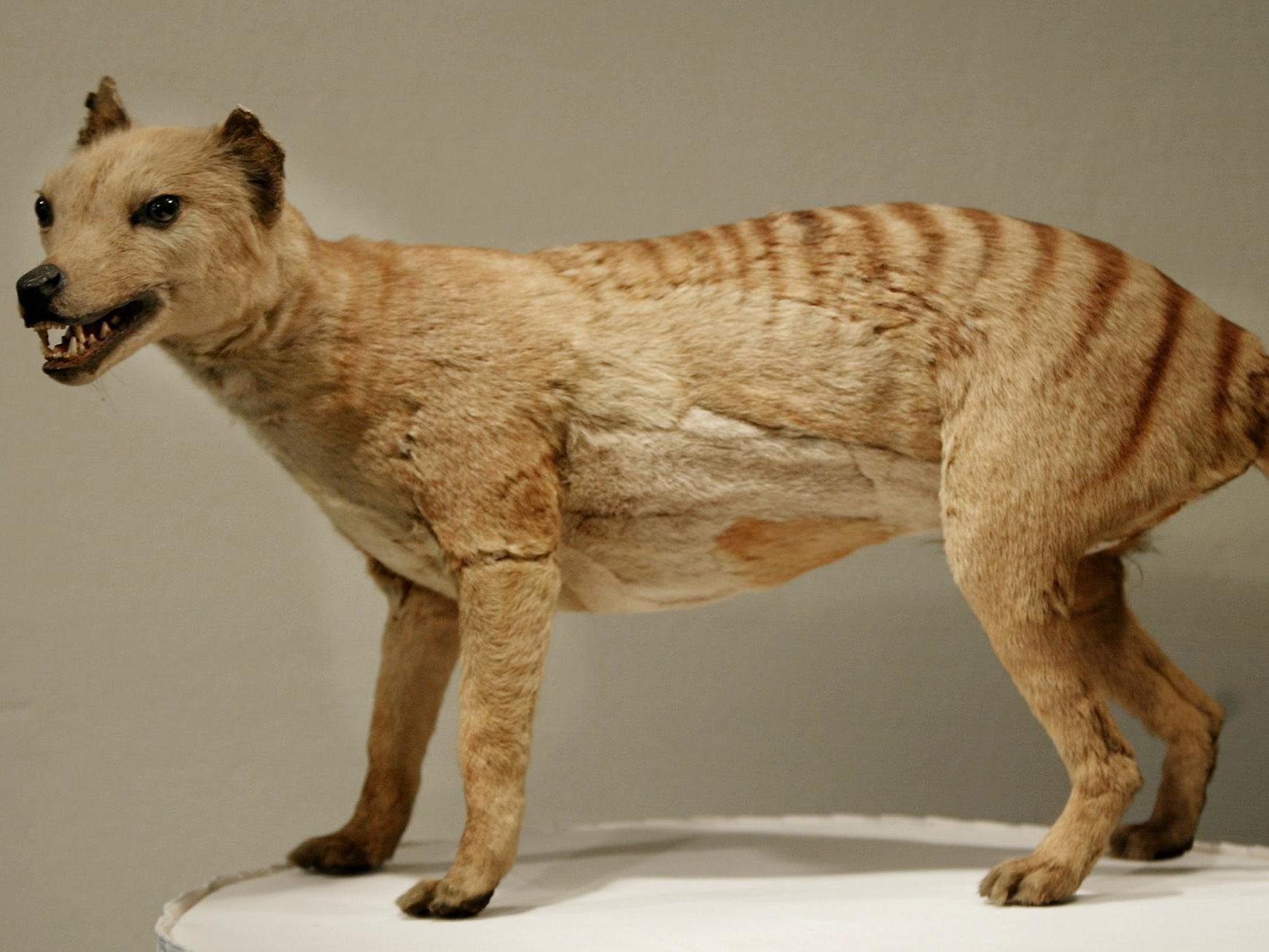
The species, officially called a thylacine, resembled a cross between a large cat, a fox and a wolf. It had yellowish brown fur, powerful jaws and a pouch for its young like a kangaroo.
Among eight sightings in the past three years was one from a couple from Western Australia visiting the island of Tasmania in February, who said they saw one of the creatures crossing the road.
The animal “turned and looked at the vehicle a couple of times” and “was in clear view for 12-15 seconds,” the report read. Both people in the car “are 100 per cent certain that the animal they saw was a thylacine.”
It had stripes down its back, the report read.
Another report the same month described a striped “cat-like creature” moving through the mist in the distance, CNN reported.
“I am accustomed to coming across most animals working on rural farms ... and I have never come across an animal anything close to what I saw in Tasmania that day,” the witness said.
In 2017, another driver reported seeing a possible thylacine near in northwestern Tasmania. He “seemed certain that if it was a cat it was a bloody big one,” the report said.
Most recently, in July, a man in southern Tasmania, near the state capital of Hobart, reported seeing a footprint that seemed to match that of the Tasmanian tiger.
Native to both Tasmania and the Australian mainland, it was the only member of the Thylacinidae family to survive into modern times, according to the Australian Museum.
European colonists in the 19th century killed thousands of thylacines for attacking sheep.
What was thought to be the last one of its kind died in Hobart Zoo in 1936, although there have been regular claims of unsubstantiated sightings, giving the animal an almost mythical status in Tasmanian culture.
Tasmania’s Department of Primary Industries, Parks, Water and Environment released the document detailing the eight reported sightings.
In 2002, scientists at the Australian Museum replicated thylacine DNA, opening the door to potentially reviving the species with cloning technology.
 www.independent.co.uk
The Tasmanian tiger, a large striped marsupial carnivore with almost Loch Ness Monster status Down Under, was thought to have died out in 1936, when the last one known died in captivity.
But newly released Australian government documents show sightings have been reported as recently as two months ago.
The species, officially called a thylacine, resembled a cross between a large cat, a fox and a wolf. It had yellowish brown fur, powerful jaws and a pouch for its young like a kangaroo.
Among eight sightings in the past three years was one from a couple from Western Australia visiting the island of Tasmania in February, who said they saw one of the creatures crossing the road.
The animal “turned and looked at the vehicle a couple of times” and “was in clear view for 12-15 seconds,” the report read. Both people in the car “are 100 per cent certain that the animal they saw was a thylacine.”
It had stripes down its back, the report read.
Another report the same month described a striped “cat-like creature” moving through the mist in the distance, CNN reported.
“I am accustomed to coming across most animals working on rural farms ... and I have never come across an animal anything close to what I saw in Tasmania that day,” the witness said.
In 2017, another driver reported seeing a possible thylacine near in northwestern Tasmania. He “seemed certain that if it was a cat it was a bloody big one,” the report said.
Most recently, in July, a man in southern Tasmania, near the state capital of Hobart, reported seeing a footprint that seemed to match that of the Tasmanian tiger.
Native to both Tasmania and the Australian mainland, it was the only member of the Thylacinidae family to survive into modern times, according to the Australian Museum.
European colonists in the 19th century killed thousands of thylacines for attacking sheep.
What was thought to be the last one of its kind died in Hobart Zoo in 1936, although there have been regular claims of unsubstantiated sightings, giving the animal an almost mythical status in Tasmanian culture.
Tasmania’s Department of Primary Industries, Parks, Water and Environment released the document detailing the eight reported sightings.
In 2002, scientists at the Australian Museum replicated thylacine DNA, opening the door to potentially reviving the species with cloning technology.
‘Mythical’ wolf-type animal once declared extinct ‘spotted’ eight times
Newly released documents show sightings of large carnivore with almost Loch Ness Monster status Down Under


