Science SpaceX Launches 60 More Starlink Satellites - 12,000 more approved, Astronomers fear “the night sky will never be the same”


Archive

SpaceX to Launch 60 More Starlink Satellites (Launched)
As the company presses ahead with its project to launch tens of thousands of satellites for internet service from space, astronomers fear “the night sky will never be the same.”

Key Points:
  • Recycled SpaceX Falcon 9 rocket Launches 60 Starlink internet relay satellites at once
  • The Starlink network is designed to provide "high-bandwidth, low-latency connectivity," throughout the world
  • Each Starlink weighs 573 pounds
  • SpaceX is approved to Launch 12,000 Starlink Satellites, SpaceX requests to operate 30,000
  • 360 Starlinks to be in orbit in 2020
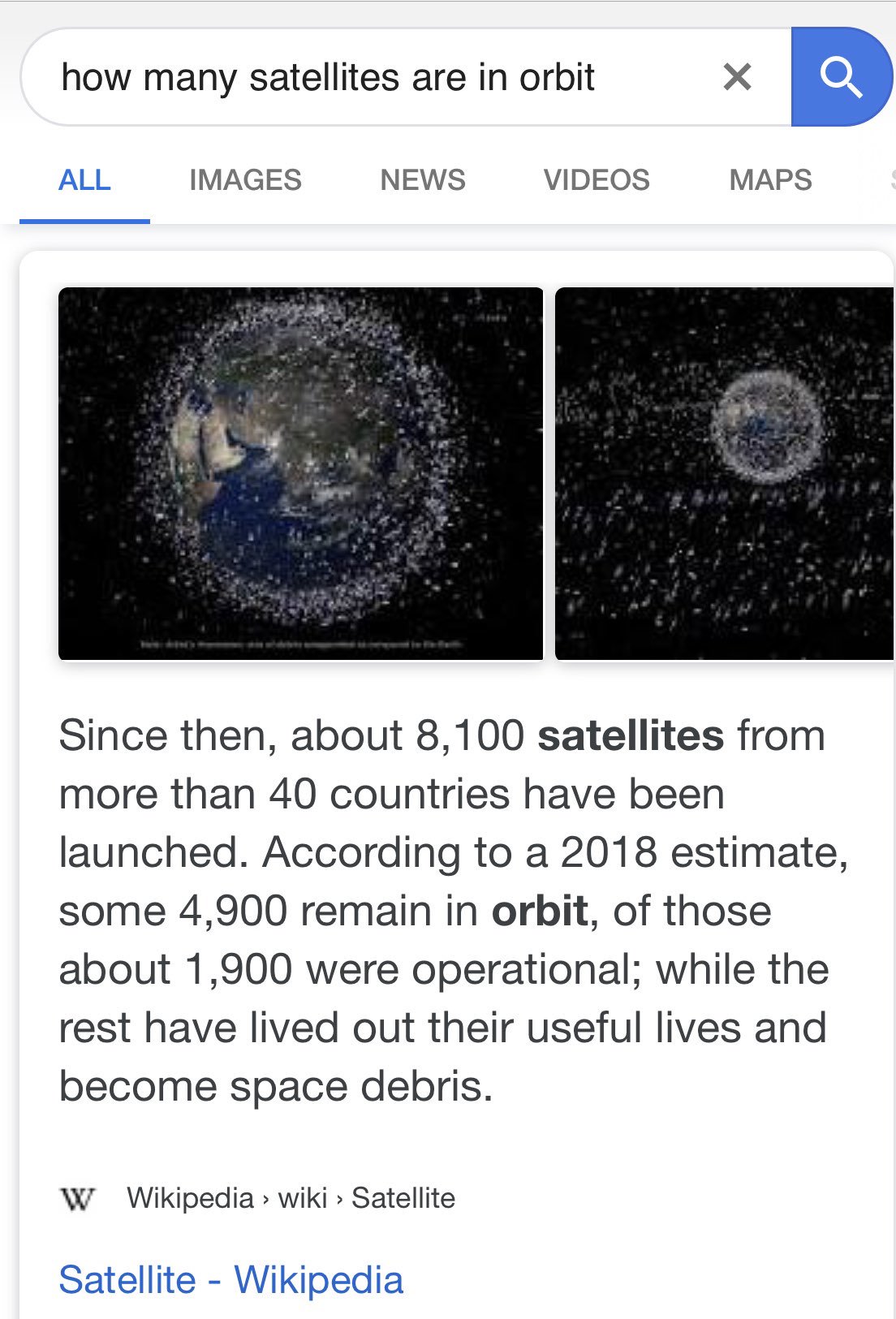
  • According to the United Nations Office of Outer Space Affairs, there were 5,062 satellites orbiting the Earth as at the 13th March 2019
  • Elon Musk "Greater good" to help the disadvantaged.

    screenshot.137.png

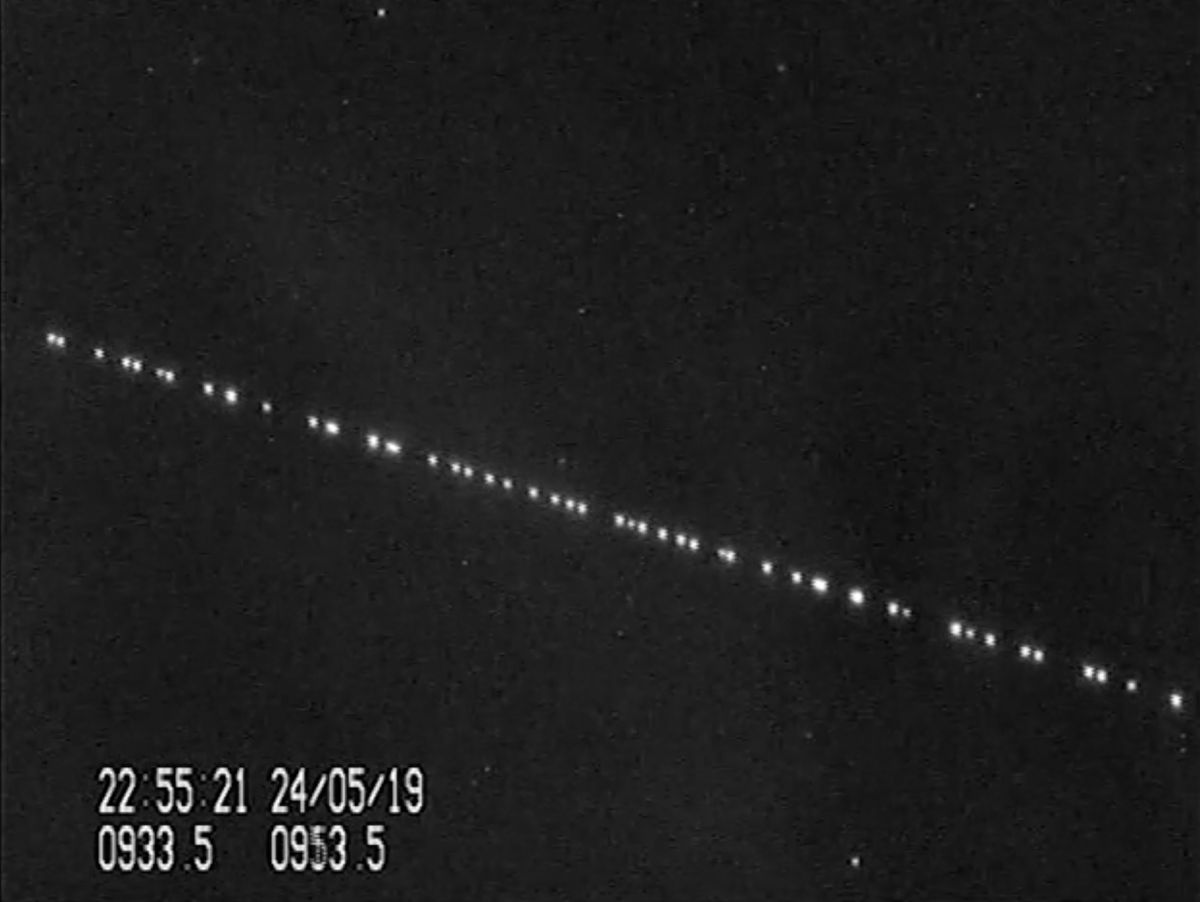
    A view of SpaceX’s Starlink’s satellites just before being deployed on May 24. The company is scheduled to launch 60 more on Monday morning. Credit...SpaceX
    Shannon Hall
    Nov. 11, 2019

    Early on Monday morning, SpaceX is scheduled to launch 60 satellites into space at once — the second installment of Starlink, its planned constellation of tens of thousands of orbiting transmitters to beam internet service across the globe. The launch, from Cape Canaveral, Fla., is set for 9:56 a.m. Eastern and will be streamed live on SpaceX’s website.


    When SpaceX, the private rocket company founded by Elon Musk, launched the first batch of Starlink orbiters in May, many astronomers were surprised to see that the satellites were extremely bright, causing them to fear that the constellation would wreak havoc on scientific research and transform our view of the stars. Since then, many scientists have been on a mission to better quantify the impacts of Starlink and to share their concerns with SpaceX.

    In response, SpaceX has said that it wants to mitigate the potential impacts of Starlink. But at the same time, the company is still moving full steam ahead.

    In October, Mr. Musk announced that he was using Twitter via a Starlink internet connection, as his company was requesting permission from the Federal Communications Commission to operate as many as 30,000 satellites on top of the 12,000 already approved. Should SpaceX succeed in sending this many satellites to low-Earth orbit, its constellation would contain more than eight times as many satellites as the total number currently in orbit.

    That move added to the worries of many astronomers.

    When James Lowenthal, an astronomer at Smith College, first saw the train of Starlink satellites marching like false stars across the night sky in the spring, he knew something had shifted.


    Less than 24 hours after SpaceX's launch of the first 60 Starlink satellites, Netherlands May 2019


    “I felt as if life as an astronomer and a lover of the night sky would never be the same,” he said.

    Most of the first Starlink nodes have since moved to higher orbits and are now invisible for most of us who live under bright city lights. But they are still noticeable from places with dark skies. If thousands more of these satellites are launched, Dr. Lowenthal said he feared “it will look as if the whole sky is crawling with stars.”

    Since May, the American Astronomical Society has convened an ad hoc committee with Dr. Lowenthal and other experts to discuss their concerns with SpaceX representatives once a month.

    At the same time, SpaceX has been working directly with the National Radio Astronomy Observatory, a federally funded research center that operates facilities across the world, to jointly minimize potential impacts of Starlink satellites on radio wavelengths that astronomers use. But these conversations did not focus on light pollution, a problem presented by the reflective surfaces of proposed satellite constellations such as Starlink. At first, SpaceX said the complication would be minimal, and the new committee is trying to assess the impact and actively find solutions.

    “So far, they’ve been quite open and generous with their data,” Dr. Lowenthal said. “But they have not made any promises.” A spokeswoman from SpaceX said the company was taking steps to paint the Earth-facing bases of the satellites black to reduce their reflectiveness.

    But Anthony Tyson, an astronomer at the University of California, Davis, said that wouldn’t solve the problem.Dr. Tyson is the chief scientist for the Large Synoptic Survey Telescope — a 27-foot, billion-dollar telescope under construction in Chile that will scan the entire sky every three days. The survey, the world’s largest yet, will help astronomers better understand dark energy, dark matter, the origin of the Milky Way and the outer regions of the solar system. But because it is designed to scan faint objects, it is expected to be greatly affected by the satellites.

    Dr. Tyson’s simulations showed that the telescope would pick up Starlink-like objects even if they were darkened. And they wouldn’t just affect a single pixel in a photograph. When there is a single bright object in the image, it can create fainter artifacts as well because of internal reflections within the telescope’s detector. Moreover, whenever a satellite photobombs a long-exposure image, it causes a bright streak of light that can cross directly in front of an object astronomers wish to observe.

    “It’s really a mess,” Dr. Tyson said.

    Knowing how challenging it would be to correct these interrupted images, Dr. Tyson decided the best step forward was to set the telescope to avoid Starlink satellites. While simulations based on the earlier 12,000-satellite total suggested that would be possible, SpaceX’s application for 30,000 additional satellites upset the calculations.

    “We’re redoing the models now just to see what’s visible at any one time — and it’s really quite frightening,” said Patrick Seitzer, a professor of astronomy emeritus at the University of Michigan, who has been running similar analyses to determine how many satellites will be visible and when. His preliminary results suggest that avoiding the satellites would be difficult during twilight — a serious problem given that potentially hazardous asteroids and many objects in the solar system are best seen during this time. The satellites thus limit the ability of astronomers to observe them.

    And Dr. Tyson’s early simulations also confirm the potential problems, demonstrating that over the course of a full year, the giant telescope wouldn’t be able to dodge these satellites 20 percent of the time. Instead, those images would be effectively ruined.

    SpaceX’s 30,000 satellites might also just be the start as other companies, such as Amazon, Telesat and OneWeb, plan to launch similar mega-constellations.

    “If there are lots and lots of bright moving objects in the sky, it tremendously complicates our job,” Dr. Lowenthal said. “It potentially threatens the science of astronomy itself.”

    Jonathan McDowell, an astronomer at the Harvard-Smithsonian Center for Astrophysics who closely tracks objects in orbit, agrees.

    “There is a point at which it makes ground-based astronomy impossible to do,” he said. “I’m not saying Starlink is that point. But if you just don’t worry about it and go another 10 years with more and more mega-constellations, eventually you are going to come to a point where you can’t do astronomy anymore. And so let’s talk about it now.”

    While astronomers are starting those conversations, they have little legal recourse. There are no regulations in place to protect the skies against light pollution.

    “International space law is pretty wide open,” said Megan Donahue, an astronomer at Michigan State University and the president of the American Astronomical Society. While many astronomers have been concerned about radio interference and space debris, she says light pollution is a bigger concern because there are no rules in place. That means any path forward relies on the good will of SpaceX and other companies.

    “It’s more of a philosophical question,” Dr. Donahue said. “It kind of boils down to: How much do I trust corporate good will, and how much would a corporation care about the opinion of people who care about science and astronomy?”

    End of Article

    Full Starlink Mission Launch, May 23 2019 (Runtime 1 hr :19 min )


    You can't stop progress.​
    Sidebar: Less panic more facts


    Elon damage control article:


    Elon Musk Twitter Takes:


    Archive
    Archive
    Archive
 
Agreed. This article is so anti-Elon. Every bit of debris in orbit up to now is the fault of state run agencies (90%+ NASA).

Hey, remember that time NASA/US military launched 1.4 MILLION needles into orbit for a stupid experiment that no one cared about?
Some of that shit is STILL floating up there.

Elon is putting shit into orbit/space. NASA is fighting for racial equity and hiring LGBTQlmnop.
No wonder NASA stated that they can't go to the moon again.

Not
A
Space
Agency

There is a book called Control Alt-Revolt you would like. It is basically about your post.

 
have you ever seen those shity Google cars running around mapping the streets with 3D cameras and thought to yourself, "wow it's kind of fucked up that Google can go around laying claim to the layout of the earth like that"

apply that bullshit to space, this is the foundation of an empire that will stretch far into the 21st century.
 
I wonder, if you painted these satellites black would they overheat in the sun? I would be unsurprised if these satellites are so reflective to save on radiator size, and therefore launch costs.

They did reduce the reflectivity of the v1.0 satellites:

https://www.teslarati.com/spacex-starlink-satellite-upgrade-more-bandwidth-more-beams/

SpaceX implied several months before launch that v1.0 spacecraft would include tweaks to limit their reflectiveness after the astronomy community stoked fears about potential impacts.

60 Starlink v1.0 satellites prepare for flight. A move to matte finishes is one immediately visible albedo-related change present on the new design.

Some of these batches should not be visible to the naked eye after they raise their orbits. The ones from 335 to 345 km are going to draw the most complaints. But you have to go there if you want that sweet low latency internet.

This. These people are exceptional individuals. Their shitty billion dollar arrays cant do shit on earth. They would be much better off giving the money to spaceX. If SpaceX succeeds and reduces the cost of space infrastructures, then they can just build a space telescope with one hundred times the capability

LSST is a good telescope that is going to discover tens of thousands of asteroids, Kuiper belt objects, and other faint objects in the solar system. It could even find "Planet Nine" on day 1 if it exists and they are lucky. It's just that the astronomy community didn't expect something like Starlink this soon, and Starship will make space telescopes (and everything else) much cheaper to launch.

Ground based telescopes can do plenty on Earth because of things like adaptive optics or the optical interferometry at the Very Large Telescope. Adaptive optics put ground based telescopes back on the map. But with Starship you could construct absolutely gigantic space telescopes in orbit. The limit for a ground based telescope is probably around 100 meters. In orbit, you can assemble an even bigger telescope that would be structurally unsound if it had to deal with weight and wind. There are proposals to do optical interferometry in space with telescope swarms.
 
The internet seems to go through phases of lusting for musk-death/deepthroating big daddy Elon. I don't know on what part of that we are right now. All I can think about when I hear that name at this point is how he sent his shitty and for that purpose inappropriate mini sub to save those kids that were trapped some time ago in a cave and then completely and utterly lost it when he was told it was shitty and inappropriate for that purpose and called some rescue diver a pedo apropos of nothing. I mean Elon Musk is your smarter than average silicon valley flimflam artist that hides under a veneer of scientific and progressive interest and being hip and approachable but that one event has uniquely demonstrated beyond all reasonable doubt to me that he's also a complete nut. It was just such a nice and raw insight into the psyche of guys like him you rarely get that clear, and it couldn't even be blamed on a bad day or sleep deprivation or the usual other bullshit excuses they come up with to hide what kinds of sociopaths they often are. The mask slipped for a moment and it was good.

The orbit of earth is such a very fragile thing and missteps there could entomb us on this world until the end of our species. You can argue that governments fuck it up too and I'd even agree in some cases but that still doesn't mean decisions over it should be placed in the hands of the likes of Musk. Also contrary to governments, a Musk doesn't even have to pretend to act in the interest of people except himself and people like himself.
 
Fuck you, space. Yeah why do WE need to look at space? Maybe SPACE should look at US!
This but unironically.

The internet seems to go through phases of lusting for musk-death/deepthroating big daddy Elon. I don't know on what part of that we are right now. All I can think about when I hear that name at this point is how he sent his shitty and for that purpose inappropriate mini sub to save those kids that were trapped some time ago in a cave and then completely and utterly lost it when he was told it was shitty and inappropriate for that purpose and called some rescue diver a pedo apropos of nothing. I mean Elon Musk is your smarter than average silicon valley flimflam artist that hides under a veneer of scientific and progressive interest and being hip and approachable but that one event has uniquely demonstrated beyond all reasonable doubt to me that he's also a complete nut. It was just such a nice and raw insight into the psyche of guys like him you rarely get that clear, and it couldn't even be blamed on a bad day or sleep deprivation or the usual other bullshit excuses they come up with to hide what kinds of sociopaths they often are. The mask slipped for a moment and it was good.

The orbit of earth is such a very fragile thing and missteps there could entomb us on this world until the end of our species. You can argue that governments fuck it up too and I'd even agree in some cases but that still doesn't mean decisions over it should be placed in the hands of the likes of Musk. Also contrary to governments, a Musk doesn't even have to pretend to act in the interest of people except himself and people like himself.
Elon Musk is like Tony Stark if he were real. Meaning that instead of being a super hero he's a narcissistic train wreck of IP theft and lies that nonetheless occasionally also does really cool things.
 
Elon Musk is like Tony Stark if he were real. Meaning that instead of being a super hero he's a narcissistic train wreck of IP theft and lies that nonetheless occasionally also does really cool things.

Tony could build something.
Musk made PayPal which was entry level coding and after that, others did everything for him.
He just thinks of some bullshit and goes: "YOU!!! SCIENTIST!!! HERE'S MONEY!!! DO IT!!!"
 
The orbit of earth is such a very fragile thing and missteps there could entomb us on this world until the end of our species. You can argue that governments fuck it up too and I'd even agree in some cases but that still doesn't mean decisions over it should be placed in the hands of the likes of Musk. Also contrary to governments, a Musk doesn't even have to pretend to act in the interest of people except himself and people like himself.

There is a lot of scaremongering since people saw Gravity with George Clooney. Even if Musk lost control of every satellite, they would burn up fairly quickly. Kessler syndrome doesn't apply at these low orbits.

Musk already received approval from the FCC to launch these satellites, and is required by the FCC to have plans for deorbiting all of the satellites. So you can already start to blame the U.S. government.

https://en.wikipedia.org/wiki/Starlink_(satellite_constellation)#2015–2017

SpaceX filed documents in late 2017 with the US FCC to clarify their space debris mitigation plan. The company will "implement an operations plan for the orderly de-orbit of satellites nearing the end of their useful lives (roughly five to seven years) at a rate far faster than is required under international standards. [Satellites] will de-orbit by propulsively moving to a disposal orbit from which they will reenter the Earth's atmosphere within approximately one year after completion of their mission."[31] In March 2018, the FCC issued SpaceX approval with some conditions. SpaceX would need to obtain a separate approval from the ITU. The FCC supported a NASA request to ask SpaceX to achieve an even higher level of de-orbiting reliability than the standard that NASA had previously used for itself: reliably deorbiting 90% of the satellites after their missions are complete.
 
  1. Launch a shton of satellites
  2. Contribute massively to an already growing problem of space junk
  3. Ignore for a while
  4. Claim leaving earth is an unviable risk now
  5. Unveil space recycling venture
  6. Get paid to clean up your mess
That's how I see things going when I read shit like this.
 
It's not $20/kg, thats ridiculous. A couple years ago it was $50,000 to launch a cubesat, maybe it's a little less now but come on. Thats less than airmail.

https://techcrunch.com/2019/11/06/e...ld-fly-for-as-little-as-2-million-per-launch/

$900,000 fuel costs. $2 million to launch at least 100,000 kg, or up to 150,000 kg, to low-Earth orbit. That's $20/kg. Multiply that launch cost by 10 times? That's still just $200/kg, or $266 for a 1.33 kg CubeSat. SpaceX is advertising ridesharing on Falcon 9 missions at $5,000/kg, with a minimum of 200 kg. The situation will improve with Starship.

1U CubeSat = 0.001135 m³. Starship volume = 1,088 m³ or more. Theoretically, around a million CubeSats could fit in the payload fairing, but that would be over a million kilograms. So the mass is the limiting factor, not the volume. Under normal circumstances, the payload fairing will be mostly empty.

You compare it to airmail. SpaceX has suggested using Starship for point-to-point suborbital transportation to compete with airliners. There are serious challenges that could make that idea unlikely, but both Elon Musk and Gwynne Shotwell have talked about it.

These are the kinds of things that are possible when you don't throw away part of your rocket on every flight.
 
Última edición:
The internet seems to go through phases of lusting for musk-death/deepthroating big daddy Elon. I don't know on what part of that we are right now. All I can think about when I hear that name at this point is how he sent his shitty and for that purpose inappropriate mini sub to save those kids that were trapped some time ago in a cave and then completely and utterly lost it when he was told it was shitty and inappropriate for that purpose and called some rescue diver a pedo apropos of nothing. I mean Elon Musk is your smarter than average silicon valley flimflam artist that hides under a veneer of scientific and progressive interest and being hip and approachable but that one event has uniquely demonstrated beyond all reasonable doubt to me that he's also a complete nut. It was just such a nice and raw insight into the psyche of guys like him you rarely get that clear, and it couldn't even be blamed on a bad day or sleep deprivation or the usual other bullshit excuses they come up with to hide what kinds of sociopaths they often are. The mask slipped for a moment and it was good.

The orbit of earth is such a very fragile thing and missteps there could entomb us on this world until the end of our species. You can argue that governments fuck it up too and I'd even agree in some cases but that still doesn't mean decisions over it should be placed in the hands of the likes of Musk. Also contrary to governments, a Musk doesn't even have to pretend to act in the interest of people except himself and people like himself.
Elon puts the SUPER in SuperVillian.

(I always cheer for the 'bad guys')

Mail and Airlines are 2 other items mentioned in this thread. Elon is punking those industries with fucking ROCKET SHIPS, because HE CAN.
It's not that Elon is a genius or a wiz-bang entrepreneur. These infrastructures are so corrupt and over regulated, you could send mail by way of Mars and STILL beat the government.
That's why he is hated. Just like how Cab drivers hate Uber.
 
Última edición:
The internet seems to go through phases of lusting for musk-death/deepthroating big daddy Elon. I don't know on what part of that we are right now. All I can think about when I hear that name at this point is how he sent his shitty and for that purpose inappropriate mini sub to save those kids that were trapped some time ago in a cave and then completely and utterly lost it when he was told it was shitty and inappropriate for that purpose and called some rescue diver a pedo apropos of nothing. I mean Elon Musk is your smarter than average silicon valley flimflam artist that hides under a veneer of scientific and progressive interest and being hip and approachable but that one event has uniquely demonstrated beyond all reasonable doubt to me that he's also a complete nut. It was just such a nice and raw insight into the psyche of guys like him you rarely get that clear, and it couldn't even be blamed on a bad day or sleep deprivation or the usual other bullshit excuses they come up with to hide what kinds of sociopaths they often are. The mask slipped for a moment and it was good.

The orbit of earth is such a very fragile thing and missteps there could entomb us on this world until the end of our species. You can argue that governments fuck it up too and I'd even agree in some cases but that still doesn't mean decisions over it should be placed in the hands of the likes of Musk. Also contrary to governments, a Musk doesn't even have to pretend to act in the interest of people except himself and people like himself.

This happens because people on sites like this and Reddit generally have an extremely poor knowledge of science, so they end up judging SpaceX and other similar ventures by the personality of the owner, which is a bit like determining the success of US society entirely by reading Trump's Twitter. I don't think for a moment that people like Musk and Bezos have our best interests in mind, but the idea that satellites in low Earth orbit explicitly designed to deorbit when they become defunct are going to cause permanent Kessler syndrome until the Sun destroys the Earth just isn't based in fact. The atmosphere doesn't just end at a line, it carries on getting thinner and thinner and thinner into space, so low Earth orbit satellites get slowly dragged down until they burn up. This also happened to obsolete space stations like Skylab and Tiangong-1. A Starlink collision would be a temporary setback at most, even without laser brooms or other technology explicitly designed to deal with space debris.

I'd also point out that 4 governments (the USA, USSR, PRC, and India) have all deliberately tested anti-satellite missiles, creating clouds of space debris. SpaceX has a 97.4% mission success rate and doesn't deliberately cause debris events for military purposes, so I am far less concerned about their use of space than anyone else's. That's not to say that NASA and government space agencies are useless; they're just hampered by Congress wanting jobs in their states more than actually advancing space travel. SpaceX received NASA grants to develop the Falcon 9 in the first place as a cheaper alternative to ULA's (largely owned by Boeing, whose recent practices have been suspect to say the least) horribly expensive launch services and continues to cooperate extensively with them to this day, including on the Commercial Crew Development programme to provide domestic human launch capability lost after Space Shuttle retirement; relying on Russian Soyuz is not a good deal, both financially and geopolitically. The first flight of NASA astronauts to the ISS in a SpaceX Dragon 2 capsule is scheduled for next year, and it will be a lot cheaper than buying seats on the Soyuz.

People have an impression that SpaceX is underperforming because Musk says absurdly optimistic timelines for his projects, but it's actually performing much better than any of its rivals. ULA charges far more per launch due to its expendable rockets and lack of vertical integration (parts are purchased from various aerospace suppliers rather than made in-house). Reusing first stage boosters and fairings, and in future even entire rockets with Starship, has cut costs down enormously and given them a major advantage in the launch market, to the point where Russia has more or less stopped trying to compete for commercial launches and focuses on payload manufacturing instead. Musk set all kinds of unrealistic goals like landing something on Mars in 2018, but in practice the staff take as long as they need to get the job done and that's still a lot faster than anyone else. With Starship already in prototype testing, it's at a greater stage of development than any other potential interplanetary crewed rocket, which are mostly on paper blueprints only. Starlink will probably take longer than whatever unrealistic timeframe Musk has for it, but it will also probably be a success when it goes online.
 
This happens because people on sites like this and Reddit generally have an extremely poor knowledge of science, so they end up judging SpaceX and other similar ventures by the personality of the owner, which is a bit like determining the success of US society entirely by reading Trump's Twitter. I don't think for a moment that people like Musk and Bezos have our best interests in mind, but the idea that satellites in low Earth orbit explicitly designed to deorbit when they become defunct are going to cause permanent Kessler syndrome until the Sun destroys the Earth just isn't based in fact. The atmosphere doesn't just end at a line, it carries on getting thinner and thinner and thinner into space, so low Earth orbit satellites get slowly dragged down until they burn up. This also happened to obsolete space stations like Skylab and Tiangong-1. A Starlink collision would be a temporary setback at most, even without laser brooms or other technology explicitly designed to deal with space debris.

I'd also point out that 4 governments (the USA, USSR, PRC, and India) have all deliberately tested anti-satellite missiles, creating clouds of space debris. SpaceX has a 97.4% mission success rate and doesn't deliberately cause debris events for military purposes, so I am far less concerned about their use of space than anyone else's. That's not to say that NASA and government space agencies are useless; they're just hampered by Congress wanting jobs in their states more than actually advancing space travel. SpaceX received NASA grants to develop the Falcon 9 in the first place as a cheaper alternative to ULA's (largely owned by Boeing, whose recent practices have been suspect to say the least) horribly expensive launch services and continues to cooperate extensively with them to this day, including on the Commercial Crew Development programme to provide domestic human launch capability lost after Space Shuttle retirement; relying on Russian Soyuz is not a good deal, both financially and geopolitically. The first flight of NASA astronauts to the ISS in a SpaceX Dragon 2 capsule is scheduled for next year, and it will be a lot cheaper than buying seats on the Soyuz.

People have an impression that SpaceX is underperforming because Musk says absurdly optimistic timelines for his projects, but it's actually performing much better than any of its rivals. ULA charges far more per launch due to its expendable rockets and lack of vertical integration (parts are purchased from various aerospace suppliers rather than made in-house). Reusing first stage boosters and fairings, and in future even entire rockets with Starship, has cut costs down enormously and given them a major advantage in the launch market, to the point where Russia has more or less stopped trying to compete for commercial launches and focuses on payload manufacturing instead. Musk set all kinds of unrealistic goals like landing something on Mars in 2018, but in practice the staff take as long as they need to get the job done and that's still a lot faster than anyone else. With Starship already in prototype testing, it's at a greater stage of development than any other potential interplanetary crewed rocket, which are mostly on paper blueprints only. Starlink will probably take longer than whatever unrealistic timeframe Musk has for it, but it will also probably be a success when it goes online.
Notice how authoritarian shitheads rush to 'protect orbit' and 'protect space' while purposefully forgetting items like:
-ionosphere nuke tests
-the soviets (and the US for fun) firing an anti-tank gun in orbit
-launching 1.4 MILLION needles into orbit to create a 'better ionosphere' for an obsolete radio concern
-the US not understanding 3d center of mass, creating at LEAST 2 satellites that tumble end over end in orbit.
-countless other calamities, unreported and redacted.

I wonder how many dead pets/people are in orbit? Hopefully they burned in the atmosphere, otherwise it would be like 'Pet Semetary' up there... We NEED to end NASA. Joke agency with a joke mission (but a fucking great Star Trek logo). Like how Google used to have 'Don't Be Evil' as a motto.

Sometimes dead is better.
 
Atrás
Top Abajo