
- Registrado
- 12 de Ene, 2017
TL;DR

Sigue el video de abajo para ver cómo instalar nuestro sitio como una aplicación web en tu pantalla de inicio.
Nota: Esta función puede no estar disponible en algunos navegadores.


Then what's the issue?Most of the shows I mentioned actually depict the main characters fightingagainst those militaristic regimes. Attack on Titan's Eren and his friends are attempting to uncover a military conspiracy involving the Titans. Fullmetal Alchemist reveals how a botched military invasion of a neighboring country (populated with brown-skinned people who have a different religion than the white folks) shows government corruption.
People who get their philosophies solely from entertainment are generally not worth listening to. See: Atheist Family Guy fans.Fascism in anime becomes a problem when fans glorify and emulate these clearly evil characters.
The uniforms were designed by Hugo Boss, of course they're going to look good.In all honesty, though, I sort of somewhat admire how Japan is just so blase about ripping uniforms straight from the Schutzstaffel and slapping them onto vaguely Germanic characters in their anime and manga. It's a really killer, powerful look, and I will not apologize for loving well-designed uniforms.

"Eren, seeking vengeance for losing his mother to the Titans, completely buys into the corps' "kill 'em all" rhetoric."
Granted that I didn't stick around after the first season because the show - in my personal opinion - is really cheap with its plot so I don't know if the end result is the giant, cannibalistic zombies are just poor, poor victims, but the goddamned things ate Eren's mother right in front of his eyes.
You have to be pretty goddamned green, straight up moldy in your head if you think a character is being irrational when they want to fucking pulverize the things. Or does every mudcrab in fantasy and sci-fi need to be able to talk about "the master race" and "cleansing" or "there being only two genders" before they're evil enough to be considered worthy of being exterminated? This is Sarkeesian levels of misrepresenting characters.

AnimeGate is Here: SyFy Decries Anime Linking It To Fascism - Bounding Into Comics
Share this:
Anime has long been maligned by audiences that look in from a window and draw quick conclusions based on surface level observations. Fans of anime, as well as the medium itself, are constantly mocked for being perverted, immature, and even for being an umbrella collective for fascists and white supremacists. In a recent column for SyfyWire, contributor and self-professed anime fan Michelle Villanueva posited that the anime medium and the political ideology of fascism are somehow closely intertwined, with anime constantly praising fascistic behavior. While fascistic imagery and themes can be seen in various anime, the insinuation that anime endorses or promotes fascism in any form is categorically false.
Villanueva begins her piece by describing the event that specifically served as the catalyst for her piece,
“I struggled through that first episode [of ACCA], not because the plot was boring (it wasn’t) or because the characters were bland (they were actually quite charming.) My shallow hang-up was with uniforms. Each government worker was clad in a black outfit: stylish and sharp with a hint of red near the shoulders — and echoing an SS uniform. This detail, seemingly superfluous, yanked me right out of my suspension of disbelief and my enjoyment of the anime. The setting is clearly not WWII-era Germany, the characters aren’t portrayed as evil, and yet the imagery turned my stomach.”
In the series ACCA: 13-Territory Inspection Dept., the main characters work for a civilian organization known as ACCA, and as such, are required to wear a uniform when performing their duties. At first glance, the all black suits adorned with white details and featuring spots of red (including ACCA patches on their sleeves) could be seen as evocative of classic SS uniforms. However, these uniforms are not meant to evoke a specific association with the horrid monsters of the SS, as many militaries around the world feature strong, uniformed outfits worn by their officers. This is less an homage to a murderous group of fascists than it is a simple reflection of the uniform styles of militaries across the world.
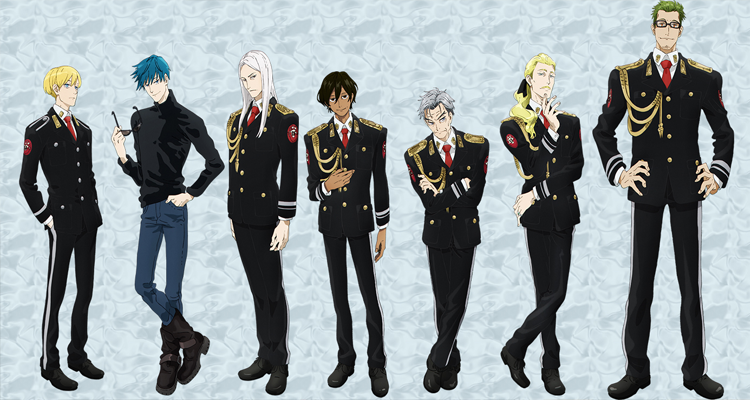
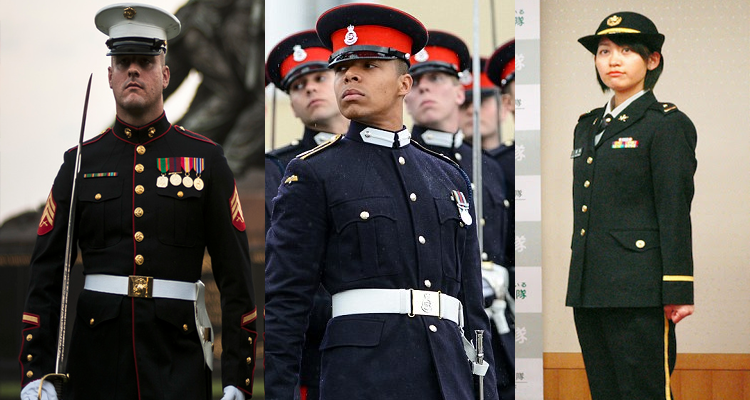
Above: The Cast of ACCA: 13-Territory Inspection Dept., clad in their alleged ‘fascist’ uniforms.
Below: The Military Uniforms of the American Marine Corps, the British Army, and the Japanese Ground Self-Defense Force.
Villanueva continues by citing specific examples of fascist qualities and themes she asserts can be found within various manga. Upon closer review, however, one finds that the basis for her assertions are flimsy at best and omit details in order to draw a specific conclusion. She begins by discussing the popular Attack on Titan:
“One of the most popular anime series in recent years, Attack on Titan, takes place within a walled city whose citizens are dominated by a militaristic government. The main character, Eren Jaeger, joins the elite army corps tasked with the destruction of gigantic, ravenous, human-like creatures called Titans. The government controls every aspect of life within the city and spreads propaganda praising the military. Eren, seeking vengeance for losing his mother to the Titans, completely buys into the corps’ “kill ’em all” rhetoric. Attack on Titan takes place in a fascist state.”
While the above is technically correct, it omits so much information that it comes across instead as a quick dismissal of the series. While there is a strong government that rules over its people with military power, it is constantly pointed out that said government is full of corruption that ultimately harms the general population in favor of securing the positions of certain military officials. In fact, a major event in the series is a coup d’etat led by the Scout Regiment against the fascistic and corrupt government.
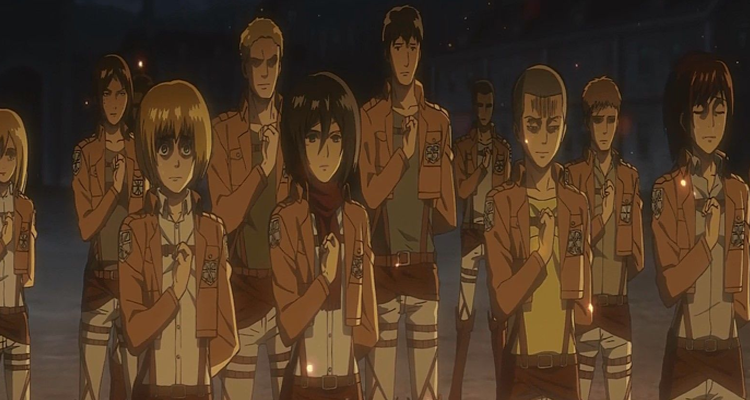
While the upper echelon of the military in Attack on Titan is corrupt, the protagonists did not join the military in service to a culture of oppression or authoritarianism, but to protect the people living with The Wall from the destructive titans. Not only that, but the protagonists eventually lead a revolt against the government.
Villanueva then turns her attentions to Full Metal Alchemist:
“Fullmetal Alchemist, one of the most beloved anime series of all time, is set in Amestris, a vaguely Germany-esque nation with, you guessed it, a militaristic government. To add to the fun, Amestris’ leader is even called Fuhrer Bradley. This connection is made more overt in the Fullmetal Alchemist movie, Conqueror of Shambala, where the plot reveals that Amestris is an alternate reality Germany. Even Hitler makes an appearance, in full-on anime form.”
This small summary, though again correct, does nothing to provide context. The word ‘fuhrer’translates to ‘leader’ in the German language, and though closely associated in modern times with Hitler due to his assumption of the title, had historically been used in its proper form as a reference to any leader. Hiromu Arakawa, the author of Full Metal Alchemist has said that the country of Amestris was based on a combination of several European countries between the 17th and 19thcenturies, rather than any specific European nation or government; the idea of a direct connection between Amestris and Germany was pushed into the spotlight in the movie Full Metal Alchemist the Movie: Conqueror of Shambala, where it is revealed that Amestris is the Germany of the alternate universe. Hitler does in fact make an appearance, but it is not to praise him: the main antagonist of the film, Dietlinde Eckhart, holds a personal goal of instilling Hitler and the Nazis in to seats of power. Both Eckhart and Hitler are shown as villains, with the entire plot of the film revolving around stopping Eckhart’s fascistic army from conquering both Edward and Alphonse’s universe, as well as the ‘real’ world. In fact, following the death of Dietlinde Eckhart, the Nazi party is dissolved, and Hitler is a fugitive wanted for war crimes.
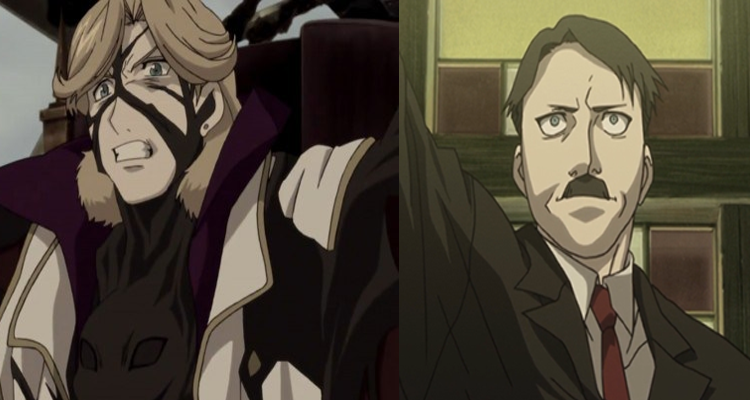
Dietlinde Eckhart and Adolf Hitler as they are depicted in Full Metal Alchemist the Movie: Conqueror of Shamballa. At no point are these characters put forward as heroic characters to emulate, but rather as villains who must be stopped at all costs.
Touching upon three more popular anime series, Villanueva states that:
“The long-running series Mobile Suit Gundam, known for constantly reinventing itself since the late 1970s, almost always features an antagonistic sovereign state based on a jingoistic, WWII-era Germany. Legend of the Galactic Heroes, a Japanese novel series adapted into multiple anime shows, also contains a similar government called the Galactic Empire. Hetalia: Axis Powersportrays a group of anthropomorphized countries with a sympathetic, long-suffering Germany as the main character.”
In Mobile Suit Gundam, the Neo Zeon faction doesn’t promote absolute law, extermination, or cleansing, but rather follow the orders of Char Anzable as he attempts to push humanity towards evolution by crashing a meteor into Earth and forcing humanity from the despondent and desolate planet and into the far reaches of space. The Galactic Empire featured in Legends of the Galactic Heroes is the primary antagonist of the series, portrayed as brutal monarchs, while the protagonists are rebels who believe in democracy. Hetalia: Axis Powers takes anthropomorphized versions of real-world nations and places them in comedic reinterpretations of historical events, while both positive and negative aspects of each country being used to form the distinct personalities of each character.
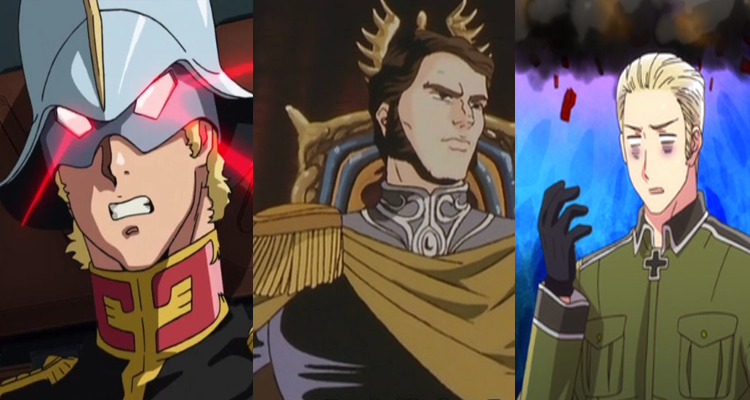
Mobile Suit Gundam and Legends of the Galactic Heroes both feature fascistic elements portrayed as villains, but never any explicit references to Nazi Germany. In the case of Hetalia: Axis Powers, Germany’s history informs aspects of his personality, such as his pessimism being a reference to the back-to-back defeats Germany suffered through World War I and II.
There are four more series’ that Villanueva cites as examples of fascism in anime:
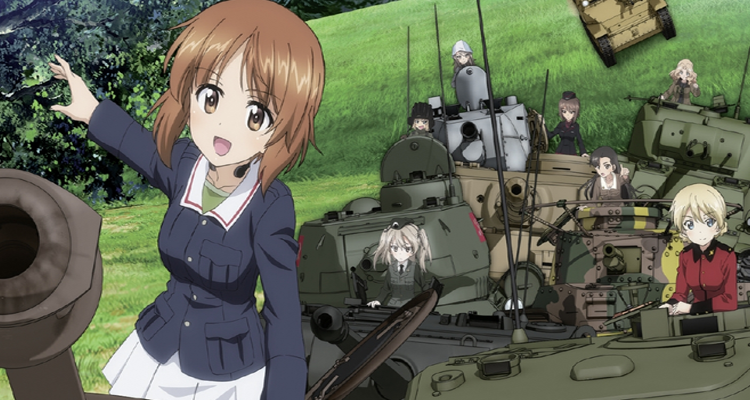
“It’s bad enough when these blond-haired, blue-eyed, Nordic-featured characters are paraded about. It’s even worse when these themes are packaged alongside overly-cute “moe” girls. Girls und Panzer is one of my personal favorite anime series. It depicts an alternate world where simulated tank warfare is a treasured sport for young women, and high school girls participate in a multi-national competition to destroy each other in sham combat. It subverts the idea of a masculine military, but the rag-tag high school group, the one you’re supposed to root for, uses a Panzer IV, a WWII-era German armored tank. These tanks used to trundle across the fields of Europe vanquishing everything in their paths, and the dissonance between the tank blowing stuff up while being piloted by a group of cute girls is at once delightfully empowering and oddly disturbing. I still enjoy the heck out of it, because the female friendships resonate with me, as does the blowing stuff up.
Strike Witches and Kantai Collection also demonstrate this bizarre dissonance between cute and disturbing. Female characters who represent planes and battleships are plunged into alternate reality WWII battles where Japan rewrites history and becomes more victorious than the country was in real life.
These cute girls are at the reins of these powerful weapons of war, but their agenda focuses on friendship and fair play, not hate. But does that lack of evil forgive all the disturbing details?
Is this issue solely in the realm of military anime? Nope. The culinary competition anime Food Wars has a storyline featuring an elitist group of chefs who fear contamination of the cooking world by others who don’t ascribe to traditional techniques. Their agenda involves teaching all aspiring cooks to make the exact same thing the exact same way, without wiggle room for innovation. Yes, Food Wars depicts fascist foodies.”
Again, there are many omitted details that drastically change the context of these statements. In Girls Und Panzer, it is a specific plot point that World War II-era tanks are used for the equivalent of a school sport and practice of a humorous martial art known as ‘the way of the tank.’ Strike Witches and Kantai Collection similarly use anthropomorphized historical technology (military planes and battleships respectively) from several nations who engage in numerous situations ranging from combating supernatural sea creatures to attending school and celebrating Christmas. The story of a young upstart who challenges the traditional sensibilities of his specialized field is a tale as old as time, and like Food Wars, has absolutely no elements of inherent fascism.
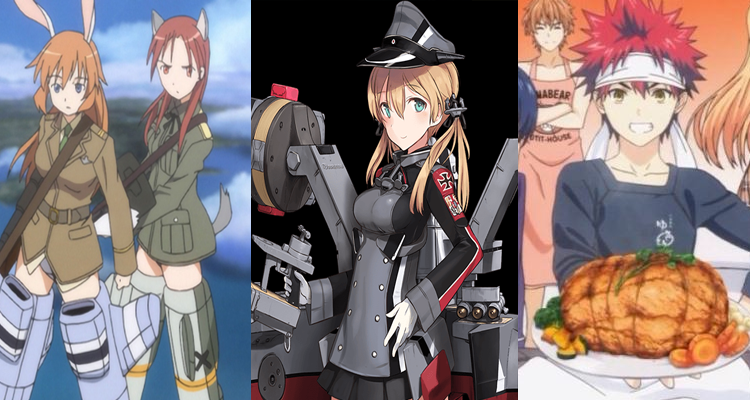
Strike Witches and Kancolle Collection both feature planes and battleships (respectively) that were used in association with fascist governments, but are now featured simply as a matter of historical fact. How Food Wars, an anime about an aspiring young chef whose techniques are seen as unorthodox by his elitist classmates, relates to fascism is a connection that remains to be seen.
However, it seems that this distinction between hero and villain is not enough to satisfy Villanueva:
“While acknowledging that lots of anime can appeal to fascists, what can be done to make sure that these shows aren’t idealizing it? Most of the shows I mentioned actually depict the main characters fighting against those militaristic regimes. Attack on Titan‘s Eren and his friends are attempting to uncover a military conspiracy involving the Titans. Fullmetal Alchemist reveals how a botched military invasion of a neighboring country (populated with brown-skinned people who have a different religion than the white folks) shows government corruption. Fascism in anime becomes a problem when fans glorify and emulate these clearly evil characters. After all, there are tons of stormtrooper cosplayers among Star Wars fans, but do any of them actually believe that the Empire was right?
Maybe that’s not the greatest example.”
To accuse each respective series of being a piece of fascistic propaganda is absurd at best and disingenuous at worst. Some of the series cited by Villanueva simply feature German items or the nation of Germany itself, with any fascist connotations existing because of historical fact rather than misplaced admiration. Most of the examples cited by Villanueva feature fascist elements, such as authoritarian governments and the use of a military force to police citizens, such elements are presented negatively. They are presented as negative qualities associated with villains, while the heroes are cheered on and encouraged by audiences to stop the threat presented by a given enemy. This is a very common trope, and fascistic elements can be seen in multiple pieces of media throughout the years, such as Marvel comics, Dr Who, Dragon Ball Z, and even Harry Potter. These elements are featured specifically because they are easily associated with evil in the minds of most audience members.
Turning from anime to comment on its source, Villanueva then begins to discuss Japan and its culture:
“There has to be something within the Japanese cultural landscape which lends itself to these narratives constantly popping up in its media. To answer this, it’s important to focus on how Japan portrays itself in its own media narratives.
On the surface, Japan seems to adore its own history. Samurai dramas are perennially popular, but there’s one era which has never really received much attention: WWII. The Ghibli film Grave of the Fireflies does depict the horrors of post-war Tokyo in graphic detail, but Japan still has a tremendously difficult time accepting its role in conflicts from the 1930s and 1940s. The systemic ignoring of Japan’s occupation of China and the denial of the existence of comfort women are clear examples of the country’s inability to take responsibility for its troubled past. The atrocities perpetrated by the Japanese military of that era are barely acknowledged, which leads to a fascination with that era. And since Japan struggles with its own history as an imperialist state, the interest falls instead on Nazi Germany and its iconography.
Japan, unfortunately, is still a very xenophobic nation and it has a difficult time accepting immigrants even if it sorely needs them. The country struggles to maintain a workforce with a dwindling population. More women are focusing on their careers instead of on family, which will eventually result in no new workers to replace the retiring ones. The country needs immigrants, which could cause resentment among Japanese citizens. This conservative, reactionary environment is ripe for creating and supporting media which fears foreigners, supports an all-reaching, totalitarian government, and celebrates the military. There’s an eagerness towards nostalgia, towards past glories, and towards reminiscing about Japan as an all-powerful empire.
Japanese society elevates and praises women who are submissive, delicate, and willing to acquiesce to men in all things. It’s no wonder that some alt-righters gravitate towards “moe” girls as avatars, to depict the sort of girl they want instead of those uppity feminists. Anime girls don’t talk back, after all, and many “moe” characters aren’t shown in relationships unless the show is specifically a romance anime, freeing them for waifu status. Outside of their cute personalities and their likes and dislikes, “moe” girls are considered a blank slate ready for love…and trolly Nazi memes. Perhaps it’s the dissonance that appeals the most. The idea that such big-eyed, soft-featured characters could harbor such hateful, angry beliefs is hand-crafted for the internet, where irony goes to die.”
The points made by Villanueva, however, seem to view Japanese culture through an explicitly western lens.
It is absolutely true that many among the Japanese government and public downplay or even erase the history of Japanese atrocities and actions during World War II, but Villanueva’s conclusion that the nation turned to admiring Nazi Germany is an astounding leap in logic, supported by Villanueva with no citations, statistical or otherwise. A common theory is that while some residents of Asia believe the Nazi aesthetic, such as the uniforms and hand gestures, exude strength, many across Asia are simply not taught the gravity of the Nazi’s actions as they focus more on the Pacific Theater (it is also a potential factor that Judaism is not a popular religion in Asia, and as such there are fewer institutions with which to combat this lack of historical information).
In regards to immigration, Prime Minister Shinzo Abe has actually relaxed the nations historically strict immigration policy, which has doubled it’s number of foreign workers. While Japanese attitudes towards immigration are still rather negative, there is no evidence to suggest that these attitudes are pushing the Japanese people to support fascism. Many Japanese are outraged at even the slightest hint of support for their former fascist governments.
Her view on the Japanese depiction of women is also highly troubling because it reinforces the ‘geisha’ stereotype, while again ignoring important nuance. ‘Moe’ anime does in fact feature ‘cute’ girls (the aforementioned Girls Und Panzer is an example), but never are they depicted as subservient dolls for male viewers to fantasize about. These series’ focus on stories and scenarios that are unrelated to romantic situations (such as camping with friends, learning to play music, or exploring one’s affinity for motorcycles). The mentioning of “the sort of girl they want instead of those uppity feminists” demonstrates that Villanueva is projecting a principally western mindset and attitude upon pieces of media produced by a foreign country, as very rarely, if ever, does anime take overtly negative swings at social movements like modern feminism.
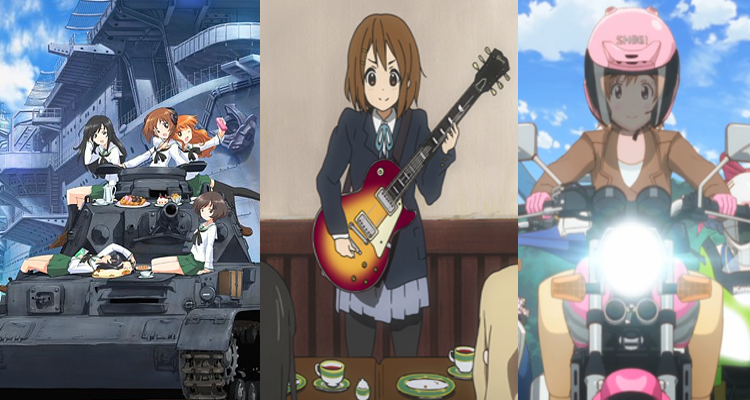
While the principal characters of most ‘moe’ anime are cute girls, the focus of these stories is not on feminism, subservience, or even appealing to the audience’s sexuality. Instead, these shows focus on slice of life situations, such as practicing for a school sport (Girls und Panzer), joining a music club (K-On!!), or learning how to ride and care for motorcycles (Bakuon!!). It is absurd to think that these shows are meant to appeal to a strawman’s ideal of a woman.
Villanueva then concludes her piece:
“So, is there any need for the ACCA characters to be in those uniforms? No, the uniforms don’t seem to be involved in any plot points. But why have it at all? Why even attempt to evoke it when the imagery might (as it did with me) conjure up negative connotations? It only seemed as if the manga creator just liked the aesthetic, and perhaps, like in those memes, there’s a fun sense of irony in the dissonance between sympathetic characters and SS-esque uniforms.
But irony, in this current political climate, is dead, and such fascist ideas should still be called out because there’s an extremely fine line between a troll and a true believer. Ironic racism is still racism; ironic fascism is still fascism.
Will I return to ACCA? Probably not. Will I continue to watch anime? Of course. Art is as much about interpretation as it is about authorial intent, and if I’m upset that something echoes an era or a political belief I find troubling, I can make a choice to not watch it. Anime has so many sub-genres that it’s entirely possible to watch anime without a hint of fascist ideas, and fans should still call out problematic things when we see them. It’s the only way to make sure the media we consume is diverse and inclusive.”
There is no reason for the characters of ACCA to wear their depicted uniforms, but there is also no reason for them not to. Critics are often far too eager to jump on any feature of a piece of media as ‘problematic’, and in order to do so, distort the truth behind their statements. Yes, a show may feature fascistic elements, or even full on Nazi allegories, but this does not necessarily serve as an endorsement or promotion of said ideals, especially when said elements are explicitly depicted as villains. Fiction is decidedly separate from reality, and while most audiences realize this fact, it is apparent that some struggle with making this distinction.
Upon reaching this conclusion, one can see that Villanueva may be attempting to place a square peg into a circular hole, as her interpretations of certain anime seem to be informed by an overwhelming sense of social justice. Her claims can be seen, but require an active ignorance of facts, both in real world history and in the respective universe of each series, and a specific agenda-driven viewpoint to interpret them as Villanueva does, which is ultimately a misrepresentation of each story or piece of media. Audience members such as Villanueva would be better served by framing each anime through Occam’s Razor: Is this show really trying to secretly recruit members in support of a fascistic dictatorship, or is it simply about cute human versions of historical battleships?
The Galactic Empire featured in Legends of the Galactic Heroes is the primary antagonist of the series, portrayed as brutal monarchs, while the protagonists are rebels who believe in democracy


