I posted this in the dedicated Don Lemon arrest thread, but I'll share my thoughts here too about the specific charges. First is 18 USC 248(a)(2):

I think it'd be hard to convict him of this because he doesn't personally use force, threaten to use force or obstruct. The rest of the group, easily, yes, but as Lemon was just filming and interviewing people, I think, sadly, not.
Next, we have 18 USC 241 and a much better likelihood of it sticking:
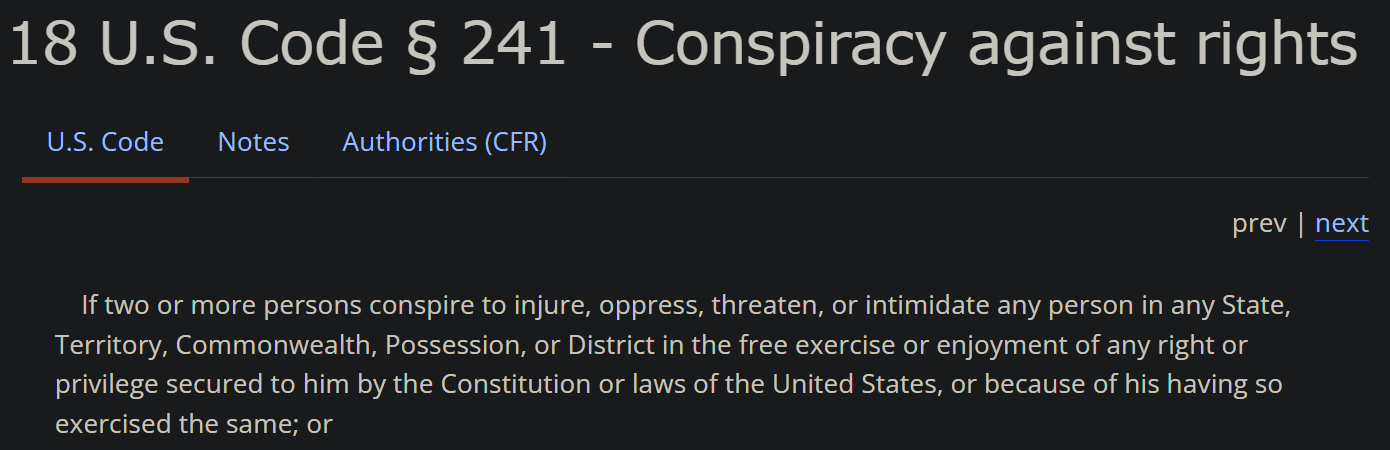
Here, all that's required is that he engaged in a conspiracy to oppress, threaten or intimidate someone who is exercising their right to, in this case, practice their religion as guaranteed by the First Amendment.
Given the conversations between Lemon and the other participants, I'd say it's fair to characterize him as part of their conspiracy and not merely an outsider documenting it, though that's his pretense and defense.
Consider that the group itself has an interest in publicizing their activities (e.g. to encourage copycats and intimidate other churches) and invited Lemon to play the role, therefore, of their propagandist.
Here's the stream where it happens, though I'm sure it's already been posted in this thread. But you can contrast this with the redacted affidavit and see which lines in it are from Lemon himself:
To add some thoughts after watching the livestream myself:
1. It's clear that Lemon knew everything about the operation before any of the livestreaming begins. He knew where they were going, the exact times, the purpose, the information about the pastor the group was motivated by, etc.
2. Therefore, it'd be advantageous for prosecution to look at the conversations that Lemon had with the group ahead of time if possible (i.e. if they're preserved in texts or e-mails). That would show the most co-ordination of purpose.
3. Don isn't documenting things neutrally here. He's documenting them only in the way that is most conducive to the operation's purpose. He doesn't want to be spotted by parishioners, either due to his face or his hat or his camera/mic equipment.
4. He is also careful to never let anyone watching the livestream have too many details and stops streaming at one point to prevent that because, presumably, they might warn the church ahead of time or call the police to go there.
5. This is all key because it shows that the "documenting" is really, as said before, publicizing the groups activities in the exact way they want, which means he's not being a journalist so much as a propagandist on their behalf.


