Metro (Archive) - May 27, 2022
By, Jeff Parsons
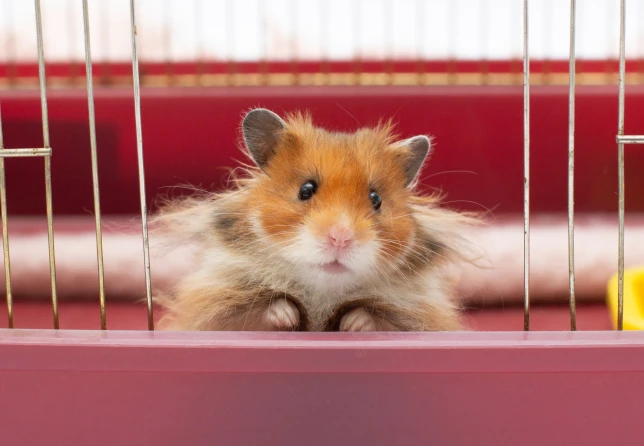
A team of scientists in the US have accidentally created overly-aggressive mutant hamsters following a gene-editing experiment.
Using the controversial CRISPR technology, researchers at Northwestern University were examining a hormone called vasopressin and its receptor, Avpr1a.
They opted to try and remove the latter from a group of Syrian hamsters, with the expectation it would increase bonding and co-operation between the lovable little critters.
That’s because Avpr1a is understood to regulate things like teamwork and friendship as well as dominance and bonding.
Their expectation proved to be wrong. Very wrong.
‘We were really surprised at the results,’ said Professor H Elliot Albers, the lead researcher on the study.
‘We anticipated that if we eliminated vasopressin activity, we would reduce both aggression and social communication.
‘But the opposite happened.’
The academics found the adorable bundles of fluff turned into mutant rage monsters exhibiting ‘high levels of aggression towards other same-sex individuals’.
All hamsters, regardless of genotype or sex, exhibited aggression (including chasing, biting, and pinning) when exposed to a nonaggressive, same-sex conspecific in a neutral arena.
Professor Albert admitted the results of the experiment were a ‘startling conclusion’.

The hamsters, regardless of genotype or sex, exhibited aggression after undergoing the gene-editing experiment (Credit: PNAS)
The scientists chose to experiment with Syrian hamsters because, unlike mice, they have a social organisation that’s similar to humans.
Professor Albert explained: ‘Even though we know that vasopressin increases social behaviours by acting within a number of brain regions, it is possible that the more global effects of the Avpr1a receptor are inhibitory.
‘We don’t understand this system as well as we thought we did.’
By, Jeff Parsons
A team of scientists in the US have accidentally created overly-aggressive mutant hamsters following a gene-editing experiment.
Using the controversial CRISPR technology, researchers at Northwestern University were examining a hormone called vasopressin and its receptor, Avpr1a.
They opted to try and remove the latter from a group of Syrian hamsters, with the expectation it would increase bonding and co-operation between the lovable little critters.
That’s because Avpr1a is understood to regulate things like teamwork and friendship as well as dominance and bonding.
Their expectation proved to be wrong. Very wrong.
‘We were really surprised at the results,’ said Professor H Elliot Albers, the lead researcher on the study.
‘We anticipated that if we eliminated vasopressin activity, we would reduce both aggression and social communication.
‘But the opposite happened.’
The academics found the adorable bundles of fluff turned into mutant rage monsters exhibiting ‘high levels of aggression towards other same-sex individuals’.
All hamsters, regardless of genotype or sex, exhibited aggression (including chasing, biting, and pinning) when exposed to a nonaggressive, same-sex conspecific in a neutral arena.
Professor Albert admitted the results of the experiment were a ‘startling conclusion’.
The hamsters, regardless of genotype or sex, exhibited aggression after undergoing the gene-editing experiment (Credit: PNAS)
The scientists chose to experiment with Syrian hamsters because, unlike mice, they have a social organisation that’s similar to humans.
Professor Albert explained: ‘Even though we know that vasopressin increases social behaviours by acting within a number of brain regions, it is possible that the more global effects of the Avpr1a receptor are inhibitory.
‘We don’t understand this system as well as we thought we did.’


