Your houseplants and gardens - Yellow leaf means underwatered AND overwatered?! What a country!

To be fair there are multiple invasive species that are causing (b)millions in damage because some dumb son of a bitch introduced something they liked or thought would help (the road to hell is paved with good intentions) so don't take it personally. If it makes you feel any better, my dumb ass planted sunchokes in my garden and now I'm finding random sunchokes in my garden.
Oh don't get me wrong, I'm highly aware of the issues. My areas issue is knotweed. Of course that shit has no trouble surviving. Even hottentot figs aren't native to the areas where I got them from, their impact is still being discussed. Great to stabilise dunes and as firebreakers, but they do spread and as bottom creeping plants

I've just not considered planting something outside I don't know, or don't know how much it will spread. I love my native area plants too much, and already have knotweed to fight my battles with, hell even native plants that spread too far that I got to keep an eye on.

It's simply the assumption itself that makes me roll my eyes so hard.
 
All this invasive weed talk has me wanting one of these really badly:


Basically it's a handheld lightning bolt generator, and the way it's setup it lets you fry any weed you touch with the wand. Boiling from the root upwards. When is this coming to North America? I NEED this. I feel like this would be a fun job. I need a RootWave in my hands.
 
Hi, this is my first post in this thread.
Here is my first decent harvest of strawberries. I didn't grow the plants from scratch but I restored an overgrown and dilapidated garden where the strawberries had been growing wild-ish, and competing with weeds and wildly growing potatoes for probably like 8 years.
I also built a frame with wire chicken net over it to keep the birds out since the birds were eating all of the berries before they were ready.

Screenshot from 2024-01-06 12-55-42.png


This is probably the best one but it had a small hole from an insect on the other side >:(
Screenshot from 2024-01-06 12-55-23.png

@Devious Dave
 
I grew strawberries last year but all the berries got eaten by asshole scrub jays :mad:

I need to figure out a system that will keep them out but let my hand in to pick berries.

I wanted to make a vertical PVC planter for strawberries like this-
IMG_1438.jpeg
IMG_1437.jpeg
-but never got around to it. You can top-water the tube with a terra cotta olla or even a plastic water bottle with holes poked in. I’m definitely doing this in the spring with my tomatoes peppers and vines to cut down on water wastage and topsoil erosion.
IMG_1439.jpeg
I also saw a rain gutter set up for strawberries that looked really neat. Vertical gardening is cool, and what’s better than a garden plant that doesn’t make you stoop over?!
IMG_1440.jpeg IMG_1435.jpeg
 
Remember this chili seedling from January of last year? It was the only surviving seedling (one of eight) from 15+ year old seeds.
1704607711583.png

Well here he is all grown up, feel old yet?
full chili.JPG
chili peppers.JPG
I plan to plant him outside this coming spring, and I hope to get lots of chilies this year. I've gotten very few chilies indoors, probably not the greatest potting soil, maybe it's just something up with the light, too much, or maybe my photoperiod is too long (14 hours). I am happy though, the plant is growing even though there are some issues. I haven't used any synthetic fertilizers, but a few days ago I mixed up some water with compost and strained it, then filled up its bottle with the compost tea water. Curious to see how it responds. It probably needs a shot of fertilizer, but I'm just trying to figure out how to grow this indoors with what I have available to me.
trunk closeup.JPG
I shake the whole plant every few days to make sure it grows STRONG. It's developed a mighty trunk, you tell from the woody striations creeping up from the base. I have been using a clay watering stake, with an inverted wine bottle reservoir, because this thing is very sensitive to water changes, which could be because my homemade "potting soil" has very little perlite, I'm not sure. I'd also sometimes forget to water it, and it got scary dry a couple times, but I caught it in time. The clay stake is great, I get about 7-9 days of watering time out of it. Only a small portion of the total pot's soil is moist, the opposite side of the pot is bone dry, but the plant still grows.

What do I mean by sensitive? It gets these weird bumps on the leaves if you give it a good soaking, they seem to be much reduced after switching to the clay stake.
leaf bumps 1.JPG
leaf bumps 2.JPG
leaf bumps 3.JPG
I'm going to retry this again with seed from these new chilies, in better potting soil, and see if that changes anything, it could just be a nutrient/soil life issue, as the plant did ok for the first few months, with no bump at all. I would like to eventually get to the bottom of it. Any ideas?

Hope you enjoyed the pictures. I'm going to start some onions from seed indoors soon (I'll post pictures eventually if they grow ok), I have high hopes for them and I'll be using a new soil mix.
 
The weird bumps are likely edema i.e. excess fluid buildup. I think all peppers are kinda susceptible? Overwatering is a factor but not the only factor- from what I understand it also has a lot to do with relative humidity and other things that influence how fast the plant sucks up water vs. rate of transpiration. In other words yeah it's likely happening due to not enough drainage. Poor nutrition and not enough light or heat can also be factors but almost certainly not as much as drainage, imo.

My current darling houseplant is a large widemouth vase full of fucking green onions in water. It grows SO fast under my grow lights and has no complaints. I feel like it grows about 1/3rd an inch per DAY. I have so many in there, it looks really lush, and it doesn't smell oniony at all unless you cut it of course. I highly recommend it, especially for a kitchen window. I bet it would be buddies with a water pothos.

All these "I want a lush paradise of plants!" people should try a lamp with a grow LED lightbulb on a timed outlet, an a wide container full of water and green onion tops LOL. They even flower! You can't go wrong!
planting-green-onions-in-cup.jpg
I have like 4 times as many in a jar this size, looks better. I don't have gravel or anything in there but it might be a good idea, or leca maybe.
 
My partner surprised me with two orchids yesterday, I'm not quite sure I believe the blue one is legit but the leaves are definitely real enough.

20240114_120155.jpg 20240114_120216.jpg

In sadder news my monstera seems to be unhappy, it decided to grow loads of large leaves at the bottom just before northern hemisphere winter hit and they are now all yellowing. It has some new green leaves at the top, a more sensible place to grow leaves IMO. Also getting these brown spots, I was previously overwatering (got mould on top of the soil....) so I've scaled that back massively. I've also started misting as during winter I barely have the window open, humidity is usually very high here so its OK when its not too cold for open windows outside. Its in a spot with quite low indirect light where its lived happily for over 2 years. Is there anything else I can do?

20240114_120350.jpg 20240114_120356.jpg
 

Archivos adjuntos

  • 20240114_120356.jpg
    20240114_120356.jpg
    1.9 MB · Vistas: 13
Is the plant "trend" over? I'm noticing fewer plant store being pushed on Etsy, less plant content in my feeds, etc.
FUCK THE TREND, PLANTS ARE FOREVER

Here are shitty photographs of my Senecio peregrinus. Part plant, part dolphin. Really is an amazing creature. Currently looks like the balding head of my manager but hopefully that will change in due time.

IMG_0004.jpg IMG_0005.jpg
 
Once I grew over 60 butternut squash in my backyard. I had a box so big it looked like it belonged in a famers market. It all started when one late winter I buried some store bought butternut squash seeds. I just put them in shallow lines and somehow they grew. They took up half the backyard. I had like 25 plants. 20 foot vines along the ground. Looked like a jungle because of the sunflowers growing along with them.
 
Is the plant "trend" over?
By my almanac, the solstice recently passed. This is the most dormant part of the year at my northern latitude, so I expect a couple more months of winter.

While I consider this the season of forced winter flowers, I did not put up any hyacinth bulbs this year. I have several dozen amaryllis and am pulling them out one at a time to hopefully stage their blossoms through winter until spring when nature sort of returns and outdoor gardening can resume. I have learned rhubarb is a cottage commercial crop in my neighborhood (buyers aplenty @ 3$/lb) and have been nursing a bunch of rhubarb in my raised beds before spreading to a field.

I'm also eagerly awaiting spring onion greens to sprout to put on my eggs every morning. Probably another 60+ days wait.
 
FUCK THE TREND, PLANTS ARE FOREVER
By my almanac, the solstice recently passed. This is the most dormant part of the year at my northern latitude, so I expect a couple more months of winter.
I think it's more than just the season. I think maybe the plant "fad" is falling off now that COVID-times are over and people are going outside again. On the one hand, I'm not going anywhere, I love plants, but on the other it'll be sad if plant stores start going out of business.
 
I wouldn't say its over by any means, I went to a little house plant event at a local nursery and was surprised by how many younger people were present. 5-6 years ago the average age of these events was probably 10+ years higher than what I've recently seen.
 
I am growing some onions from seed. I have never grown onions before, so this is definitely a learning experience.

I watched a good youtube series on the entire process, including when to pick them, and how to preserve them for storage.

I wanted to make my own seed starting mix this year, because last year my transplants weren't very healthy. The other thing I was hoping to create was a seed starter that I didn't need to add any fertilizers to. This is the soil mix that I came up with:

Homemade mix (approximate)
35% compost that I made last summer (manure + dry forest leaves + some grass clippings)
35% peat moss
20% perlite
10% play sand

I setup one seed tray with homemade mix, and another seed tray with a commercial seed starting mix that is made of peat moss, coir (coconut fiber), perlite, ground limestone, wetting agent, and mycorrhizae (fungus of some kind). I am growing two different types of onions, one is a standard large cooking onion good for storage, and the other is a perennial Japanese bunching onion (sort of looks like a green onion to me, it's supposed to divide and spread on its own). I split the seeds from each packet equally, and planted them in the trays. Each tray has 50% storage onion seeds, and 50% bunching onion seeds. The seed trays spent about a week in warm room with a seed heating mat, and a humidity dome. After they begun to poke out of the dirt I moved them under a grow light. Both trays are in the same location. I did my best to water each tray about the same amount, and kept the seeds moist through germination.

Preliminary observations between the two different seed mixes:
  • The homemade soil mix appears to have a lot more things living in it, I have kept the soil moist since bringing it inside in the fall. It's been in a big plastic tub with a lid for a few months. I notice some pill bugs, a few small centipedes, and various other things crawling around. Unfortunately also some fungus gnats. It's a heavier mix, and that is probably because of the added sand component. It's a little harder making the holes for the seeds, as it's a bit more chunky.
  • The commercial seed mix is very light/fluffy, and easy to work with, overall planting takes less time. Doesn't appear to have anything living in it, and it takes a little bit of time to fully hydrate.
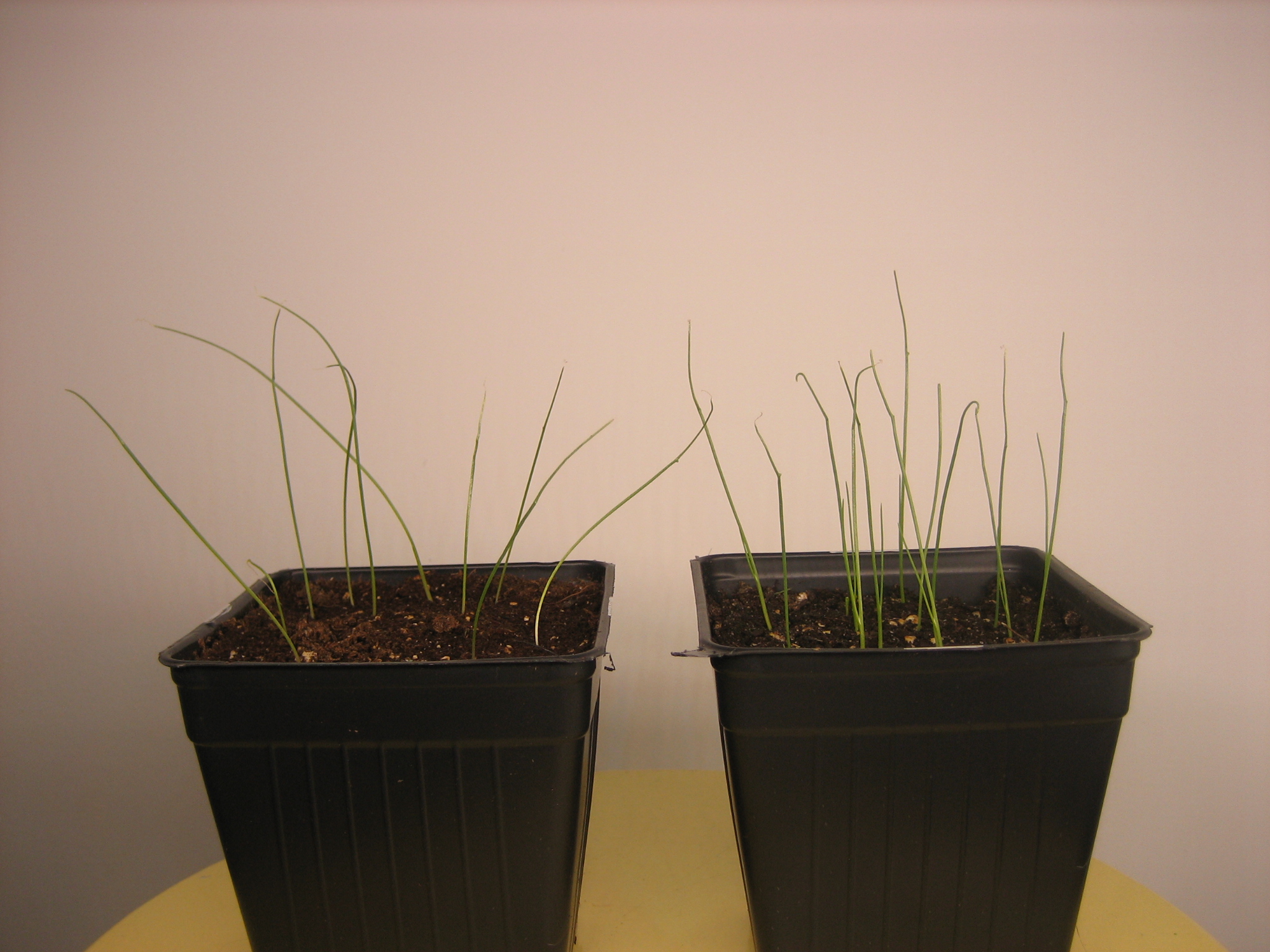
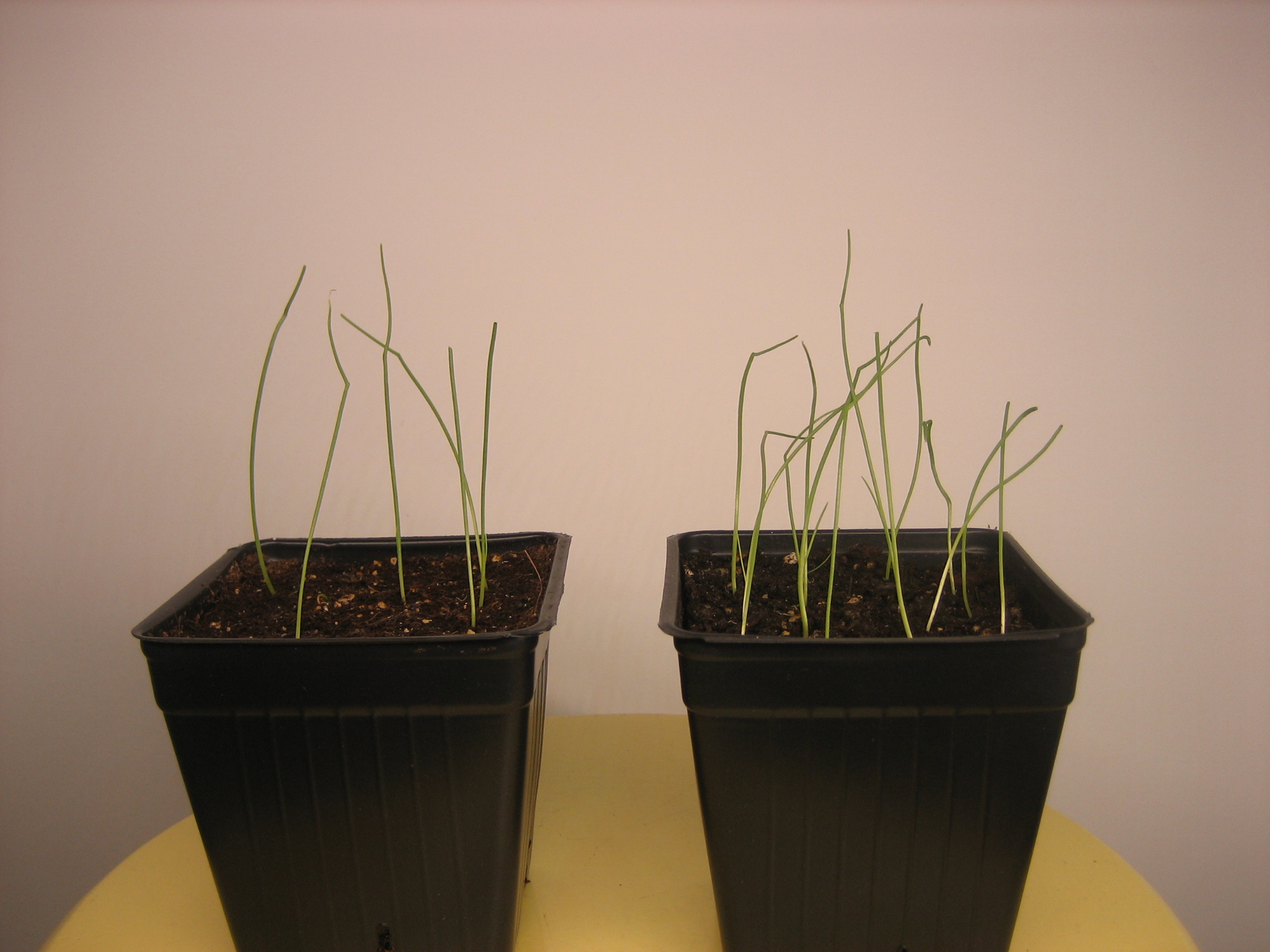
I ended up planting over 250 onion seeds in many seed starting containers, with multiple seeds per pot. I planted the same number of seeds in each pot. There are many more pots, but I am only going to show a couple for illustration purposes. I am going to take a picture of the same pots each time I post an update. Below is a picture of each type of onion in both kinds of soil:

Bunching Onion
LEFT POT: Commercial mix - RIGHT POT: Homemade mix
bunchingonions1.JPG
Germination Rates
Commercial mix: 84%
Homemade mix: 81%

Observations:
If you look closely you can see the onions in the homemade mix have grown their second leaves earlier than the ones in the commercial mix. Seedlings have a more difficult time standing straight in the commercial mix, could be due to the fact that it is very light. When watering the commercial mix I need to be careful not to wash the soil around in the pots, this isn't a problem in my homemade mix. Water rapidly soaks into the homemade mix, this takes longer in the commercial mix.

Storage Onion
LEFT POT: Commercial mix - RIGHT POT: Homemade mix
storageonions1.JPG
Germination Rates
Commercial mix: 46% (LOW!)
Homemade mix: 94%

Observations:
Shocking difference in germination rates, the commercial mix didn't even crack 50%. The onions in the homemade mix sprouted noticeable earlier, and appear to be healthier, with some seedlings starting their second set of leaves already.

Conclusions:
Really surprised there was such a difference in germination rates in the two different soils for the storage onions, the seeds were from the same package, so I really don't know why they appeared to hate the commercial soil so much. The bunching onions didn't appear to prefer either soil for germination. I feel the onions in the homemade soil are growing faster, as more onions are showing second leaves already, and overall they appear to be healthier.

Going forward:
I am going to fertilize the onions in the commercial mix with a standard seed starting fertilizer high in phosphorus. They appear to be suffering, and I wan't them to be healthy to plant in the spring. I will leave the homemade soil alone, and won't add any fertilizer to it. This will provide an interesting contrast, and I will see how closely my homemade mix holds up, compared to onions getting water soluble fertilizer. Will the compost be enough? I am still fighting the fungus gnats in the homemade soil, and have put more sticky bug strips to catch the remaining gnats.

I hope you enjoyed my show and tell.
 
All these "I want a lush paradise of plants!" people should try a lamp with a grow LED lightbulb on a timed outlet, an a wide container full of water and green onion tops LOL. They even flower! You can't go wrong!
I must unfortunately redact this statement.
My family came over and went, "What the FUCK is that smell?" (I have lost my sense of smell.)
It turns out that a giant vase full of living onions smells like onions.
My family stole my onions and cooked them with fried rice and we ate them for supper.
I still think keeping a couple in a jar in the kitchen window is okay, but uh maybe don't keep a hundred in your bedroom.

The plant fad is fading from social media but in general is still a thing compared to pre-pandemic. It's just winter.

I also got a string of dolphins recently and the soil mix is super weird, like a dry brownie that turns into fudge when I water it, but I know all the "string of" plants have really delicate root systems so I don't feel like I should replant it so soon after getting it...? I just mix some random potting soil I have around with some perlite, worm castings, and sometimes orchid bark or coco coir depending on the plant.
 
Really surprised there was such a difference in germination rates in the two different soils for the storage onions, the seeds were from the same package, so I really don't know why they appeared to hate the commercial soil so much. The bunching onions didn't appear to prefer either soil for germination. I feel the onions in the homemade soil are growing faster, as more onions are showing second leaves already, and overall they appear to be healthier.
I wonder if it could have been from different levels of moisture retention. Typically compost would help once the plant is growing and consuming nutrients but I don't know if it would effect germination very much.
When I started some seeds today I was actually thinking about doing an experiment to see if using a lighter commercial seed starting soil which is more expensive or a cheaper heavier commercial potting soil make a difference. I ended up using all seed starting soil but now I want to go back and start some in potting soil and see how they compare.
 
Última edición:
I wonder if it could have been from different levels of moisture retention. Typically compost would help once the plant is growing and consuming nutrients but I don't know if it would effect germination very much.
When I started some seeds today I was actually thinking about doing an experiment to see if a lighter commercial seed starting soil which is more expensive or a cheaper heavier commercial potting soil make a difference. I ended up using all seed starting soil but now I want to go back and start some in potting soil and see how they compare.
I'm leaning towards moisture retention being a big(if not the main) factor on the difference in seed germination. The benefits of seed starter is that it (usually) is free of potentially harmful fungi and pathogens, and the water retention tends to be better. I've had no problem sprouting seeds in small pots with potting mix so go ahead and give it a try.
On a side note make sure you moisten your seed starting mix before you add any seeds, and pay attention to the seed starter that you purchase they're not all equal. Last year I picked up a different brand of starter soil and it was so hydrophobic that even multihour soaking sessions wouldn't moisten it. I has to vigerously mix it in a bucket for it to absorb any water and as soon as it dried out it went back to being hydrophobic.
 
Atrás
Top Abajo