Why Chinese Americans Have Shifted Rightward
The New York Times (archive.ph)
By Amy Qin
2024-12-09 20:40:31GMT
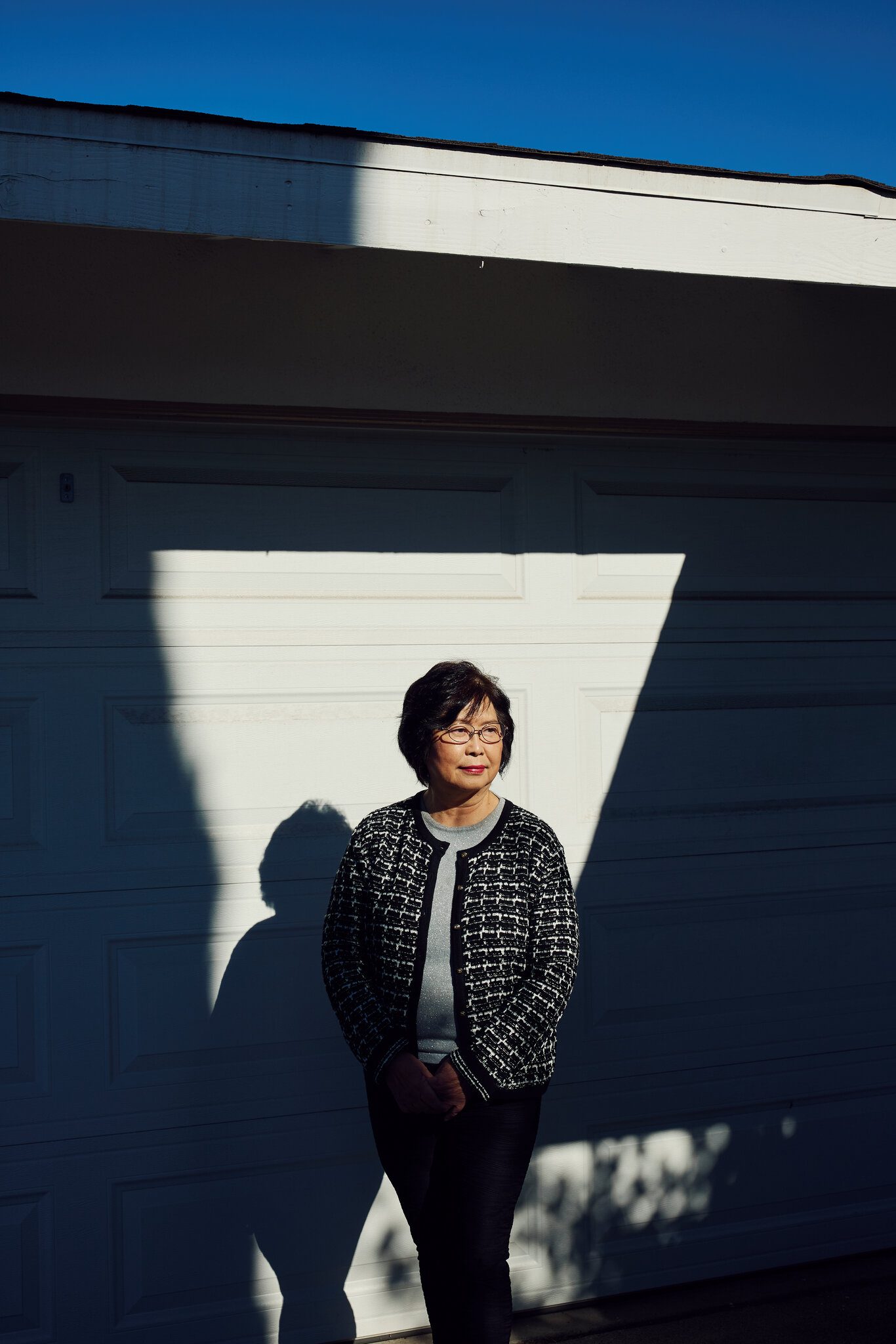
Annie Tan, a sales director at a local Chinese television station, said she thought Democrats had become too lenient on crime.Credit...Ryan Young for The New York Times
For the three decades after she became an American citizen, Annie Tan tried to stay out of the fray. Politics, she thought, was for politicians, not for “regular people” like her, a 71-year-old Chinese American immigrant from Taiwan living in Southern California.
That all changed last year, when Ms. Tan was checking her bank statement and noticed something strange: two checks in her name that had been cashed for $949 each.
For Ms. Tan, a sales director at a local Chinese television station, the precise amounts were telling. In 2014, Californians voted to reduce penalties for some crimes, including forged checks where the amount did not exceed $950. This year, the law became a talking point for President-elect Donald J. Trump and other Republicans who argued that Democratic officials were out of touch with the electorate.
Ms. Tan was hardly a fan of Mr. Trump, who was accused of using racist rhetoric against Chinese Americans during the pandemic. But on crime, the Republican Party had a point, Ms. Tan thought. The same for transgender rights and affirmative action, she felt. The Democrats had gone too far.
So last month, for the first time in two decades, Ms. Tan cast a ballot for Republicans down the ticket.
“A lot of laws are not fair or good for us Chinese,” said Ms. Tan, who lives in Temple City, a suburb outside of Los Angeles with a predominantly Asian population.
Voters across the country shifted right this November, propelled by persistent frustrations about inflation, crime and immigration. But the drop in support for Democrats has been particularly noticeable among Chinese Americans, whose support for the Democratic presidential candidate fell to 53 percent this election from over 70 percent in 2020, according to the American Electorate Voter Poll, a large-scale national survey of voters.

A Trump sign in Arcadia, Calif., a predominantly Asian suburb. Voters there moved toward Donald J. Trump as part of the same shift in the broader electorate.Credit...Ryan Young for The New York Times
The shift was evident in heavily Chinese neighborhoods in New York City and San Francisco, but also in suburban regions like the San Gabriel Valley, several miles east of downtown Los Angeles.
About 4.7 million people of Chinese descent live in the United States, and the population is still growing. As a group, most Chinese Americans, like Asian Americans in general, predominantly identify as Democratic. But first-generation Chinese Americans especially have been less committed to a particular party and have increasingly become concerned about crime and homelessness in American cities, which has punctured the sense of security they sought in the United States.
More socially conservative than their American-born children, many Chinese immigrants have also been turned off by Democratic support for affirmative action because they believe it does not reward merit. Few see relevance in the fight for transgender rights. They have a sense that the Democratic Party is the defender of minority groups — just not their own.
Such views have often been distorted and widely circulated through online platforms like WeChat, X and YouTube. The result has been a frustration with the left, especially in Democratic-run coastal states that have large concentrations of Chinese Americans.
“What we’re seeing, especially with Chinese Americans in some of the cities like San Francisco and New York, is a rejection of certain Democratic leaders that have taken what they see as a harder left position on issues like crime and safety, economy and education,” said James Zarsadiaz, a professor of history at the University of San Francisco who has written about Asian American conservatism.
In the San Gabriel Valley, Mr. Trump improved his performance this year from four years ago in nearly every Asian-majority city. A Chinese American Republican candidate in the 49th State Assembly District who focused heavily on public safety concerns won a higher share of the vote than any Republican challenger in the solidly Democratic district over the past decade. (The candidate, Long Liu, who goes by David, ultimately lost.)
It may seem counterintuitive to Democrats that a growing number of Chinese Americans would support Mr. Trump. During his first term, he called the coronavirus the “Chinese virus,” a label that fed xenophobia toward Asian Americans during the pandemic, and his administration took a confrontational stance against China. The Justice Department, under Mr. Trump, also ramped up a program that investigated and prosecuted Chinese American researchers and scientists as spies.
The effects of anti-Asian hate were deeply felt across California, including in the San Gabriel Valley, which has more than a dozen suburbs with an Asian-majority population. In 2021, reports of hate crimes against Asians jumped 107 percent from the year before, according to Rob Bonta, California’s attorney general.
But not everyone blamed Mr. Trump’s rhetoric for precipitating the attacks. James Wang, 60, a first-generation Chinese American businessman from the city of San Gabriel, said that while his children did experience discrimination during the pandemic, racism already existed in America.
“The United States is not a Chinese person’s country,” Mr. Wang said. “We are a minority here.”
Mr. Wang, a self-described independent who does not typically vote, was more concerned by crime and what he felt was America’s declining influence in the world. Over the past two years, a popular mall in nearby Arcadia had been hit several times by “smash-and-grab” thefts. In Rosemead, the number of homeless people living on major thoroughfares has noticeably increased after state officials began dismantling homeless encampments in Los Angeles this summer, said Steven Ly, the city’s mayor.
It was enough, Mr. Wang said, to convince him to vote for Mr. Trump this year.
In Monterey Park, another Chinese-majority suburb, residents have complained about illegal boardinghouses and public littering. Some Chinese Americans have blamed undocumented Chinese migrants who have crossed the border over the past two years.
“They’ve commented to me how, ‘We got here legally, I don’t know why they’re doing that,’” said Thomas Wong, the Democratic mayor of Monterey Park. “So there is this underlying tension and sentiment within our communities around some of the same rhetoric that has clearly propelled Trump to a second term.”
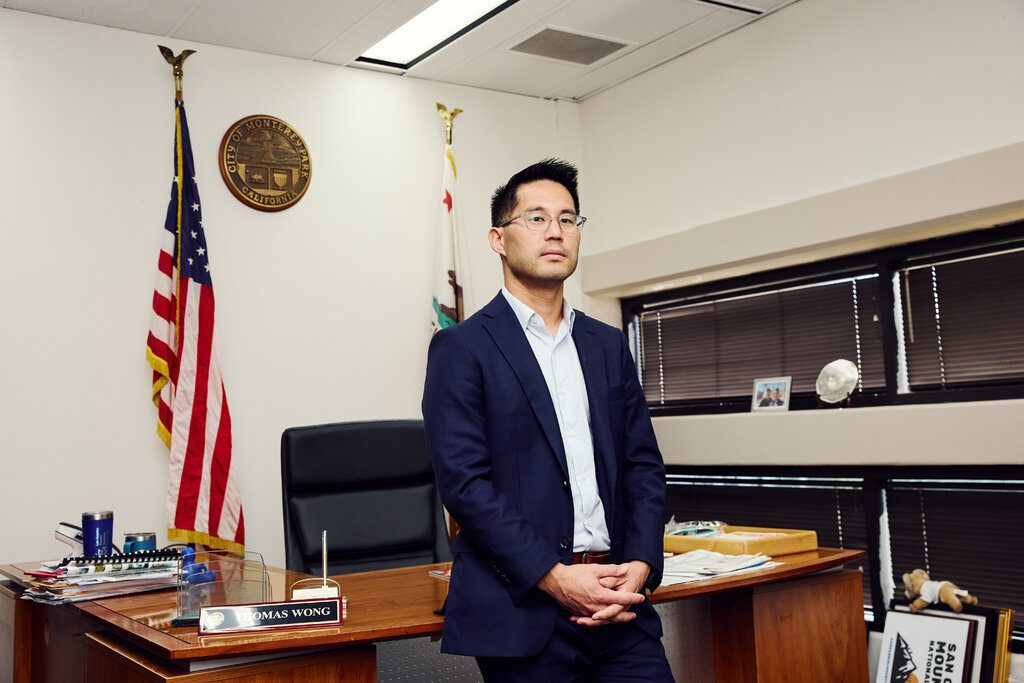
Thomas Wong, the Democratic mayor of Monterey Park, said that in his Asian-majority suburb, residents had complained about illegal boardinghouses and public littering. Credit...Ryan Young for The New York Times
Chinese-language social media spaces, which are popular among first-generation immigrants, reinforced the perception that California and New York were lawless states with Democratic leaders. Many of the narratives drew from right-wing, English-language misinformation and disinformation.
Among the most popular was the false claim that as attorney general of California, Kamala Harris was responsible for the 2014 criminal justice measure that reduced sentences for shoplifting up to $950 from stores. Many referred to the thefts in Chinese as “zero-dollar shopping.”
Ms. Harris never publicly took a position on the measure. But there were rarely articles or videos rebutting the claims on Chinese-language social media, said Jinxia Niu, who leads Piyaoba, a Chinese-language fact-checking organization based in San Francisco.
Ms. Niu noted that the Harris campaign did run a Chinese-language opinion piece right before the election. But it was published in The World Journal, a newspaper that has limited reach among Chinese Americans from mainland China, many of whom rely more on online platforms like WeChat.
It remains to be seen how long the rightward shift will last. Chinese Americans still align more with Democrats on certain issues such as gun control and climate change, and many have chafed at what they see as growing anti-China rhetoric and policies, particularly in Republican-led states. Younger, American-born Chinese Americans also see the Democratic Party as the stronger defender of ethnic minorities.
“It’s the first-generation immigrants who still retain a lot of the conservative traditional values that they have from back home,” said Aidan Chao, a second-generation Taiwanese American and a political consultant who works with Republican candidates in the San Gabriel Valley.
At a marathon Rosemead City Council meeting in October, a parade of mostly Chinese American immigrants stepped up to the podium to decry the city’s plans to open a small facility for homeless mothers and children.
Many were convinced that the project was in fact a homeless shelter for 400 people. One woman, speaking through a Mandarin translator, blasted “you Democrats” for “shoving homeless people into every town and city.”
City Council members quickly tried to make it clear that the supportive housing facility would not be allowed to expand beyond its stated cap of 87 people. They urged the charity developing the facility to work more directly with the Chinese community.
Ultimately, in the wee hours of the morning, the council approved the project.
Mr. Ly, the Rosemead mayor who has described himself as a “George W. Bush Republican,” said that Democrats could win back some Chinese Americans if they took the voters’ concerns more seriously. Too often, he suggested, Democrats have dismissed their perspectives as the product of misinformation or disinformation.
“That’s why Trump won, he’s willing to talk about the economy, crime and public safety,” Mr. Ly said. “It’s the left hiding under the covers until the problem goes away.”
The New York Times (archive.ph)
By Amy Qin
2024-12-09 20:40:31GMT
Annie Tan, a sales director at a local Chinese television station, said she thought Democrats had become too lenient on crime.Credit...Ryan Young for The New York Times
For the three decades after she became an American citizen, Annie Tan tried to stay out of the fray. Politics, she thought, was for politicians, not for “regular people” like her, a 71-year-old Chinese American immigrant from Taiwan living in Southern California.
That all changed last year, when Ms. Tan was checking her bank statement and noticed something strange: two checks in her name that had been cashed for $949 each.
For Ms. Tan, a sales director at a local Chinese television station, the precise amounts were telling. In 2014, Californians voted to reduce penalties for some crimes, including forged checks where the amount did not exceed $950. This year, the law became a talking point for President-elect Donald J. Trump and other Republicans who argued that Democratic officials were out of touch with the electorate.
Ms. Tan was hardly a fan of Mr. Trump, who was accused of using racist rhetoric against Chinese Americans during the pandemic. But on crime, the Republican Party had a point, Ms. Tan thought. The same for transgender rights and affirmative action, she felt. The Democrats had gone too far.
So last month, for the first time in two decades, Ms. Tan cast a ballot for Republicans down the ticket.
“A lot of laws are not fair or good for us Chinese,” said Ms. Tan, who lives in Temple City, a suburb outside of Los Angeles with a predominantly Asian population.
Voters across the country shifted right this November, propelled by persistent frustrations about inflation, crime and immigration. But the drop in support for Democrats has been particularly noticeable among Chinese Americans, whose support for the Democratic presidential candidate fell to 53 percent this election from over 70 percent in 2020, according to the American Electorate Voter Poll, a large-scale national survey of voters.
A Trump sign in Arcadia, Calif., a predominantly Asian suburb. Voters there moved toward Donald J. Trump as part of the same shift in the broader electorate.Credit...Ryan Young for The New York Times
The shift was evident in heavily Chinese neighborhoods in New York City and San Francisco, but also in suburban regions like the San Gabriel Valley, several miles east of downtown Los Angeles.
About 4.7 million people of Chinese descent live in the United States, and the population is still growing. As a group, most Chinese Americans, like Asian Americans in general, predominantly identify as Democratic. But first-generation Chinese Americans especially have been less committed to a particular party and have increasingly become concerned about crime and homelessness in American cities, which has punctured the sense of security they sought in the United States.
More socially conservative than their American-born children, many Chinese immigrants have also been turned off by Democratic support for affirmative action because they believe it does not reward merit. Few see relevance in the fight for transgender rights. They have a sense that the Democratic Party is the defender of minority groups — just not their own.
Such views have often been distorted and widely circulated through online platforms like WeChat, X and YouTube. The result has been a frustration with the left, especially in Democratic-run coastal states that have large concentrations of Chinese Americans.
“What we’re seeing, especially with Chinese Americans in some of the cities like San Francisco and New York, is a rejection of certain Democratic leaders that have taken what they see as a harder left position on issues like crime and safety, economy and education,” said James Zarsadiaz, a professor of history at the University of San Francisco who has written about Asian American conservatism.
In the San Gabriel Valley, Mr. Trump improved his performance this year from four years ago in nearly every Asian-majority city. A Chinese American Republican candidate in the 49th State Assembly District who focused heavily on public safety concerns won a higher share of the vote than any Republican challenger in the solidly Democratic district over the past decade. (The candidate, Long Liu, who goes by David, ultimately lost.)
It may seem counterintuitive to Democrats that a growing number of Chinese Americans would support Mr. Trump. During his first term, he called the coronavirus the “Chinese virus,” a label that fed xenophobia toward Asian Americans during the pandemic, and his administration took a confrontational stance against China. The Justice Department, under Mr. Trump, also ramped up a program that investigated and prosecuted Chinese American researchers and scientists as spies.
The effects of anti-Asian hate were deeply felt across California, including in the San Gabriel Valley, which has more than a dozen suburbs with an Asian-majority population. In 2021, reports of hate crimes against Asians jumped 107 percent from the year before, according to Rob Bonta, California’s attorney general.
But not everyone blamed Mr. Trump’s rhetoric for precipitating the attacks. James Wang, 60, a first-generation Chinese American businessman from the city of San Gabriel, said that while his children did experience discrimination during the pandemic, racism already existed in America.
“The United States is not a Chinese person’s country,” Mr. Wang said. “We are a minority here.”
Mr. Wang, a self-described independent who does not typically vote, was more concerned by crime and what he felt was America’s declining influence in the world. Over the past two years, a popular mall in nearby Arcadia had been hit several times by “smash-and-grab” thefts. In Rosemead, the number of homeless people living on major thoroughfares has noticeably increased after state officials began dismantling homeless encampments in Los Angeles this summer, said Steven Ly, the city’s mayor.
It was enough, Mr. Wang said, to convince him to vote for Mr. Trump this year.
In Monterey Park, another Chinese-majority suburb, residents have complained about illegal boardinghouses and public littering. Some Chinese Americans have blamed undocumented Chinese migrants who have crossed the border over the past two years.
“They’ve commented to me how, ‘We got here legally, I don’t know why they’re doing that,’” said Thomas Wong, the Democratic mayor of Monterey Park. “So there is this underlying tension and sentiment within our communities around some of the same rhetoric that has clearly propelled Trump to a second term.”
Thomas Wong, the Democratic mayor of Monterey Park, said that in his Asian-majority suburb, residents had complained about illegal boardinghouses and public littering. Credit...Ryan Young for The New York Times
Chinese-language social media spaces, which are popular among first-generation immigrants, reinforced the perception that California and New York were lawless states with Democratic leaders. Many of the narratives drew from right-wing, English-language misinformation and disinformation.
Among the most popular was the false claim that as attorney general of California, Kamala Harris was responsible for the 2014 criminal justice measure that reduced sentences for shoplifting up to $950 from stores. Many referred to the thefts in Chinese as “zero-dollar shopping.”
Ms. Harris never publicly took a position on the measure. But there were rarely articles or videos rebutting the claims on Chinese-language social media, said Jinxia Niu, who leads Piyaoba, a Chinese-language fact-checking organization based in San Francisco.
Ms. Niu noted that the Harris campaign did run a Chinese-language opinion piece right before the election. But it was published in The World Journal, a newspaper that has limited reach among Chinese Americans from mainland China, many of whom rely more on online platforms like WeChat.
It remains to be seen how long the rightward shift will last. Chinese Americans still align more with Democrats on certain issues such as gun control and climate change, and many have chafed at what they see as growing anti-China rhetoric and policies, particularly in Republican-led states. Younger, American-born Chinese Americans also see the Democratic Party as the stronger defender of ethnic minorities.
“It’s the first-generation immigrants who still retain a lot of the conservative traditional values that they have from back home,” said Aidan Chao, a second-generation Taiwanese American and a political consultant who works with Republican candidates in the San Gabriel Valley.
At a marathon Rosemead City Council meeting in October, a parade of mostly Chinese American immigrants stepped up to the podium to decry the city’s plans to open a small facility for homeless mothers and children.
Many were convinced that the project was in fact a homeless shelter for 400 people. One woman, speaking through a Mandarin translator, blasted “you Democrats” for “shoving homeless people into every town and city.”
City Council members quickly tried to make it clear that the supportive housing facility would not be allowed to expand beyond its stated cap of 87 people. They urged the charity developing the facility to work more directly with the Chinese community.
Ultimately, in the wee hours of the morning, the council approved the project.
Mr. Ly, the Rosemead mayor who has described himself as a “George W. Bush Republican,” said that Democrats could win back some Chinese Americans if they took the voters’ concerns more seriously. Too often, he suggested, Democrats have dismissed their perspectives as the product of misinformation or disinformation.
“That’s why Trump won, he’s willing to talk about the economy, crime and public safety,” Mr. Ly said. “It’s the left hiding under the covers until the problem goes away.”


