Article/Archive
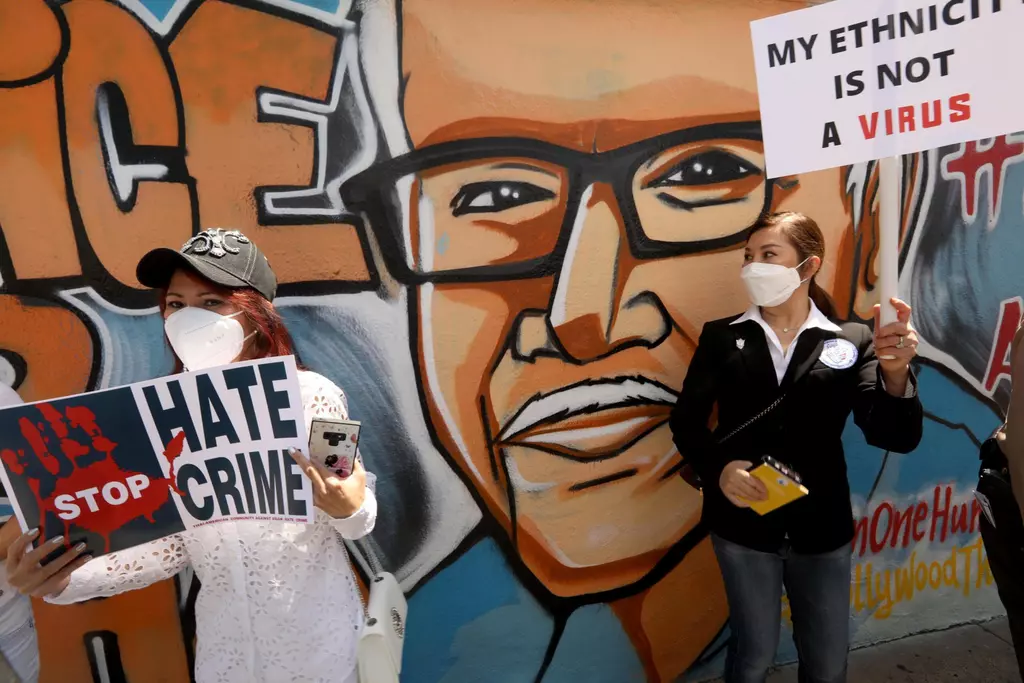
Last month, the man who killed Grandpa Vicha walked out(opens in new tab) of a San Francisco courtroom free.
On Jan. 28, 2021, Antoine Watson sprinted across the street in Anza Vista and body-slammed 84-year-old Vicha Ratanapakdee to the pavement. Ratanapakdee’s head cracked on the concrete. He never woke up. He died two days later from a brain hemorrhage.
In March, Judge Linda Colfax sentenced Watson to eight years for involuntary manslaughter and assault, gave him credit for five years served, and released him on probation. Vicha’s daughter Monthanus Ratanapakdee said what every sane person was thinking: “When consequences do not match the harm, it sends the wrong message about protecting our seniors and public safety.” District Attorney Brooke Jenkins was more blunt: “Justice was not served.”
The going rate for an 84-year-old Asian life in San Francisco is five years in county jail. How did we get here?
This is not a failure of one judge or one jury. It is what happens when a narrow set of organizations claims to speak for the Asian community while advancing a framework that treats punishment and policing as suspect — and when the state rewards that framework with enormous institutional legitimacy and money.
Our community was misrepresented. And the organizations that misrepresented us were paid millions to do it.
The hijack
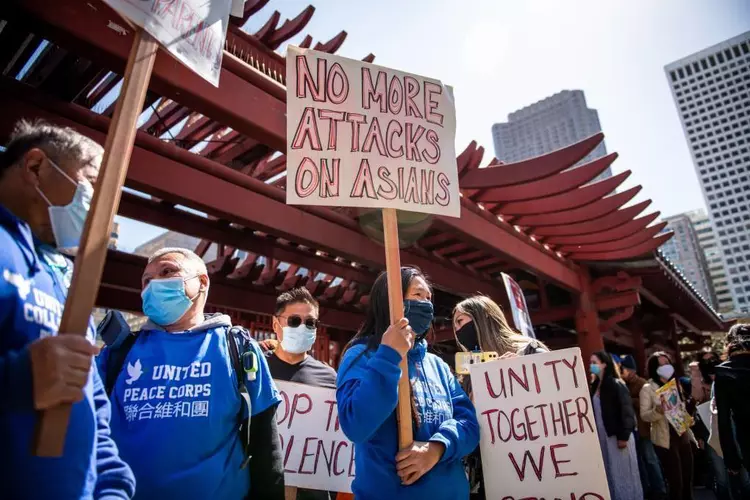
In 2020 and 2021, a horrifying wave of attacks(opens in new tab) on elderly Asian Americans swept San Francisco and New York. Ordinary immigrant families demanded two simple things: that the attacks stop, and that the attackers face real consequences. That organic fury produced the hashtag #StopAsianHate. It was a demand for accountability — real consequences for real violence.
Stop AAPI Hate launched on March 19, 2020, deliberately positioned to ride that wave. Its goals were to document anti-Asian hate and influence policy. Its founders — Chinese for Affirmative Action, the AAPI Equity Alliance, and San Francisco State’s Asian American studies department — moved quickly to capture the narrative, claim the mantle of “the community response,” and position themselves to absorb the flood of funding that followed.
They succeeded. But they didn’t end up fighting for what the community actually wanted.
The betrayal
What began as a call for protection became a critique of punishment itself.
Stop AAPI Hate did not merely document anti-Asian violence. It helped redefine the acceptable response to it.
The coalition’s public language makes this explicit. It champions(opens in new tab) “comprehensive, non-carceral solutions” and views policing-centered responses with suspicion, arguing that “carceral solutions, like policing, disproportionately harm Black and brown communities.” It opposes expanding hate-crime penalties. When the federal COVID-19 Hate Crimes Act passed, the organization publicly welcomed the bill while criticizing its criminal-law emphasis — taking credit with one hand; undermining the mechanism with the other. It co-signed letters arguing(opens in new tab) that tougher penalties give “a false sense of comfort.”
The coalition’s founders stated their intentions out loud. In February 2021 — the month Ratanapakdee was fatally attacked — cofounder Russell Jeung told the Stanford Daily(opens in new tab): “We don’t need more mass incarceration, we need more racial healing and solidarity.” In March 2022, all three founders wrote in Time(opens in new tab) that “the problem with investing in ineffective solutions like policing is that they keep us from adopting methods that will actually make us safer.”
They were not alone. More than 85 Asian American organizations cosigned the letter opposing the federal COVID-19 Hate Crimes Act. Jason Wu of Gay Asian & Pacific Islander Men of New York, speaking to NBC News, explained the coalition’s reasoning while citing the case of Yao Pan Ma, a 61-year-old Chinese man who was beaten while collecting cans and died after months in a coma: “Hate crimes, prosecution and incarceration of the attacker does nothing to address those needs.”
The result was not a community speaking with one voice. It was a narrow ideological layer speaking over the immigrant families and elderly Asians who wanted the simplest thing in the world: Protect us, arrest the people doing this, and punish them when they kill. But that wasn’t what Stop AAPI Hate wanted. Its own 2025 survey, conducted with NORC at the University of Chicago, undermines its entire advocacy platform. The single most popular policy actions(opens in new tab) among AAPI adults surveyed were increased punishments for hate crimes and greater police presence. The consensus Stop AAPI Hate sold to Sacramento and Washington doesn’t exist — and the organization’s own data proves it.
The money
California ratified Stop AAPI Hate’s worldview with enormous institutional backing, which meant that the state’s taxpayers funded it at an industrial scale. In February 2021, California ratified AB 85, appropriating $1.4 million(opens in new tab) for work tied to Stop AAPI Hate, including funding to its three coalition partners and UCLA-run research projects. Assemblymember Phil Ting championed the allocation.
In July 2021, California ratified the API Equity Budget. The AAPI Legislative Caucus described it as a $166.5 million, three-year investment. NBC News was more specific(opens in new tab) about what it purchased: “a $156 million investment in noncarceral alternatives to combating violence against Asian Americans.” The package included $10 million that went directly to the Stop AAPI Hate coalition, $110 million to community organizations, $10 million for “restorative justice programs” in schools, and millions more for ethnic media. Additional rounds followed — $14 million in March 2022, $30.3 million in July 2022, continued funding in 2023, and a $2 million federal Justice Department grant to CAA in October 2024.
CAA, the fiscal sponsor of Stop AAPI Hate, swelled accordingly. ProPublica’s nonprofit data shows revenue(opens in new tab) of $16.8 million and total assets of $49 million in 2023. By 2024, revenue had climbed to $19.7 million and total assets to $52.3 million. CAA’s own audited financials show roughly $19.8 million in net assets designated specifically for Stop AAPI Hate. Top officers drew six-figure salaries. Hundreds of thousands went to media strategy.
The money didn’t buy what it promised. FBI data shows that the number of anti-Asian hate crime incidents went from 161 in 2019 to a peak of 746 in 2021(opens in new tab), then declined to 379 in 2024 (opens in new tab)(the most recent data) — but remains nearly three times higher than pre-pandemic averages, according to Advancing Justice-AAJC’s analysis of the FBI’s August 2025 release(opens in new tab). Five years and $166.5 million in “non-carceral solutions” later, we are not back to baseline.
Ting called it “a historic investment in the API community.” It was a historic investment in the organizations that claimed to represent the API community. There is a difference.
The outcome
No advocacy group controls a courtroom. But juries and judges do not operate in a vacuum. They absorb the same narrative environment as everyone else — the op-eds, the policy briefs, the grant-funded studies, the ethnic media coverage, the sense of what “the community” supposedly wants. For years, California’s most institutionally empowered anti-hate organizations used public money and public legitimacy to argue against policing- and punishment-centered responses, even as many Asian elders and immigrant families wanted exactly those responses. That is the water Watson’s jury swam in.
They saw the video of an 84-year-old man being body-slammed to death. They convicted Watson of assault. They declined to call it murder. They declined to call it elder abuse. They deliberated for roughly six hours.
Colfax’s record speaks for itself. In the 2021 Union Square smash-and-grab cases(opens in new tab), the judge sentenced Kimberly Cherry to Primary Caregiver Diversion — zero days incarcerated — over the DA’s objection.
Stop AAPI Hate claims to speak for the Asian community. It does not. Monthanus Ratanapakdee does. The families who showed up to every hearing do. The elderly residents who are still afraid to walk to the grocery store do.
Ratanapakdee’s killer is free. Monthanus goes home tonight without her father. CAA has already filed its next grant application. And another day ends without justice for our community.
Last month, the man who killed Grandpa Vicha walked out(opens in new tab) of a San Francisco courtroom free.
On Jan. 28, 2021, Antoine Watson sprinted across the street in Anza Vista and body-slammed 84-year-old Vicha Ratanapakdee to the pavement. Ratanapakdee’s head cracked on the concrete. He never woke up. He died two days later from a brain hemorrhage.
In March, Judge Linda Colfax sentenced Watson to eight years for involuntary manslaughter and assault, gave him credit for five years served, and released him on probation. Vicha’s daughter Monthanus Ratanapakdee said what every sane person was thinking: “When consequences do not match the harm, it sends the wrong message about protecting our seniors and public safety.” District Attorney Brooke Jenkins was more blunt: “Justice was not served.”
The going rate for an 84-year-old Asian life in San Francisco is five years in county jail. How did we get here?
This is not a failure of one judge or one jury. It is what happens when a narrow set of organizations claims to speak for the Asian community while advancing a framework that treats punishment and policing as suspect — and when the state rewards that framework with enormous institutional legitimacy and money.
Our community was misrepresented. And the organizations that misrepresented us were paid millions to do it.
The hijack
In 2020 and 2021, a horrifying wave of attacks(opens in new tab) on elderly Asian Americans swept San Francisco and New York. Ordinary immigrant families demanded two simple things: that the attacks stop, and that the attackers face real consequences. That organic fury produced the hashtag #StopAsianHate. It was a demand for accountability — real consequences for real violence.
Stop AAPI Hate launched on March 19, 2020, deliberately positioned to ride that wave. Its goals were to document anti-Asian hate and influence policy. Its founders — Chinese for Affirmative Action, the AAPI Equity Alliance, and San Francisco State’s Asian American studies department — moved quickly to capture the narrative, claim the mantle of “the community response,” and position themselves to absorb the flood of funding that followed.
They succeeded. But they didn’t end up fighting for what the community actually wanted.
The betrayal
What began as a call for protection became a critique of punishment itself.
Stop AAPI Hate did not merely document anti-Asian violence. It helped redefine the acceptable response to it.
The coalition’s public language makes this explicit. It champions(opens in new tab) “comprehensive, non-carceral solutions” and views policing-centered responses with suspicion, arguing that “carceral solutions, like policing, disproportionately harm Black and brown communities.” It opposes expanding hate-crime penalties. When the federal COVID-19 Hate Crimes Act passed, the organization publicly welcomed the bill while criticizing its criminal-law emphasis — taking credit with one hand; undermining the mechanism with the other. It co-signed letters arguing(opens in new tab) that tougher penalties give “a false sense of comfort.”
The coalition’s founders stated their intentions out loud. In February 2021 — the month Ratanapakdee was fatally attacked — cofounder Russell Jeung told the Stanford Daily(opens in new tab): “We don’t need more mass incarceration, we need more racial healing and solidarity.” In March 2022, all three founders wrote in Time(opens in new tab) that “the problem with investing in ineffective solutions like policing is that they keep us from adopting methods that will actually make us safer.”
They were not alone. More than 85 Asian American organizations cosigned the letter opposing the federal COVID-19 Hate Crimes Act. Jason Wu of Gay Asian & Pacific Islander Men of New York, speaking to NBC News, explained the coalition’s reasoning while citing the case of Yao Pan Ma, a 61-year-old Chinese man who was beaten while collecting cans and died after months in a coma: “Hate crimes, prosecution and incarceration of the attacker does nothing to address those needs.”
The result was not a community speaking with one voice. It was a narrow ideological layer speaking over the immigrant families and elderly Asians who wanted the simplest thing in the world: Protect us, arrest the people doing this, and punish them when they kill. But that wasn’t what Stop AAPI Hate wanted. Its own 2025 survey, conducted with NORC at the University of Chicago, undermines its entire advocacy platform. The single most popular policy actions(opens in new tab) among AAPI adults surveyed were increased punishments for hate crimes and greater police presence. The consensus Stop AAPI Hate sold to Sacramento and Washington doesn’t exist — and the organization’s own data proves it.
The money
California ratified Stop AAPI Hate’s worldview with enormous institutional backing, which meant that the state’s taxpayers funded it at an industrial scale. In February 2021, California ratified AB 85, appropriating $1.4 million(opens in new tab) for work tied to Stop AAPI Hate, including funding to its three coalition partners and UCLA-run research projects. Assemblymember Phil Ting championed the allocation.
In July 2021, California ratified the API Equity Budget. The AAPI Legislative Caucus described it as a $166.5 million, three-year investment. NBC News was more specific(opens in new tab) about what it purchased: “a $156 million investment in noncarceral alternatives to combating violence against Asian Americans.” The package included $10 million that went directly to the Stop AAPI Hate coalition, $110 million to community organizations, $10 million for “restorative justice programs” in schools, and millions more for ethnic media. Additional rounds followed — $14 million in March 2022, $30.3 million in July 2022, continued funding in 2023, and a $2 million federal Justice Department grant to CAA in October 2024.
CAA, the fiscal sponsor of Stop AAPI Hate, swelled accordingly. ProPublica’s nonprofit data shows revenue(opens in new tab) of $16.8 million and total assets of $49 million in 2023. By 2024, revenue had climbed to $19.7 million and total assets to $52.3 million. CAA’s own audited financials show roughly $19.8 million in net assets designated specifically for Stop AAPI Hate. Top officers drew six-figure salaries. Hundreds of thousands went to media strategy.
The money didn’t buy what it promised. FBI data shows that the number of anti-Asian hate crime incidents went from 161 in 2019 to a peak of 746 in 2021(opens in new tab), then declined to 379 in 2024 (opens in new tab)(the most recent data) — but remains nearly three times higher than pre-pandemic averages, according to Advancing Justice-AAJC’s analysis of the FBI’s August 2025 release(opens in new tab). Five years and $166.5 million in “non-carceral solutions” later, we are not back to baseline.
Ting called it “a historic investment in the API community.” It was a historic investment in the organizations that claimed to represent the API community. There is a difference.
The outcome
No advocacy group controls a courtroom. But juries and judges do not operate in a vacuum. They absorb the same narrative environment as everyone else — the op-eds, the policy briefs, the grant-funded studies, the ethnic media coverage, the sense of what “the community” supposedly wants. For years, California’s most institutionally empowered anti-hate organizations used public money and public legitimacy to argue against policing- and punishment-centered responses, even as many Asian elders and immigrant families wanted exactly those responses. That is the water Watson’s jury swam in.
They saw the video of an 84-year-old man being body-slammed to death. They convicted Watson of assault. They declined to call it murder. They declined to call it elder abuse. They deliberated for roughly six hours.
Colfax’s record speaks for itself. In the 2021 Union Square smash-and-grab cases(opens in new tab), the judge sentenced Kimberly Cherry to Primary Caregiver Diversion — zero days incarcerated — over the DA’s objection.
Stop AAPI Hate claims to speak for the Asian community. It does not. Monthanus Ratanapakdee does. The families who showed up to every hearing do. The elderly residents who are still afraid to walk to the grocery store do.
Ratanapakdee’s killer is free. Monthanus goes home tonight without her father. CAA has already filed its next grant application. And another day ends without justice for our community.


