Link/Archive
The BBC has been accused of 'clunky' casting choices in a new report that highlighted ethnic minority actors appearing in period dramas and historical episodes of shows including Doctor Who.
The broadcaster was warned of a need to ensure casting is 'authentic' and 'not tokenistic or forced' following a string of roles in shows including Great Expectations and Murder Is Easy by a damning independent report into the corporation's content.
Elsewhere, the BBC was told it needs to improve coverage of the working class, with themes currently focussing too much on crime and addiction, and women over 60.
It must also take steps to reduce its reliance on London for content creation, casting and news broadcasts, the report found, and instead focus on areas outside of the south of England and the devolved nations.
The review follows criticism over 'preachy' casting in a string of dramas, and ruled the need for 'a smattering of diversity in every programme' risks ethnic minority actors ending up in inappropriate settings that 'look clunky'.
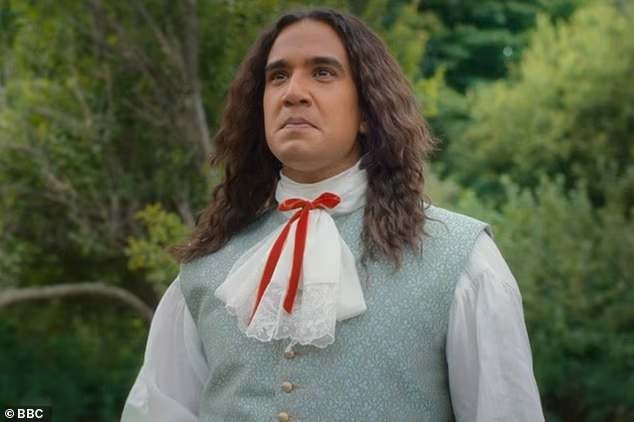
It picked up on the casting of mixed-race Nathaniel Curtis as Sir Isaac Newton in the 60th anniversary episode of Doctor Who, as well as an adaptation of Charles Dickens's Great Expectations.
In this series released in 2023 mixed-race actress Shalom Brune-Franklin plays Estella despite the story taking place in the early to mid-19th Century.
The report acknowledged the Doctor Who role was 'less of a stretch' given the science-fiction focus of the show and questioned whether the aim of fictional programmes should be to be 'historically accurate' or accept it is a realm of 'fantasy'.

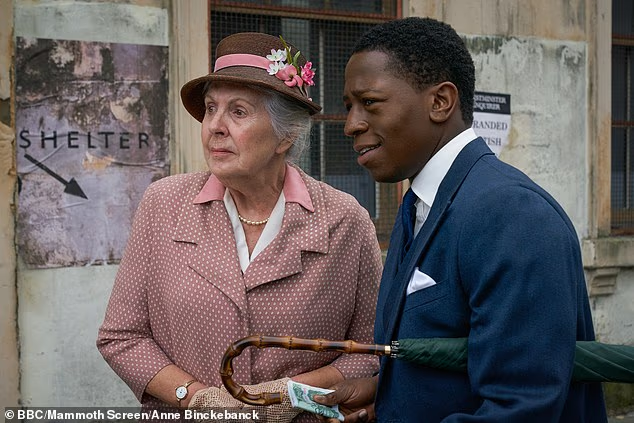
It also homed in on Murder Is Easy, the BBC's 2023 adaptation of an Agatha Christie novel, which saw David Jonsson star as Luke Fitzwilliam in the mid-century story set in a country village.
'Audiences are particularly unforgiving of this if it challenges their expectations of what they have switched on to see,' the review said.
'If there's an Agatha Christie murder mystery over the Christmas period, they won't expect to be taken into anti-colonial struggles alongside the country house murder.'
But it added: 'All adaptations change the original text to a greater or lesser degree and we are after all in the world of fiction.'
The review questioned whether casting ethnic minorities in certain settings served to ignore the historic plight of certain groups in a way which would not be the case for white actors.
'In depicting an anachronistic historical world in which people of colour are able to rise to the top of society as scientists, artists, courtiers and Lords of the Realm, there may be the unintended consequence of erasing the past exclusion and oppression of ethnic minorities and breeding complacency about their former opportunities,' the review added.
But it also pointed out that without so-called 'colour-blind casting' for historical programmes, the 'range of roles available to actors of colour would be severely restricted, in a way which would not be the case for white actors.'
The authors added solely casting white actors in period pieces also risks ignoring the presence of ethnic minority people in Britain at the time: 'People sometimes assume that the history of the British Isles was entirely white, without recognising that some degree of ethnic mix has always existed.'
The report brought up a contemporary example of crime drama Shetland which cast Tanzanian, Sri Lankan and Jamaican/Irish actors to play the Procurators Fiscal.
Three police officers during the series were played by actors of Nigerian heritage, while several families also included ethnic minority actors.
The report pointed out ethnic minorities make up just 3.2 per cent of senior law officers and one percent of police across Scotland and the numbers for rural Shetland are likely to be far lower.
But it also said it's 'clear' that the series is not attempting 'to give an accurate depiction of life on the islands' and highlighted that the protagonist and other leading characters are white.
Elsewhere, the document criticised the BBC's portrayal of white working class men and women, stating it is 'less positive', especially when looked at 'cumulatively' across the corporation.
'Portrayal of working class communities can often rely on the themes of poverty, crime, addiction and deindustrialisation with an absence of role models,' the authors said.
They raised the one-off drama series Denmark, set in Blaenau Gwent in southeast Wales, in which the 'white working class characters are portrayed as hopeless and the locality as a trap'.
'One character says, "So you never got out then?" implying life is much better elsewhere,' the report added.
The review was conducted by former Bafta chairwoman and ex-BBC exec Anne Morrison, and independent media consultant Chris Banatvala.
The duo spoke to more than 100 executives, commissioners, programme-makers and media experts, as well as 4,500 members of the TV-watching public.
They found perceptions of the BBC are often lower among those demographics who are also less likely to be satisfied with how they are represented and portrayed.
The review said power in the organisation is still too concentrated in London and recommended more key decision makers should be located outside the capital.
'Our audience research found that the perception of the BBC remains that it is skewed towards the middle class and is London-centric - and that the power in the organisation still lies in the UK capital,' the report said.
'We found that this has consequences for portrayal and representation.
'Genuine production, rooted in the location, made by people who understand it in depth was described to us as fundamental to on-air authenticity. We agree.'
The report found content makers in Scotland, Wales and northern Ireland lack opportunities due to the 'concentration of editorial power' in London, even when programmes are very popular or relate to huge regional stories.
It raised documentary The Ice Cream Wars, which was commissioned for BBC Scotland but turned down for national screens.
The show did so well on iPlayer it was eventually shown on BBC Two some time after, where one million people tuned in, before being bought by Netflix, where it landed in its top ten documentaries.
The Ice Cream Wars has subsequently been purchased by BBC Select in North America and Amazon UK too.
Accusations of the BBC being too London-centric extend to news content too, with flagship programme Newsnight coming under fire.
Newsnight restructured in May 2024, becoming completely studio based - in London - without external packages.
'Inevitably, this means that we see less out and about in the UK and hear more from London-based interviewees,' the report states, adding Newsnight has been reduced to a 'sofa-based show' which is 'looking, being and feeling very London-centric'.
The review added the BBC's key decision makers 'must understand the audience and what will appeal to them - whoever and wherever they are' and that bosses need to devise a 'new set of diversity characteristics specifically for measuring portrayal and representation which would include class and geography'.
In order to facilitate these changes, it said that senior editorial staff and TV genre commissioners should be located outside London.
The review noted that, while there has been some improvement, there are still more men than women featured in BBC news, nations and factual programming, and this is particularly prevalent among older people.
The report said: 'We would like to see a renewed effort to achieve gender balance in content for contributors and reporters in news and factual programmes.
'In addition, we found that male presenters significantly outnumber female presenters in the older age groups.
'The BBC has not been making full use of the data it holds to keep track of this issue. We believe that women on air ought to be able to have as long a career at the BBC as their male counterparts.'
Responding to the review, BBC chairman Samir Shah said: 'It is vital the BBC authentically reflects the lives of all the communities, classes and cultures across the UK.
'Decision-making must happen closer to audiences if we want to ensure that everyone feels represented and that the BBC remains an engine for growth within the creative industries.
'The board welcomes the challenge set out in the report and the actions the BBC Executive want to take in response.'
The BBC Executive said it has committed to strengthening how the BBC measures the ways in which different audiences are portrayed and represented in its output.
The organisation also said: 'The BBC welcomes the authors' recognition that significant progress has been made in how it represents all the communities of the UK, including through increased regional investment, a broader and more representative range of voices on and off-air, and a stronger focus on authentic portrayal in commissioning decisions.'
The BBC has been accused of 'clunky' casting choices in a new report that highlighted ethnic minority actors appearing in period dramas and historical episodes of shows including Doctor Who.
The broadcaster was warned of a need to ensure casting is 'authentic' and 'not tokenistic or forced' following a string of roles in shows including Great Expectations and Murder Is Easy by a damning independent report into the corporation's content.
Elsewhere, the BBC was told it needs to improve coverage of the working class, with themes currently focussing too much on crime and addiction, and women over 60.
It must also take steps to reduce its reliance on London for content creation, casting and news broadcasts, the report found, and instead focus on areas outside of the south of England and the devolved nations.
The review follows criticism over 'preachy' casting in a string of dramas, and ruled the need for 'a smattering of diversity in every programme' risks ethnic minority actors ending up in inappropriate settings that 'look clunky'.
It picked up on the casting of mixed-race Nathaniel Curtis as Sir Isaac Newton in the 60th anniversary episode of Doctor Who, as well as an adaptation of Charles Dickens's Great Expectations.
In this series released in 2023 mixed-race actress Shalom Brune-Franklin plays Estella despite the story taking place in the early to mid-19th Century.
The report acknowledged the Doctor Who role was 'less of a stretch' given the science-fiction focus of the show and questioned whether the aim of fictional programmes should be to be 'historically accurate' or accept it is a realm of 'fantasy'.
It also homed in on Murder Is Easy, the BBC's 2023 adaptation of an Agatha Christie novel, which saw David Jonsson star as Luke Fitzwilliam in the mid-century story set in a country village.
'Audiences are particularly unforgiving of this if it challenges their expectations of what they have switched on to see,' the review said.
'If there's an Agatha Christie murder mystery over the Christmas period, they won't expect to be taken into anti-colonial struggles alongside the country house murder.'
But it added: 'All adaptations change the original text to a greater or lesser degree and we are after all in the world of fiction.'
The review questioned whether casting ethnic minorities in certain settings served to ignore the historic plight of certain groups in a way which would not be the case for white actors.
'In depicting an anachronistic historical world in which people of colour are able to rise to the top of society as scientists, artists, courtiers and Lords of the Realm, there may be the unintended consequence of erasing the past exclusion and oppression of ethnic minorities and breeding complacency about their former opportunities,' the review added.
But it also pointed out that without so-called 'colour-blind casting' for historical programmes, the 'range of roles available to actors of colour would be severely restricted, in a way which would not be the case for white actors.'
The authors added solely casting white actors in period pieces also risks ignoring the presence of ethnic minority people in Britain at the time: 'People sometimes assume that the history of the British Isles was entirely white, without recognising that some degree of ethnic mix has always existed.'
The report brought up a contemporary example of crime drama Shetland which cast Tanzanian, Sri Lankan and Jamaican/Irish actors to play the Procurators Fiscal.
Three police officers during the series were played by actors of Nigerian heritage, while several families also included ethnic minority actors.
The report pointed out ethnic minorities make up just 3.2 per cent of senior law officers and one percent of police across Scotland and the numbers for rural Shetland are likely to be far lower.
But it also said it's 'clear' that the series is not attempting 'to give an accurate depiction of life on the islands' and highlighted that the protagonist and other leading characters are white.
Elsewhere, the document criticised the BBC's portrayal of white working class men and women, stating it is 'less positive', especially when looked at 'cumulatively' across the corporation.
'Portrayal of working class communities can often rely on the themes of poverty, crime, addiction and deindustrialisation with an absence of role models,' the authors said.
They raised the one-off drama series Denmark, set in Blaenau Gwent in southeast Wales, in which the 'white working class characters are portrayed as hopeless and the locality as a trap'.
'One character says, "So you never got out then?" implying life is much better elsewhere,' the report added.
The review was conducted by former Bafta chairwoman and ex-BBC exec Anne Morrison, and independent media consultant Chris Banatvala.
The duo spoke to more than 100 executives, commissioners, programme-makers and media experts, as well as 4,500 members of the TV-watching public.
They found perceptions of the BBC are often lower among those demographics who are also less likely to be satisfied with how they are represented and portrayed.
The review said power in the organisation is still too concentrated in London and recommended more key decision makers should be located outside the capital.
'Our audience research found that the perception of the BBC remains that it is skewed towards the middle class and is London-centric - and that the power in the organisation still lies in the UK capital,' the report said.
'We found that this has consequences for portrayal and representation.
'Genuine production, rooted in the location, made by people who understand it in depth was described to us as fundamental to on-air authenticity. We agree.'
The report found content makers in Scotland, Wales and northern Ireland lack opportunities due to the 'concentration of editorial power' in London, even when programmes are very popular or relate to huge regional stories.
It raised documentary The Ice Cream Wars, which was commissioned for BBC Scotland but turned down for national screens.
The show did so well on iPlayer it was eventually shown on BBC Two some time after, where one million people tuned in, before being bought by Netflix, where it landed in its top ten documentaries.
The Ice Cream Wars has subsequently been purchased by BBC Select in North America and Amazon UK too.
Accusations of the BBC being too London-centric extend to news content too, with flagship programme Newsnight coming under fire.
Newsnight restructured in May 2024, becoming completely studio based - in London - without external packages.
'Inevitably, this means that we see less out and about in the UK and hear more from London-based interviewees,' the report states, adding Newsnight has been reduced to a 'sofa-based show' which is 'looking, being and feeling very London-centric'.
The review added the BBC's key decision makers 'must understand the audience and what will appeal to them - whoever and wherever they are' and that bosses need to devise a 'new set of diversity characteristics specifically for measuring portrayal and representation which would include class and geography'.
In order to facilitate these changes, it said that senior editorial staff and TV genre commissioners should be located outside London.
The review noted that, while there has been some improvement, there are still more men than women featured in BBC news, nations and factual programming, and this is particularly prevalent among older people.
The report said: 'We would like to see a renewed effort to achieve gender balance in content for contributors and reporters in news and factual programmes.
'In addition, we found that male presenters significantly outnumber female presenters in the older age groups.
'The BBC has not been making full use of the data it holds to keep track of this issue. We believe that women on air ought to be able to have as long a career at the BBC as their male counterparts.'
Responding to the review, BBC chairman Samir Shah said: 'It is vital the BBC authentically reflects the lives of all the communities, classes and cultures across the UK.
'Decision-making must happen closer to audiences if we want to ensure that everyone feels represented and that the BBC remains an engine for growth within the creative industries.
'The board welcomes the challenge set out in the report and the actions the BBC Executive want to take in response.'
The BBC Executive said it has committed to strengthening how the BBC measures the ways in which different audiences are portrayed and represented in its output.
The organisation also said: 'The BBC welcomes the authors' recognition that significant progress has been made in how it represents all the communities of the UK, including through increased regional investment, a broader and more representative range of voices on and off-air, and a stronger focus on authentic portrayal in commissioning decisions.'


