Estás usando un navegador desactualizado. Es posible que no muestre este u otros sitios web correctamente. Deberías actualizar o usar un navegador alternativo.
CultureSilicon Valley Wants to Put a Chip in Your Brain - A battle is looming not just over privacy, but the future of the human species.
Silicon Valley Wants to Put a Chip in Your Brain Politico (archive.ph)
By Calder McHugh
2026-05-15 07:00:00GMT
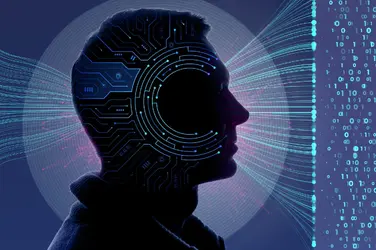
Illustration by Claudine Hellmuth/POLITICO (source images via iStock)
There will come a time, in the not-so-distant future, when you decide to stick a computer chip in your brain.
At least, that’s what D. Scott Phoenix told the audience at TED 2026 in Vancouver last month.
“Someone you work with will get it first. And you’ll hold out for a while, the way you did with the smartphone. But eventually, you won’t,” said Phoenix, dressed in all black with a tiny mic attached to his ear. “The advantages of integration will be hard to compete with.”
Put bluntly, in his view, “We’re on the cusp of the next major transition, the merger of humans and AI.”
This perspective, as outlandish as it may sound, is commonly held in Silicon Valley. OpenAI CEO Sam Altman mused way back in 2017 that “a merge is probably our best-case scenario” for survival after the emergence of superhuman AI. Tech billionaire Peter Thiel is a vocal advocate of “transhumanism.”
There is good reason to be skeptical about an imminent evolution for the species. The technology to perform this kind of merger — to radically change what it really means to be human — remains in its earliest stages. Even setting aside the uncertain future of AI, the so-called implantable brain-computer interface (BCI) is still quite nascent.
And yet, there are huge sums of money already sloshing around the technology, with more to come. The BCI market, currently sitting at around $350 million, is expected to reach $1.2 billion by 2035, according to Future Market Insights. That doesn’t include companies like the one Phoenix founded, named Vicarious, which sought to use core principles in the brain to build AI that could act like humans. Phoenix, who is now a venture capitalist, sold his company to Alphabet in 2022, after it was funded to the tune of $250 million by investors including Elon Musk and Mark Zuckerberg. The broader neurotechnology market is projected to expand to $52 billion by 2032, according to the Neurorights Foundation.
With that much money at stake, not to mention the future of humanity, it should be no surprise that the political battle over our brainwaves is starting to heat up. That’s particularly true amid skepticism on both the left and right toward Silicon Valley’s relentless push for AI growth.
Thus far, the use case for implantable devices is largely medical in nature. Noland Arbaugh, the first human to receive an implanted BCI from the Musk-founded Neuralink, is paralyzed from the neck down but is now able to use a computer with his mind. (Neuralink has reported 21 clinical trials of implantable BCIs in humans as of January, after years of trials with primates that often ended in gruesome fashion.)
Michael Mcloughlin, gets a demonstration of Gemini on Android XR glasses at a Google I/O event in Mountain View, Calif., Tuesday, May 20, 2025. | Jeff Chiu/AP
There are also less intrusive forms of BCI; wearable technology like smart glasses, fitness wristbands or stress-tracking apps are already widespread. These products are lucrative for their makers not just because of how many people are buying them, but because of what can also be extracted from customers: the extremely valuable commodity of neural data.
Ownership of extensive neural data can be used to do anything from serve extremely targeted ads to surveil or manipulate consumers’ behavior. The tech billionaires who believe in the possibility of true human-AI integration may also see a chance to make some more money in the meantime.
“If data is the oil of the 21st century,” former UNESCO Director-General Audrey Azoulay wrote in November in the Financial Times, “then ‘brain’ data is the crude oil. We need to guard it more jealously.”
Resistance to private sector accumulation of neural data is growing quickly, with red states and blue states alike passing legislation to protect the privacy of neural information.
Within the burgeoning movement of neurorights advocates, there are real debates about how best to address companies worming their way into consumers’ brains. But there is broad opposition among advocates to the notion that AI and humans must become one for the species to survive — and broad concern about the private sector extracting neural data from consumers to speed that process along.
“That logic strikes me as very twisted,” said Susan Schneider, the director of the Center for the Future of AI, Mind and Society at Florida Atlantic University, adding that AI should be developed “in a way that protects privacy and promotes human flourishing.”
Ultimately the simmering debate over collecting neural data is about a lot more than just legislation on privacy. It hits at the very heart of what makes us human, now and in the future.
Late last year, the neurotechnology company Kernel — founded by Bryan Johnson, a tech entrepreneur who insists he can live forever — published its quarterly newsletter. Alongside new product announcements, CEO Ryan Field wrote, “If you’ve been dreaming about building models on brain data, we’ve got the best solution for high-quality data collection at scale and are actively developing more advanced capabilities.”
In an interview, Field said the company is selling technology that other companies can use to collect neural data and train large language models on. “[Our technology] gives very rich and powerful information you can use to train new models to do all kinds of different things,” he said.
Field said they don’t sell neural data at Kernel, but that they want to collect as much of it as they can with consent to build their own wearable devices that better measure cognitive health and activity. “I’m looking for people who will exchange their brain data in exchange for some kind of compensation,” he continued, noting their work is in the research domain and includes clear consent forms.
But as neurotechnology companies become more consumer-oriented and less focused on clinical trials, it’s not entirely clear what information they are allowed to collect from their users. A small group of lawyers, scientists and advocates are now trying to protect user data from being bought and sold without their consent. That is, if they can get on the same page with one another.
Regulation of neural data at any governmental level remains in its infancy, but some states have begun to take up measures to stop companies from having access to certain kinds of information.
In Colorado, California and Connecticut, legislators have amended existing privacy statutes to include information that is generated by a “consumer’s central or peripheral nervous system.” Montana has gone a step further, requiring consent, access, deletion and destruction obligations around any neural data. And Minnesota is in the midst of considering a broad, “neurodata rights” framework, which includes more than just an expansion of privacy protections.
At the federal level, Senate Minority Leader Chuck Schumer (D-N.Y.), along with Sens. Maria Cantwell (D-Wash.) and Ed Markey (D-Mass.), introduced the MIND Act last September. The bill would direct the Federal Trade Commission to study how neural data can reveal thoughts, emotions, or decision-making patterns — and how it and related data should be regulated.
Many of these proposals have been written in part by the Neurorights Foundation, a global advocacy group that reports funding from the Omidyar Network and the Alfred P. Sloan Foundation. The group, begun by neuroscientist Rafael Yuste in 2022, is trying to build regulations protecting brain data across Europe, Latin America and the United States. The foundation says they are currently working in nine other U.S. states to pass similar legislation to what they’ve already pushed across the finish line in California, Colorado, Montana and Connecticut.
The group is made up in large part by technologists who have no fundamental opposition to building neurotechnology but are also concerned about safety. They aim for a targeted approach to regulation: expanding existing privacy laws so as to protect consumers’ neural data, without stifling innovation.
“Neurotechnologies have wonderful and profound implications to enhance human flourishing,” said Stephen Damianos, the CEO of the Neurorights Foundation. “Without common sense regulations and safeguards, there is risk that humanity will never benefit from what these technologies have to offer. [That’s] because of heavy handed regulation that will come in to correct for harms that can and will occur because of enormous lack of public trust, because of scandals and actual instances of the technologies harming people.”
It’s an argument tailored for the industry and for the safety-conscious alike: Consider some reasonable safeguards now, so there aren’t angry mobs later. Damianos appears eager to head off the kind of caustic battles that have emerged over other AI-related issues like data center buildouts or LLM usage.
Not everyone agrees with the Neurorights Foundation’s approach.
Nita Farahany, a professor of law and philosophy at Duke and a leading scholar on emerging technologies, believes questions of neural data should be treated separately from other privacy issues rather than simply amending existing privacy law.
“The most intimate data is the data about what you’re thinking and feeling that could be gathered through neural data,” said Farahany. Even amid disagreement over how to treat data privacy issues more broadly, she said carving out distinct rules for what’s in our brain waves could be possible.
The Beinao-1, a semi-invasive brain-computer interface system, is displayed during a press conference at the Chinese Institute for Brain Research on March 19, 2026 in Beijing, China. | Kevin Frayer/Getty Images
Others worry that advocacy aimed specifically at protecting our innermost thoughts is the wrong approach. After all, even if most people are not close to having an implanted chip in their brain, wearable neurotechnologies — from smartwatches to sleep- and stress-tracking rings — are here and corporations are already gobbling up that data.
“Neural data can’t really reveal our private thoughts at the moment, so why are we raising the alarm about this right now? Anything that neural data can really reveal today can be revealed through other means,” said Anna Wexler, the principal investigator of the Wexler Lab at the University of Pennsylvania, where she studies the ethical, legal and social issues surrounding emerging technology.
That doesn’t mean regulation isn’t needed, but that it should include information that’s already being collected by companies that specialize in wearable technology. “Maybe it’s worth creating new laws or new legislation, but that shouldn’t be specific to neural data,” Wexler said. “Maybe it should more broadly capture inferences about mental states.”
Those in the industry bristle at the notion of having to abide by a series of different state laws governing neural data.
Field, the CEO of Kernel, argues any regulation should be done at the federal level. “For innovation to happen in this space, we can’t be navigating 50 different legislative agendas,” he said. “Let’s get the right stakeholders involved, so that you have actual subject matter experts and not just science fiction enthusiasts writing laws.”
This approach echoes the Trump administration’s broader stance on AI, which critics say amounts to letting industry run wild. Proponents of establishing neural data restrictions, many of whom are scientists themselves, insist that the companies working on neural data products are using the idea of competition with China and a potential patchwork of state legislation as a cudgel to shut down any and all regulation.
The debate remains fluid, in part because the field is still so nascent. The back-and-forth over some of these proposals is even unknown to many working in the industry. Phoenix insisted that he broadly believed in privacy protections, but that he hadn’t heard of any of the specific state legislation around the brain.
In an interview with Ross Douthat last year, Thiel was notably hesitant when asked whether the human race should survive. He eventually said yes, before adding, “But I also would like us to radically solve these problems. And so it’s always, I don’t know, yeah — transhumanism. The ideal was this radical transformation where your human, natural body gets transformed into an immortal body.”
Thiel is not alone among tech titans who are increasingly talking about the idea that “humanity” might not look much like humankind as we know it.
“The next era of human is here,” Johnson, the anti-aging guru doing everything he can to his body to extend his lifespan, said in November. In January, Anthropic CEO Dario Amodei wrote, “I believe we are entering a rite of passage, both turbulent and inevitable, which will test who we are as a species.”
This turns the already significant question of how best to maintain the privacy of our brains into an even more fraught discussion about the future of human life.
Phoenix says that the word “transhumanism” is not a particularly useful phrase, but he is absolutely advocating for the merger of man and machine, and argues that failure to do so would inevitably mean a powerful AI would destroy or enslave humans.
“We either get on the train, or we are left behind in a way that’s profoundly bad for us,” he said. “I don’t think we are going to be able to control a God brain. I think we have the opportunity to humanize it.”
These ideas have produced fierce opposition from across the political spectrum.
“You’ve demoralized an entire generation, and told them that they can look forward to basically being pets to the machines or to billionaires with machines,” Joe Allen, a social conservative and contributor to Steve Bannon’s War Room, said in an interview last year. “If that actually comes true, nightmare.”
A protester holds a placard stating that ‘Musk murders monkeys’ at his company Neuralink during the demonstration. Protesters gathered outside the Tesla Centre in Park Royal as part of the Tesla Takedown Global Day of Action against Tesla and Elon Musk. | Vuk Valcic/SOPA Images/LightRocket/Getty Images
Plenty of critiques come from the left as well, with some arguing that the full-throttled embrace of AI only benefits a small group of the tech elite. “You think they’re staying up nights worrying about working people and how this technology will impact those people?” Sen. Bernie Sanders (I-Vt.) said recently. “They are not. They are doing it to get richer and even more powerful.”
In general, AI accelerationists have a lot going for them at the moment. They have an ally in the White House, and an almost unlimited war chest ahead of the midterms. But public opposition to AI is real; an April POLITICO poll showed that only 13 percent of people believe the government should not regulate AI at all — a number that’s largely consistent across party affiliation.
According to Silicon Valley’s leading evangelists, it’s only a matter of time before chips are implanted in all of our brains. Perhaps they are fooling themselves, or perhaps they just see a chance to make a lot of money. But for many, this is their honest conviction.
For advocates and others concerned about privacy, no matter what the future looks like, it shouldn’t solely be determined by tech companies with a profit motive. Otherwise, humans lose a different kind of agency.
In fact, a political backlash to AI or to the massive collection of neural data could endanger the very dreams of those hoping to build a new world.
“Transhumanists that I know are very worried that their well-intentioned views on human flourishing could instead not be realized because of technosurveillance and human rights abuses,” said Schneider of the Center for the Future of AI, Mind and Society.
“Thought data is the most intimate and private data there is,” she added. “If and when abusive platforms gain control of our thought data and misuse it — and use it to manipulate our behavior unbeknownst to us — we will have ruined the very transhumanist prospect from flourishing.”
Yeah, I vaguely remembered something of the sort but couldn't remember the exact example, didn't an eye get removed or something in order to have it done also? Though maybe misremembering
One instance was the Argus II bionic eye by Second Sight medical products. But its actually happened more than once now. Another instance was Pixium Vision in France who did the same thing. There may have even been one more beyond that.
Generally the chip-brain space has been a horror show and its not a serious technology. Human speech, language, motion and vision are actually a very efficient means of communicating externally. Its not at all clear what the advantage of these brain-chip interfaces would actually be. Other than it cases of people with serious medical conditions.
One anecdotal thing from the world of technology.
Once upon a time vending machine companies wanted more data from their vending machines. The first approach was to put elaborate sensors and computers into the vending machines. But it was discovered that the failure rate in the elaborate sensor systems was high and that maintaining the system was very costly. The eventual solution was to put cheap analog sensors in the machines and then put cameras inside the machines to capture image data of the analog sensor's dial and transmit it back over the network to something that could analyze it and detect the sensor values in the machine. That proved a far better and reliable solution.
There are alot of situations where biological and analog systems are actually far cheaper that the digital and chip alternative.
“Someone you work with will get it first. And you’ll hold out for a while, the way you did with the smartphone. But eventually, you won’t,” said Phoenix, dressed in all black with a tiny mic attached to his ear. “The advantages of integration will be hard to compete with.”
"And he causeth all, both small and great, rich and poor, free and bond, to receive a mark in their right hand, or in their foreheads: And that no man might buy or sell, save he that had the mark, or the name of the beast, or the number of his name".
These golems just want to implant brain chips to send the hate police against white people for committing thought crimes.
Standing in line at a grocery store in front of a bunch of aimless, violent nogs and thinking about how they’re a bunch of worthless monkeys? Instant death sentence as the brain implant explodes.
Wonder why the Epstein flight logs have a lot of names ending in stein or berg? You guessed it! Blows up like a beeper in some durka-durkastani bomb chucker’s pocket!
Man, the LMS scammers would never stop being funny. Yes, Claude can do amazing things. Same thing with Chatgpt. But it's not actually intelligent in any sense of the word. I was bored for a few minutes, so I asked it to do some complicated engineering. The structure it built would fall over. And broke every single law of physics and about five or six different international building standards and codes.
I asked it to create. Guns. Similar to an AK-47. It basically created something that would create, uh, pretty much a pipe bomb in your hand. Blow your hand off.
As someone who's an engineer, do you know why we do not tend? To screw around with attempting to put complex electronics in the human body. Because this thing in blood called iron. Iron and electronic components really do not like to. Interact with each other. They tend to a short circuit. Out electronical components.
And yes, we do have a. Things that can mitigate this. But chromium is also not very good to put into the human body and to be leached directly into your brainstem.
Yes, we have made marked improvements, especially there was a Australian. Dr, whose father was a plumber, was also an engineer who created a more valuable. Artificial heart.
And I see in the future, artificial organs that can actually be used long term is something that may be developed in the next 15 to 20 years, which is a good thing.
But the idea that we're anywhere close to having brain. Interface computers is laughable. We are barely breaking the surface. We would also still need to understand why the human body dreams. And why the brain does a bunch of things we have no understanding of.
No. Science and engineering are both extremely complicated fields and sticking things in your head if you don't already have a pre-existing condition. Is a really bad idea.
Fun fact, in Shadowrun Hong Kong, head computers are a bad deal because having to get it upgraded requires undergoing very risky brain surgery and the unfortunate problem of your head computer being set to blow with it getting hacked. Which was the plot of Shadowrun SNES.
In practical terms, lots of things can go wrong with a mechanical implant in your brain. I'm certain the people who are trying to force you to have this won't mention the part you'll be tracked down 24/7 and they will definitely load your dreams with ads. Which can drive people crazy. And despite all this tech, your information will still get stolen by hackers or leaked by some pissed off worker.
The first attempt at "smart glasses" a decade ago flopped pretty hard, and saw them mostly relegated to being a tool in niche manufacturing. The second wave from the past year or so doesn't seem to have caught on
I would be shocked if this actually gets off the ground, for the simple fact that there's a key difference between smartphones and brain chips: Smartphones don't have an element of body horror to them. People are intuitively sensitive to the idea of their bodily autonomy being violated in some way. Yeah, smartphones are privacy nightmares, but for most people that discomfort is tempered by the fact you can simply remove it from your person and put it away at any time. You're not trapped. You can't get away from something that's embedded in your body.
The fact any of these tech bros hear "brain chips" and don't feel an instinctual revulsion says nothing other than how detached from normal human thought they really are.
Yeah ok Kenjaku.
This shit won't happen in the near distant future at all; it's already hard enough to make chips for blind people that don't get attacked by the immune system and those things don't need to be nearly as integrated or complicated as what's being proposed here.
To gather data I do not think you would need an implant in brain. You could just put some kind of device on people's heads. Wait this is sounding familiar...
ask the 300 Second Sight users. the company went bust in 2019 and now all those people have permanent, failing electronics in their eyes. they can't get them removed because there isn't any documentation about the installation procedure, no one really know how it works anymore and they use a big fucking battery pack thats can't be repaired or replaced. which is sad because the tech works and now all those people will become blind again.
but that alone makes me unwillingly to buy in. but im currently healthy, i dont know how desperate i'll be if i became impaired.
I held off until my mid-twenties because I moved and needed a way for employers to reach me. Putting a retarded chip in my brain you can beam advertisements into isn't the same as a 'need'.
ask the 300 Second Sight users. the company went bust in 2019 and now all those people have permanent, failing electronics in their eyes. they can't get them removed because there isn't any documentation about the installation procedure, no one really know how it works anymore and they use a big fucking battery pack thats can't be repaired or replaced. which is sad because the tech works and now all those people will become blind again.
but that alone makes me unwillingly to buy in. but im currently healthy, i dont know how desperate i'll be if i became impaired.
Second Sight was something I felt was the right kind of biomechanics that should have a ton of money poured into. That's a bummer to hear about. We could treat blindness, but no we need to make sure jeets can generate AI porn and let Commiefornians operate their fridge with their mind.