by Benji Jones
Dec 2, 2024, 12:00 PM UTC
Alejandro Montoya, a veterinarian who works on the methane project. Juan Pablo Marín
Benji Jones is an environmental correspondent at Vox, covering biodiversity loss and climate change. Before joining Vox, he was a senior energy reporter at Business Insider. Benji previously worked as a wildlife researcher.
VALLE DEL CAUCA, Colombia — The chambers look a bit like walk-in refrigerators. Housed inside a research building in southwestern Colombia, they are essentially big metal boxes with large, latched doors. Inside them are concrete floors, plexiglass windows, and air conditioners mounted on the wall.
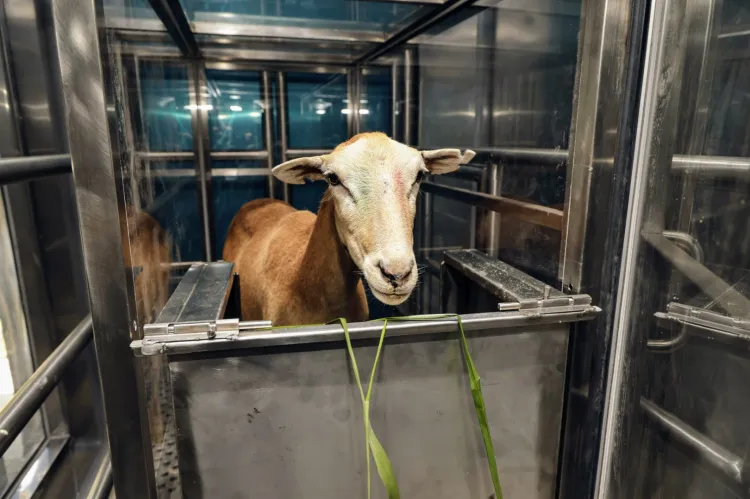
These chambers serve a noble and highly scientific purpose: measuring burps and farts. Specifically, the ones produced by animals.
In a few months, scientists at an agriculture research organization called Alliance of Biodiversity International and CIAT — which built eight of these chambers — will place live sheep inside each one. Then they’ll wait for the animals to pass gas. Over the course of 24 hours, that gas will run through high-tech machines that measure its contents.

A sheep inside one of the hermetically sealed chambers that measures methane gas. Juan Pablo/Alliance of Biodiversity International and CIAT
What exactly are they looking for? Among other things: methane.
These chambers are part of a multiyear project to lower the amount of methane produced by farm animals. This is important. Methane is a potent greenhouse gas, responsible for roughly 20 to 30 percent of global warming since the Industrial Revolution. The bulk of global methane emissions stem from human activities, and the largest single source among them is agriculture — namely, the burps of ruminant animals such as cattle, goats, and sheep, as well as their manure.
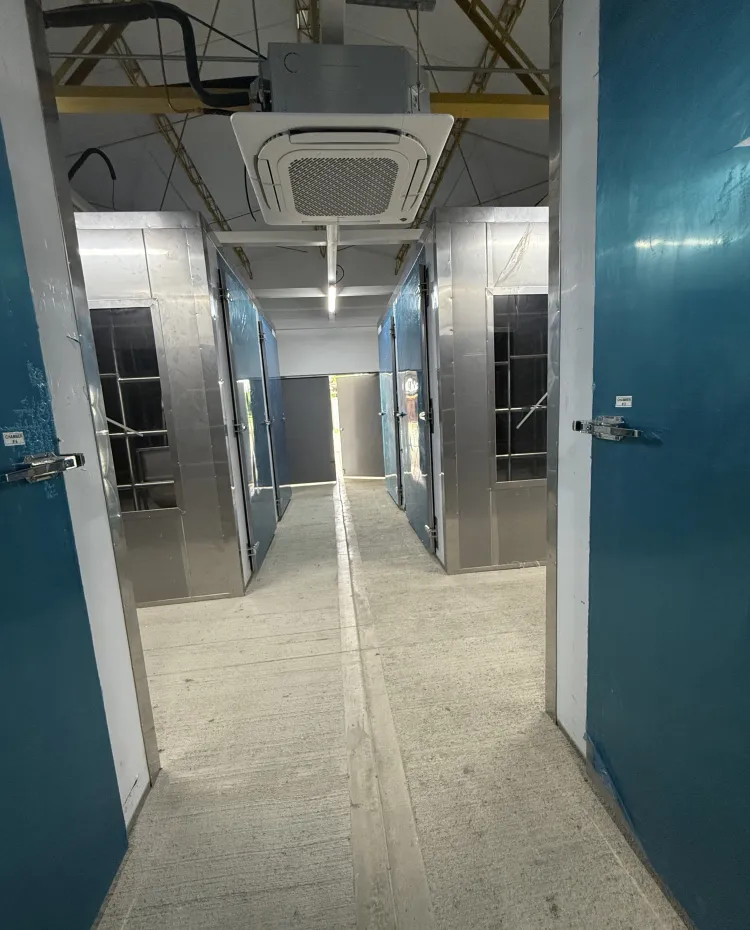
A view of several chambers from the outside at Alliance of Biodiversity International and CIAT, an agriculture research center outside of Palmira, Colombia. Benji Jones/Vox
The amount of methane an animal produces is tied to what it eats. And that’s the key premise of the new CIAT project. Starting in February, researchers led by Jacobo Arango will feed sheep — which have very similar digestive systems to cattle — different kinds of plants, such as legumes and grasses. Then they’ll put the animals inside the chambers with more food to measure how much methane the animals produce. The idea is to identify specific types of forage that result in fewer greenhouse gases, with an ultimate goal of lowering global methane emissions and, thus, fighting climate change.
It was stifling outside when I visited the bank one afternoon in October, yet I had to wear a winter jacket to go inside. The seeds are kept in a room at -9.4 degrees Fahrenheit and stored in vacuum-sealed packets made of laminated aluminum foil. Inside the room were rows and rows of seed packets sitting on mobile shelves like those in a college library.

Shelves full of seed packets at Future Seeds, a gene bank at Alliance of Biodiversity International and CIAT. Benji Jones/Vox
For the methane project, scientists are using seeds from the bank and growing them into forage. From there, the experiment has two main phases. The first is testing the plant material in a lab, with no animals. Researchers essentially replicate the stomach of a ruminant, like a cow, in a test tube, put some forage inside, and see how much gas it produces. Only the plant varieties that produce little methane — and meet other requirements related to things like nutrition and drought tolerance — will then be fed to sheep. They will be put into the chambers, at which point their burps and farts and feces will be measured.
The researchers may also eventually put cattle in the chambers as a final test, said Arango, a senior scientist at the Alliance of Biodiversity International and CIAT.

Saplings of a legume called Asian pigeonwings. Anny Yedra/Alliance of Biodiversity International and CIAT
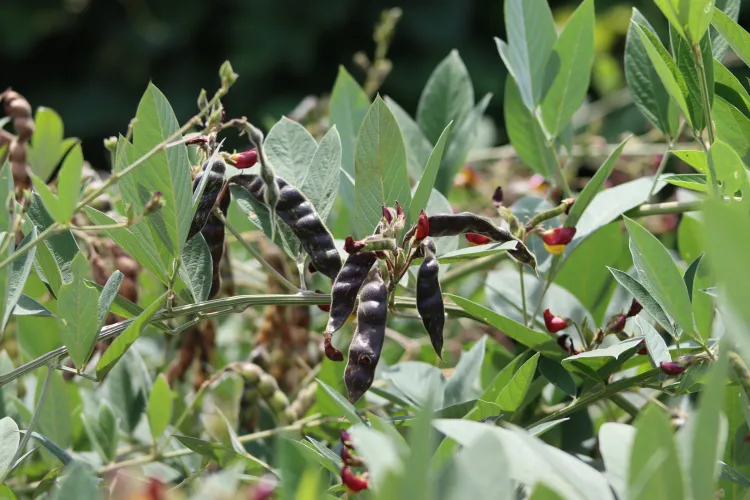
A forage legume. Anny Yedra/Alliance of Biodiversity International and CIAT
Lab testing is now underway, and several forage varieties already show promise, Arango said. Most of those are legumes, such as Leucaena diversifolia, a plant species with feather-like leaves and flowers that look like spiky balls.
There are many reasons why certain plants might produce less methane. Some legumes, for example, are high in compounds called condensed tannins. Tannins, which are also found in things like wine, giving reds their astringent taste, can suppress microbes that produce methane in the guts of a cow.
That makes identifying better forage a promising tool in at least moderating the climate impact of all that carnivory, said Richard Waite, director of agriculture initiatives at the World Resources Institute, a research group. A review published in 2022 found that various changes to the diets of farm animals, such as giving them tannin-rich foods, can cut the methane they produce every day by an average of more than 20 percent, without reducing how much milk or meat they yield.
High-tech approaches to reduce methane from farm animals, from methane-lowering feed supplements to vaccines, are already under development. It’s not yet clear, however, whether enough farmers, many of whom are in developing nations, will want to adopt these approaches or be able to pay for them.
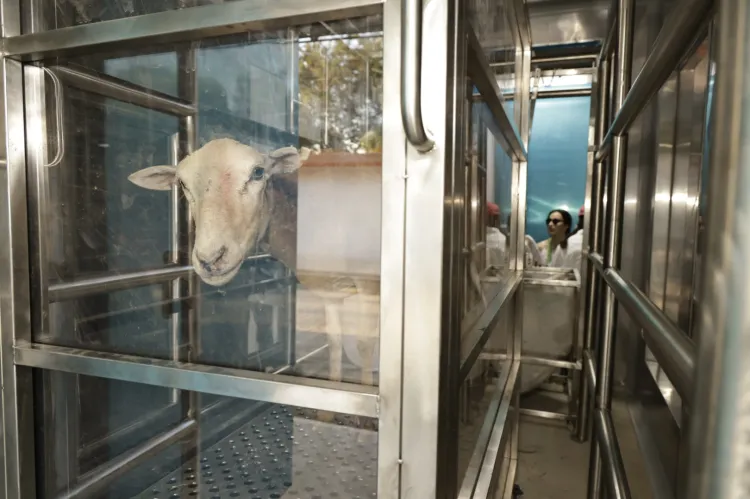
A sheep peers from inside the chamber. Juan Pablo Marín/Alliance of Biodiversity International and CIAT
The advantage of the new CIAT project is that it’s simple and useful for farmers in poorer parts of the world, where beef consumption is growing quickly. The idea, Arango said, is to identify a range of forages that will all help lower methane emissions if farmers plant them in their cattle pastures. It’s also a way to add plant diversity to the pasture landscape, which comes with other benefits, such as more habitat for wildlife.
Ultimately, while measuring how much gas a sheep passes may sound like a joke, this is serious science, said Waite, of the World Resources Institute. “It’s funny because it’s burps and farts — mostly burps — but it’s really important,” Waite said. “It’s a big chunk of emissions. So anything we can do to reduce those emissions while feeding more people is going to be really helpful.”
Kenny Torrella contributed reporting.
Source (Archive)
Dec 2, 2024, 12:00 PM UTC
Alejandro Montoya, a veterinarian who works on the methane project. Juan Pablo Marín
Benji Jones is an environmental correspondent at Vox, covering biodiversity loss and climate change. Before joining Vox, he was a senior energy reporter at Business Insider. Benji previously worked as a wildlife researcher.
VALLE DEL CAUCA, Colombia — The chambers look a bit like walk-in refrigerators. Housed inside a research building in southwestern Colombia, they are essentially big metal boxes with large, latched doors. Inside them are concrete floors, plexiglass windows, and air conditioners mounted on the wall.
These chambers serve a noble and highly scientific purpose: measuring burps and farts. Specifically, the ones produced by animals.
In a few months, scientists at an agriculture research organization called Alliance of Biodiversity International and CIAT — which built eight of these chambers — will place live sheep inside each one. Then they’ll wait for the animals to pass gas. Over the course of 24 hours, that gas will run through high-tech machines that measure its contents.
A sheep inside one of the hermetically sealed chambers that measures methane gas. Juan Pablo/Alliance of Biodiversity International and CIAT
What exactly are they looking for? Among other things: methane.
These chambers are part of a multiyear project to lower the amount of methane produced by farm animals. This is important. Methane is a potent greenhouse gas, responsible for roughly 20 to 30 percent of global warming since the Industrial Revolution. The bulk of global methane emissions stem from human activities, and the largest single source among them is agriculture — namely, the burps of ruminant animals such as cattle, goats, and sheep, as well as their manure.
A view of several chambers from the outside at Alliance of Biodiversity International and CIAT, an agriculture research center outside of Palmira, Colombia. Benji Jones/Vox
The amount of methane an animal produces is tied to what it eats. And that’s the key premise of the new CIAT project. Starting in February, researchers led by Jacobo Arango will feed sheep — which have very similar digestive systems to cattle — different kinds of plants, such as legumes and grasses. Then they’ll put the animals inside the chambers with more food to measure how much methane the animals produce. The idea is to identify specific types of forage that result in fewer greenhouse gases, with an ultimate goal of lowering global methane emissions and, thus, fighting climate change.
Testing 6,000 plants
The researchers are aiming to test around 6,000 varieties of forage, many of which are stored as seeds in a gene bank not far from the chambers, at a CIAT research center near Palmira, Colombia. The bank, known as Future Seeds, houses roughly 67,000 samples, including the world’s largest collection of seeds for tropical forage plants.It was stifling outside when I visited the bank one afternoon in October, yet I had to wear a winter jacket to go inside. The seeds are kept in a room at -9.4 degrees Fahrenheit and stored in vacuum-sealed packets made of laminated aluminum foil. Inside the room were rows and rows of seed packets sitting on mobile shelves like those in a college library.
Shelves full of seed packets at Future Seeds, a gene bank at Alliance of Biodiversity International and CIAT. Benji Jones/Vox
For the methane project, scientists are using seeds from the bank and growing them into forage. From there, the experiment has two main phases. The first is testing the plant material in a lab, with no animals. Researchers essentially replicate the stomach of a ruminant, like a cow, in a test tube, put some forage inside, and see how much gas it produces. Only the plant varieties that produce little methane — and meet other requirements related to things like nutrition and drought tolerance — will then be fed to sheep. They will be put into the chambers, at which point their burps and farts and feces will be measured.
The researchers may also eventually put cattle in the chambers as a final test, said Arango, a senior scientist at the Alliance of Biodiversity International and CIAT.
Saplings of a legume called Asian pigeonwings. Anny Yedra/Alliance of Biodiversity International and CIAT
A forage legume. Anny Yedra/Alliance of Biodiversity International and CIAT
Lab testing is now underway, and several forage varieties already show promise, Arango said. Most of those are legumes, such as Leucaena diversifolia, a plant species with feather-like leaves and flowers that look like spiky balls.
There are many reasons why certain plants might produce less methane. Some legumes, for example, are high in compounds called condensed tannins. Tannins, which are also found in things like wine, giving reds their astringent taste, can suppress microbes that produce methane in the guts of a cow.
Burp detectors against climate change
Without addressing emissions from the food sector, it’s impossible to limit global warming to 1.5 degrees Celsius, beyond which climate change will be catastrophic. Lowering meat (and especially beef) consumption is probably the most important part of that effort, but it’s an uphill battle as meat consumption is projected to rise globally over the next few years.That makes identifying better forage a promising tool in at least moderating the climate impact of all that carnivory, said Richard Waite, director of agriculture initiatives at the World Resources Institute, a research group. A review published in 2022 found that various changes to the diets of farm animals, such as giving them tannin-rich foods, can cut the methane they produce every day by an average of more than 20 percent, without reducing how much milk or meat they yield.
High-tech approaches to reduce methane from farm animals, from methane-lowering feed supplements to vaccines, are already under development. It’s not yet clear, however, whether enough farmers, many of whom are in developing nations, will want to adopt these approaches or be able to pay for them.
A sheep peers from inside the chamber. Juan Pablo Marín/Alliance of Biodiversity International and CIAT
The advantage of the new CIAT project is that it’s simple and useful for farmers in poorer parts of the world, where beef consumption is growing quickly. The idea, Arango said, is to identify a range of forages that will all help lower methane emissions if farmers plant them in their cattle pastures. It’s also a way to add plant diversity to the pasture landscape, which comes with other benefits, such as more habitat for wildlife.
Ultimately, while measuring how much gas a sheep passes may sound like a joke, this is serious science, said Waite, of the World Resources Institute. “It’s funny because it’s burps and farts — mostly burps — but it’s really important,” Waite said. “It’s a big chunk of emissions. So anything we can do to reduce those emissions while feeding more people is going to be really helpful.”
Kenny Torrella contributed reporting.
Source (Archive)


