Tom Cotterill
Defence Editor
Published 20 April 2026 12:37pm BST
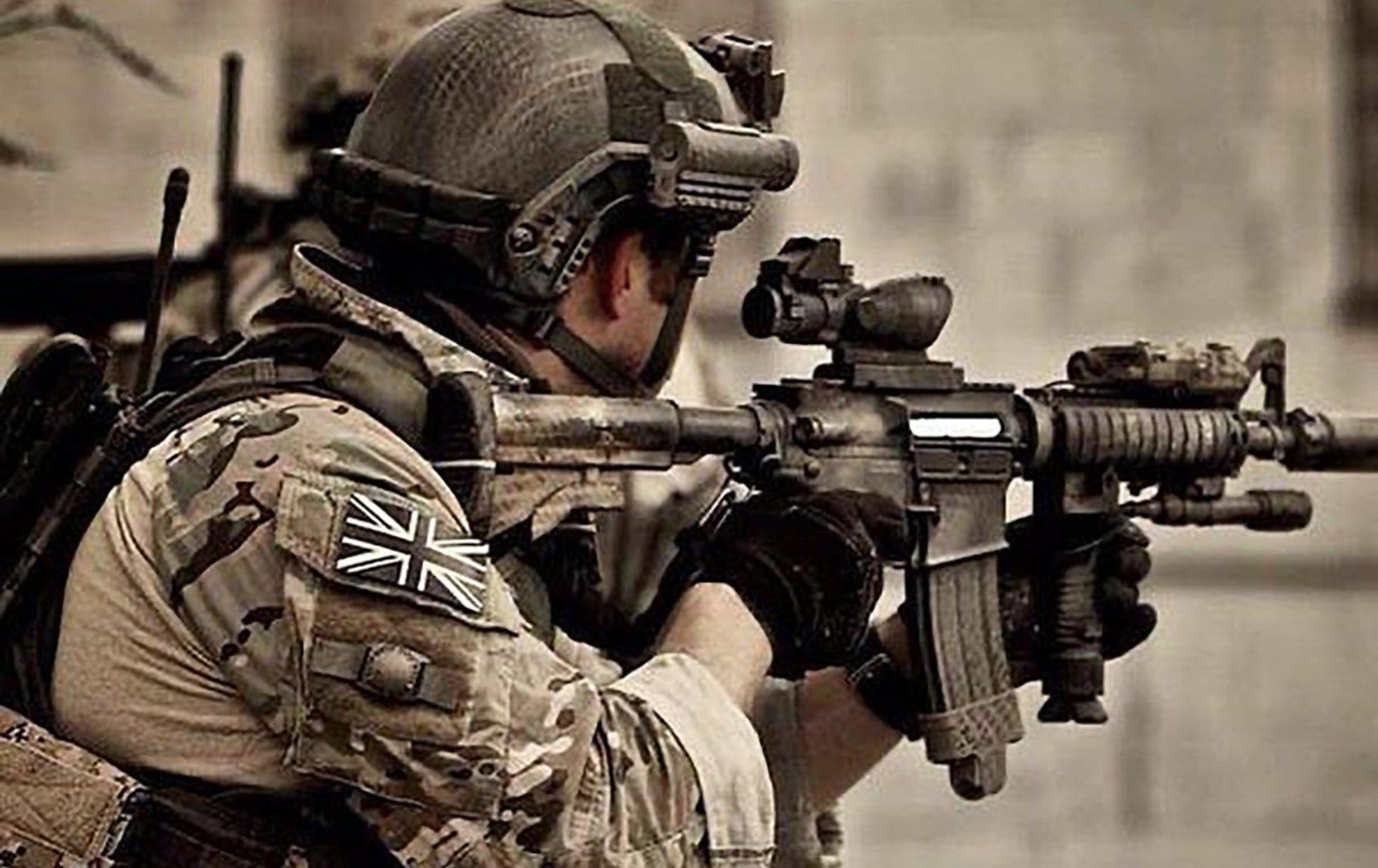
The resignation of SAS soldiers poses a threat to national security, sources say
Special Air Service (SAS) soldiers are resigning in significant numbers over fears they will be subjected to “witch hunts” by human rights lawyers.
Several sources have claimed that soldiers from 22 SAS, the Army’s most elite fighting force, have applied for premature voluntary release.
The Telegraph is withholding the exact figure for security reasons, but at least two squadrons, D and G, are believed to have been affected. Several SAS sources described the losses as significant and a “threat to national security”.
Insiders say the resignations have been driven by outrage over recent war crime investigations into Afghanistan and Syria, which have been described as “witch hunts”.
The treatment of elderly Northern Ireland veterans who served in the SAS has also contributed, insiders say. They are viewed as having been hounded through the courts on vexatious claims, some of which have been described as “ludicrous” by a judge.
Among those understood to have resigned are several senior warrant officers, who are the backbone of the special forces and among the most experienced troops in the regiment. A number are understood to have applied for release “on principle” just before Christmas.
“Morale is s--- at the moment,” one insider with knowledge of the recent losses said, while another said there was “considerable disquiet” in the regiment as a result.
It took three weeks for HMS Dragon, a Type 45 destroyer, to arrive in the eastern Mediterranean after RAF Akrotiri, a British air base in Cyprus, was hit by a drone.
Sir Keir has failed to say how the Government will meet its pledge to spend 3 per cent of GDP on defence, and his defence investment plan for military spending over the next decade – promised last autumn – has still not been published amid wrangling between the Ministry of Defence (MoD) and the Treasury.
The SAS resignations are a significant blow to the famed special forces unit, which is the tip of the spear in military operation and is deployed globally.
Last month it was revealed that 242 special forces troops, including 120 serving troops, were being hounded by lawyers as part of £1m-a-month human rights inquiries.
The figures came in a memo shared with the Special Air Service and the Special Reconnaissance Regiment associations last month.
Secret operations across Afghanistan, Northern Ireland and Syria are being investigated by lawyers, with the troops involved facing legal sanctions if they fail to comply.
The memo, revealed by the Daily Mail, claimed troops had started to sign off in protest at the legal onslaught.
He said laws such as the European Convention on Human Rights (ECHR) were being applied to war zones and that the right to life for “armed terrorists and murderers” now outweighed that of the special forces troops sent to stop them from committing atrocities.
“If a soldier discharges their weapon, they are almost certainly going to get a knock at their door one day,” he told The Telegraph. “It feels like a betrayal and a break in the trust.
“We now have to consider the lives of the terrorists because of the ECHR. These are the guys who are shooting at us. We have all killed mass murderers and these lawyers say you should have done this and should have done that. It’s a joke.
“There is a dangerous dichotomy that has crept into the command and come all the way down the chain of command and now the lawyers are all over it.”

Lt Col Richard Williams, a former commanding officer, said the SAS was under pressure from Labour’s ‘toxic double whammy of lawfare persecution and budget cuts’
Lt Col Richard Williams, a former commanding officer of 22 SAS, told The Telegraph: “The SAS, like all involved in UK defence today, is being hit with the Labour Party’s unique, toxic, double whammy of lawfare persecution and budget cuts.
“It’s hardly surprising that professional and loyal soldiers, SAS or otherwise, choose to leave.”
Labour’s Troubles bill, which seeks to remove immunity protections introduced by the Conservatives in their Northern Ireland Legacy Act, has provoked anger in military circles.
Some of the UK’s most senior retired military chiefs warned before Christmas that legal reform was provoking an “exodus” from the special forces.
In an unprecedented intervention, nine former military chiefs claimed that soldiers’ trust in the legal system had collapsed to such a point that it “risks everything”.
The letter – which included Gen Sir Patrick Sanders, a former chief of the general staff, among its signatories – warned: “Today every British soldier deployed must consider not only the enemy in front of them but the lawyer behind them.
“Make no mistake, our closest allies are watching uneasily, and our enemies will be rubbing their hands.”
Writing for The Telegraph in December, seven former SAS commanders warned Britain’s most elite troops risked being used as scapegoats by politicians who were “doing the enemy’s work”.
The writers included two former commanding officers of 22 SAS, Aldwin Wight and Lt Col Williams, as well as three former squadron commanders, a former regimental sergeant major and a former warrant officer first class.
They said the threat of legal action could result in deaths as “commanders turn risk-averse” and “soldiers hesitate where boldness saves lives”.
“Britain’s special forces are small, discreet, uniquely lethal... Their humiliation rewards Moscow, Tehran and Beijing,” they wrote. “Our handling of allegations is national security, not a sideshow.
“Defend our defenders fairly, firmly, eyes open to war’s moral mess – or keep doing the enemy’s work, one leak, one inquiry, one broken soldier at a time. A democracy that won’t back its warriors won’t long endure.”
The Army has shrunk from more than 100,000 around 2010 to just over 70,000 fully trained soldiers now, its smallest since before the Napoleonic War.
The Navy, once the jewel of Britain’s military, is now at its smallest size in living memory, with only seven frigates and six destroyers in the fleet and two aircraft carriers. Of the six Astute-class nuclear attack submarines, only one is at sea.
One of Britain’s Vanguard boats, armed with nuclear missiles, spent more than six months underwater, a far longer deployment than previously carried out by the nuclear deterrence force.
An MoD spokesman said: “While it is a longstanding policy of successive governments not to comment on UK Special Forces, we are immensely proud of all our Armed Forces and their extraordinary contribution to keeping the UK safe at home and abroad.
“We are committed to ensuring that the legal framework governing our Armed Forces reflects the practical realities of military operations, and that those who served with honour are properly protected.
“Where the UK undertakes military action, it complies fully with UK and international law. We are clear that upholding those standards does not prevent our Armed Forces from conducting effective operations.”
Source (Archive)
Defence Editor
Published 20 April 2026 12:37pm BST
The resignation of SAS soldiers poses a threat to national security, sources say
Special Air Service (SAS) soldiers are resigning in significant numbers over fears they will be subjected to “witch hunts” by human rights lawyers.
Several sources have claimed that soldiers from 22 SAS, the Army’s most elite fighting force, have applied for premature voluntary release.
The Telegraph is withholding the exact figure for security reasons, but at least two squadrons, D and G, are believed to have been affected. Several SAS sources described the losses as significant and a “threat to national security”.
Insiders say the resignations have been driven by outrage over recent war crime investigations into Afghanistan and Syria, which have been described as “witch hunts”.
The treatment of elderly Northern Ireland veterans who served in the SAS has also contributed, insiders say. They are viewed as having been hounded through the courts on vexatious claims, some of which have been described as “ludicrous” by a judge.
Among those understood to have resigned are several senior warrant officers, who are the backbone of the special forces and among the most experienced troops in the regiment. A number are understood to have applied for release “on principle” just before Christmas.
“Morale is s--- at the moment,” one insider with knowledge of the recent losses said, while another said there was “considerable disquiet” in the regiment as a result.
Scrutiny on Starmer
Sir Keir Starmer is under immense pressure to boost the military after Donald Trump’s attack on Iran showed how ill-prepared Britain was for war.It took three weeks for HMS Dragon, a Type 45 destroyer, to arrive in the eastern Mediterranean after RAF Akrotiri, a British air base in Cyprus, was hit by a drone.
Sir Keir has failed to say how the Government will meet its pledge to spend 3 per cent of GDP on defence, and his defence investment plan for military spending over the next decade – promised last autumn – has still not been published amid wrangling between the Ministry of Defence (MoD) and the Treasury.
The SAS resignations are a significant blow to the famed special forces unit, which is the tip of the spear in military operation and is deployed globally.
Last month it was revealed that 242 special forces troops, including 120 serving troops, were being hounded by lawyers as part of £1m-a-month human rights inquiries.
The figures came in a memo shared with the Special Air Service and the Special Reconnaissance Regiment associations last month.
Secret operations across Afghanistan, Northern Ireland and Syria are being investigated by lawyers, with the troops involved facing legal sanctions if they fail to comply.
The memo, revealed by the Daily Mail, claimed troops had started to sign off in protest at the legal onslaught.
‘It feels like a betrayal’
George Simm, a former regimental sergeant major of 22 SAS, said troops were afraid they would “get a knock on the door” from lawyers and felt they had been betrayed.He said laws such as the European Convention on Human Rights (ECHR) were being applied to war zones and that the right to life for “armed terrorists and murderers” now outweighed that of the special forces troops sent to stop them from committing atrocities.
“If a soldier discharges their weapon, they are almost certainly going to get a knock at their door one day,” he told The Telegraph. “It feels like a betrayal and a break in the trust.
“We now have to consider the lives of the terrorists because of the ECHR. These are the guys who are shooting at us. We have all killed mass murderers and these lawyers say you should have done this and should have done that. It’s a joke.
“There is a dangerous dichotomy that has crept into the command and come all the way down the chain of command and now the lawyers are all over it.”
Lt Col Richard Williams, a former commanding officer, said the SAS was under pressure from Labour’s ‘toxic double whammy of lawfare persecution and budget cuts’
Lt Col Richard Williams, a former commanding officer of 22 SAS, told The Telegraph: “The SAS, like all involved in UK defence today, is being hit with the Labour Party’s unique, toxic, double whammy of lawfare persecution and budget cuts.
“It’s hardly surprising that professional and loyal soldiers, SAS or otherwise, choose to leave.”
Labour’s Troubles bill, which seeks to remove immunity protections introduced by the Conservatives in their Northern Ireland Legacy Act, has provoked anger in military circles.
Some of the UK’s most senior retired military chiefs warned before Christmas that legal reform was provoking an “exodus” from the special forces.
In an unprecedented intervention, nine former military chiefs claimed that soldiers’ trust in the legal system had collapsed to such a point that it “risks everything”.
Enemies ‘rubbing their hands’
In an open letter to Sir Keir, they said allowing historic cases against veterans to be reopened was playing into the hands of Britain’s enemies.The letter – which included Gen Sir Patrick Sanders, a former chief of the general staff, among its signatories – warned: “Today every British soldier deployed must consider not only the enemy in front of them but the lawyer behind them.
“Make no mistake, our closest allies are watching uneasily, and our enemies will be rubbing their hands.”
Writing for The Telegraph in December, seven former SAS commanders warned Britain’s most elite troops risked being used as scapegoats by politicians who were “doing the enemy’s work”.
The writers included two former commanding officers of 22 SAS, Aldwin Wight and Lt Col Williams, as well as three former squadron commanders, a former regimental sergeant major and a former warrant officer first class.
They said the threat of legal action could result in deaths as “commanders turn risk-averse” and “soldiers hesitate where boldness saves lives”.
“Britain’s special forces are small, discreet, uniquely lethal... Their humiliation rewards Moscow, Tehran and Beijing,” they wrote. “Our handling of allegations is national security, not a sideshow.
“Defend our defenders fairly, firmly, eyes open to war’s moral mess – or keep doing the enemy’s work, one leak, one inquiry, one broken soldier at a time. A democracy that won’t back its warriors won’t long endure.”
The Army has shrunk from more than 100,000 around 2010 to just over 70,000 fully trained soldiers now, its smallest since before the Napoleonic War.
The Navy, once the jewel of Britain’s military, is now at its smallest size in living memory, with only seven frigates and six destroyers in the fleet and two aircraft carriers. Of the six Astute-class nuclear attack submarines, only one is at sea.
One of Britain’s Vanguard boats, armed with nuclear missiles, spent more than six months underwater, a far longer deployment than previously carried out by the nuclear deterrence force.
An MoD spokesman said: “While it is a longstanding policy of successive governments not to comment on UK Special Forces, we are immensely proud of all our Armed Forces and their extraordinary contribution to keeping the UK safe at home and abroad.
“We are committed to ensuring that the legal framework governing our Armed Forces reflects the practical realities of military operations, and that those who served with honour are properly protected.
“Where the UK undertakes military action, it complies fully with UK and international law. We are clear that upholding those standards does not prevent our Armed Forces from conducting effective operations.”
Source (Archive)


