Prepare for Guacamole to Be a Luxury Item
The New York Times (archive.ph)
By Rebecca Patterson
2024-12-11 10:03:08GMT
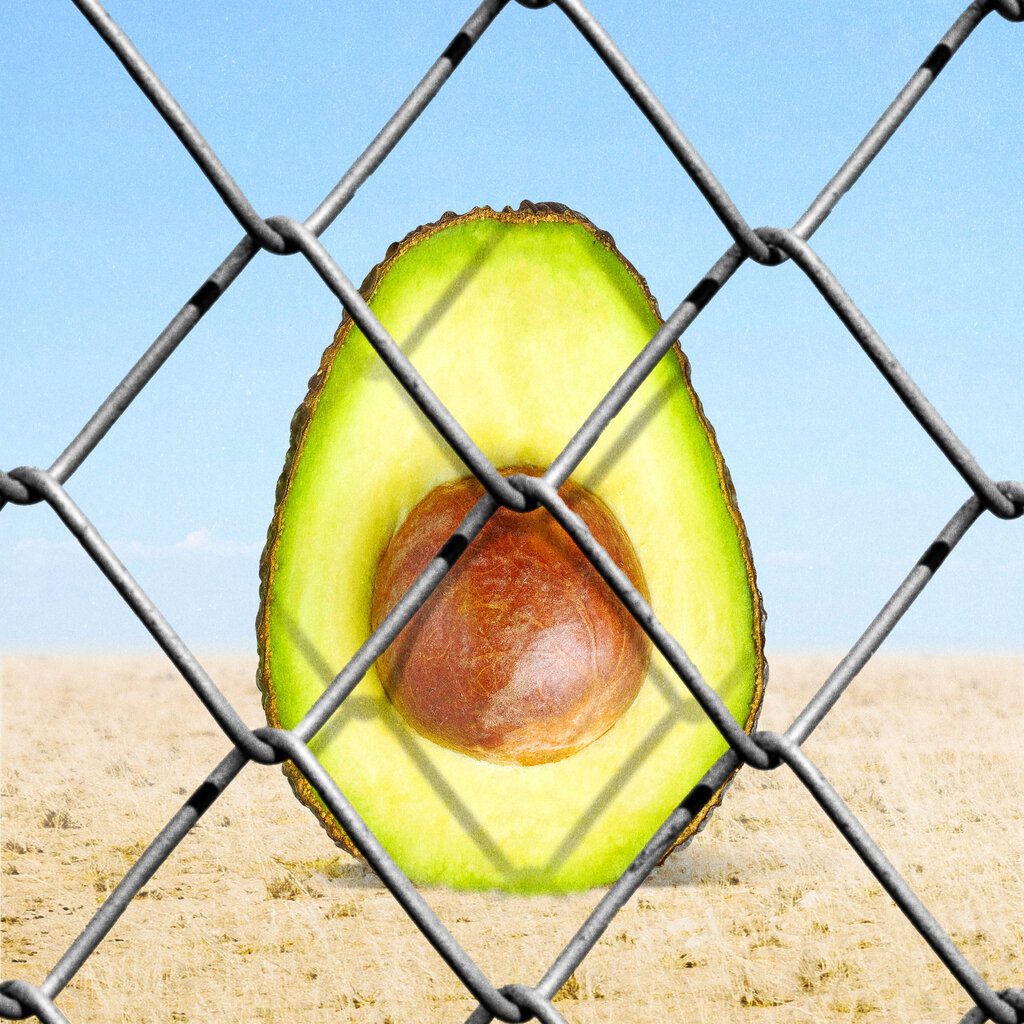
Credit...Photo illustration by Sam Whitney/The New York Times
Are you ready for guacamole to become a luxury item?
Donald Trump’s first term is a reminder of the financial damage a trade war can create. After the United States in 2018 imposed tariffs on a range of countries, Canada, China, the European Union, India, Mexico and Turkey struck back against American exports. The Agriculture Department says the retaliation raised the price of farm goods from the United States; that in turn contributed to a decline in export revenues of $27 billion in 2018 and 2019.
Now we’re settling in to watch the same movie again. Hours after Mr. Trump’s late November Truth Social post threatening a new round of tariffs, Mexico’s president, Claudia Sheinbaum, responded, “For every tariff, there will be a response in kind.” Just as a reminder to the incoming administration, about two-thirds of vegetables and almost half of fruit and nut imports to the United States come from Mexico. And how many avocados? Ninety percent.
It’s not just tariffs. American farmers and ranchers, many of whom have supported Mr. Trump, would struggle to find enough workers if he delivers on his vow to deport millions of undocumented immigrants. And financial aid from Washington to offset the damage might not be forthcoming, given the giant size of the federal deficit.
Farms and related businesses would be most directly hit, but the impact would be felt at kitchen tables around the country. The quality and supply of grocery-store staples would suffer and prices would probably rise, something consumers have little appetite for after the pandemic-era inflation spike.
The American food ecosystem, including farms, ranches and processors, has heavily relied on immigrant labor for decades. More than half of farmers reported labor shortages in 2022, up from 14 percent in 2014, according to surveys conducted by researchers at the University of California, Davis, and Michigan State.
In 2022, about seven in 10 farm workers were foreign-born, according to the National Agricultural Workers Survey. Many of those workers obtain seasonal visas. The rest of the immigrant labor pool, as much as 44 percent of foreign farm workers, are undocumented and have no work authorization.
American consumers acutely felt the pain of insufficient labor, coupled with plant closures and transportation challenges, during the pandemic. Beef and veal prices spiked more than 20 percent in just three months from March 2020, according to data from the Bureau of Labor Statistics. More broadly, the government’s cost measure of food eaten at home showed a notable increase: Prices rose 4.3 percent over those early pandemic months, up from a roughly 1 percent inflation rate over the prior 12 months.
Even with the pandemic in the rearview mirror, labor shortages continue. More than half of states have counties heavily dependent on farming, according to the Agriculture Department. The lack of workers “has been a problem for decades, and it continues to worsen,” the House Agriculture Committee said in a March report.
Mr. Trump’s deportation plan is almost certain to increase the strain on farmers. Greater labor shortages would make it harder to produce food, cut farm revenue and pressure sellers to increase prices.
There’s a solution here, and that’s imports. Despite its fruited plains and amber waves of grain, the United States, astonishingly, is no longer a net agricultural exporter. Since 2019, it has imported more food than it exported in four of six years, and 2024 is expected to see a record food deficit. Labor shortages and their subsequent costs have contributed to the shift in the balance of trade, along with exchange rate trends (the strong dollar makes American goods less competitive overseas) and tariffs.
The pandemic, however, showed us the risks of relying on overseas supply chains for critical goods. A broader and more aggressive trade war would add to the burden on American farmers. The incoming president has already suggested he will levy 25 percent tariffs on all goods from Mexico and Canada and put an additional 10 percent tariff on Chinese imports. All three countries play critical roles in global food-supply chains, with Mexico and Canada the United States’ two largest suppliers of farm products, and China its largest buyer of agricultural goods, as of 2023.
Beyond the potential short-term tensions, Mr. Trump’s policies threaten to reinforce changes in international trade that occurred during and after his first term. China in particular seems keen to reduce its dependence on the United States, and already is shifting more of its purchases to countries such as Brazil.
American farmers may be hoping that any new trade-war pain will be softened through government largess. In recent years, government programs provided huge cash payments to farmers; these were expanded in 2020 during the pandemic. According to analysis of Agriculture Department data, farm-related companies received over $80 billion in federal payments between 2018 and 2020.
This time around, such handouts will be harder to come by. The budget deficit has widened, from 3.9 percent of gross domestic product in 2018 to 6.4 percent today. Government debt has similarly risen, from roughly 77 percent of gross domestic product in 2018 to 99 percent in 2024. Members of Congress have said they want to find spending cuts to offset some of Mr. Trump’s proposed tax cut extension. Politicians from farming districts may want to help their constituents if a trade war accelerates, but may not have funds at their disposal.
Farmers, many already under financial pressure, are surely hoping that some of the Republican Party’s campaign promises fall by the wayside or are carried out in limited ways. They also saw a glimmer of hope in comments made by the European Central Bank’s president, Christine Lagarde. In a recent interview, she urged European leaders “not to retaliate, but to negotiate” with Mr. Trump, and offer to buy more U.S. goods to avoid a trade war. Unfortunately for American farmers, the European Commission, not its central bank, ultimately makes that decision.
Mr. Trump sees tariffs and deportation as means to strengthen the country, and voters seem to agree. Let’s hope his administration also understands that those same policies risk undermining one of America’s greatest inherent economic strengths — the ability to use its terrain and climate to provide great quantities of affordable food both at home and abroad.
The New York Times (archive.ph)
By Rebecca Patterson
2024-12-11 10:03:08GMT
Credit...Photo illustration by Sam Whitney/The New York Times
Are you ready for guacamole to become a luxury item?
Donald Trump’s first term is a reminder of the financial damage a trade war can create. After the United States in 2018 imposed tariffs on a range of countries, Canada, China, the European Union, India, Mexico and Turkey struck back against American exports. The Agriculture Department says the retaliation raised the price of farm goods from the United States; that in turn contributed to a decline in export revenues of $27 billion in 2018 and 2019.
Now we’re settling in to watch the same movie again. Hours after Mr. Trump’s late November Truth Social post threatening a new round of tariffs, Mexico’s president, Claudia Sheinbaum, responded, “For every tariff, there will be a response in kind.” Just as a reminder to the incoming administration, about two-thirds of vegetables and almost half of fruit and nut imports to the United States come from Mexico. And how many avocados? Ninety percent.
It’s not just tariffs. American farmers and ranchers, many of whom have supported Mr. Trump, would struggle to find enough workers if he delivers on his vow to deport millions of undocumented immigrants. And financial aid from Washington to offset the damage might not be forthcoming, given the giant size of the federal deficit.
Farms and related businesses would be most directly hit, but the impact would be felt at kitchen tables around the country. The quality and supply of grocery-store staples would suffer and prices would probably rise, something consumers have little appetite for after the pandemic-era inflation spike.
The American food ecosystem, including farms, ranches and processors, has heavily relied on immigrant labor for decades. More than half of farmers reported labor shortages in 2022, up from 14 percent in 2014, according to surveys conducted by researchers at the University of California, Davis, and Michigan State.
In 2022, about seven in 10 farm workers were foreign-born, according to the National Agricultural Workers Survey. Many of those workers obtain seasonal visas. The rest of the immigrant labor pool, as much as 44 percent of foreign farm workers, are undocumented and have no work authorization.
American consumers acutely felt the pain of insufficient labor, coupled with plant closures and transportation challenges, during the pandemic. Beef and veal prices spiked more than 20 percent in just three months from March 2020, according to data from the Bureau of Labor Statistics. More broadly, the government’s cost measure of food eaten at home showed a notable increase: Prices rose 4.3 percent over those early pandemic months, up from a roughly 1 percent inflation rate over the prior 12 months.
Even with the pandemic in the rearview mirror, labor shortages continue. More than half of states have counties heavily dependent on farming, according to the Agriculture Department. The lack of workers “has been a problem for decades, and it continues to worsen,” the House Agriculture Committee said in a March report.
Mr. Trump’s deportation plan is almost certain to increase the strain on farmers. Greater labor shortages would make it harder to produce food, cut farm revenue and pressure sellers to increase prices.
There’s a solution here, and that’s imports. Despite its fruited plains and amber waves of grain, the United States, astonishingly, is no longer a net agricultural exporter. Since 2019, it has imported more food than it exported in four of six years, and 2024 is expected to see a record food deficit. Labor shortages and their subsequent costs have contributed to the shift in the balance of trade, along with exchange rate trends (the strong dollar makes American goods less competitive overseas) and tariffs.
The pandemic, however, showed us the risks of relying on overseas supply chains for critical goods. A broader and more aggressive trade war would add to the burden on American farmers. The incoming president has already suggested he will levy 25 percent tariffs on all goods from Mexico and Canada and put an additional 10 percent tariff on Chinese imports. All three countries play critical roles in global food-supply chains, with Mexico and Canada the United States’ two largest suppliers of farm products, and China its largest buyer of agricultural goods, as of 2023.
Beyond the potential short-term tensions, Mr. Trump’s policies threaten to reinforce changes in international trade that occurred during and after his first term. China in particular seems keen to reduce its dependence on the United States, and already is shifting more of its purchases to countries such as Brazil.
American farmers may be hoping that any new trade-war pain will be softened through government largess. In recent years, government programs provided huge cash payments to farmers; these were expanded in 2020 during the pandemic. According to analysis of Agriculture Department data, farm-related companies received over $80 billion in federal payments between 2018 and 2020.
This time around, such handouts will be harder to come by. The budget deficit has widened, from 3.9 percent of gross domestic product in 2018 to 6.4 percent today. Government debt has similarly risen, from roughly 77 percent of gross domestic product in 2018 to 99 percent in 2024. Members of Congress have said they want to find spending cuts to offset some of Mr. Trump’s proposed tax cut extension. Politicians from farming districts may want to help their constituents if a trade war accelerates, but may not have funds at their disposal.
Farmers, many already under financial pressure, are surely hoping that some of the Republican Party’s campaign promises fall by the wayside or are carried out in limited ways. They also saw a glimmer of hope in comments made by the European Central Bank’s president, Christine Lagarde. In a recent interview, she urged European leaders “not to retaliate, but to negotiate” with Mr. Trump, and offer to buy more U.S. goods to avoid a trade war. Unfortunately for American farmers, the European Commission, not its central bank, ultimately makes that decision.
Mr. Trump sees tariffs and deportation as means to strengthen the country, and voters seem to agree. Let’s hope his administration also understands that those same policies risk undermining one of America’s greatest inherent economic strengths — the ability to use its terrain and climate to provide great quantities of affordable food both at home and abroad.


