UN "Operation lock down Haiti" calls for President to resign - Protestors loot stores, embassies; Haitian ambassador recalled from DC; Canada delays deportations

So, for the past week Haiti has been descending into lawlessness and chaos and nobody noticed. Note there were protests and what Wikipedia calls a "massacre" in 2018, but I believe these are separate if related, in that people are asking where did all the Chavez-shekels go.

Haiti to Unveil Economic Measures to Quell Violent Protests
Haitians say they will keep protesting until President Jovenel Moise resigns despite his announcement of upcoming economic measures to quell more than a week of violent demonstrations across the country.

By EVENS SANON, Associated Press

PORT-AU-PRINCE, Haiti (AP) — Haitians on Friday vowed to keep protesting until President Jovenel Moise resigns, despite his announcement of upcoming economic measures designed to quell more than a week of violent demonstrations across the country.

Moise said during a televised address late Thursday that he would not surrender the country to armed gangs and drug dealers, and he accused people of freeing prisoners to kill him. It was the first time Moise had spoken since the demonstrations began, and he made another call for dialogue with the opposition.

"I heard the voice of the people. I know the problems that torment them. That's why the government has taken a lot of measures," he said. "I asked the Prime Minister to come and explain them and implement them without delay in order to relieve misery."

He said Prime Minister Jean-Henry Ceant would share details of the new economic measures Friday, but none were announced as protesters once again clashed with police in the Port-au-Prince neighborhood of Delmas. Unrest also was reported in cities including Gonaives and Mirebalais, while opposition leaders said they would join in and head to Moise's home.

Protesters remain angry about skyrocketing inflation and the government's failure to prosecute embezzlement from a multi-billion dollar Venezuelan program that sent discounted oil to Haiti. Few believe the government will take any steps to alleviate the crisis.

Widler Saintil, a 35-year-old shop owner, said he has been forced to reduce the amount of food he eats because he can't afford to buy as much milk, bread, sugar, rice or beans as before. He also has been unable to work or send his two children to school.

"The situation has gotten worse," he said, adding that he will take part in the demonstrations until Moise resigns.

Protesters also continued to block roads across Haiti as food, water and gas became scarce and schools, businesses and government offices remain closed. Louis Didie Herold, who oversees Haiti's National Ambulance Center, told Radio Vision 2000 that the center would likely not be able to provide service after Friday because of gas shortages. Meanwhile, a hospital in Desjardines north of the capital said it was running out of oxygen and medicine.

Moise was sworn in as president in February 2017 for a five-year term and promised to fight corruption and bring investment and jobs to one of the least developed nations in the world. His swearing-in marked Haiti's return to constitutional rule a year after ex-President Michel Martelly left office without an elected successor amid waves of opposition protests and a political stalemate that resulted in suspended elections.

Moise is a businessman from northern Haiti and had never run for office until he was hand-picked in 2015 to be the Tet Kale party candidate by Martelly.

On Thursday, the U.S. Department of State issued a travel advisory warning people not to travel to Haiti because of crime and civil unrest. It recalled all non-emergency U.S. personnel and their families and warned that it had limited ability to provide emergency services to U.S. citizens in the Caribbean country.

The U.S. government said in a statement that it supported Moise's call for dialogue and urged people to express themselves peacefully.

"We also encourage the full implementation of sound economic policy measures for the benefit of the Haitian people," it stated, adding: "We urge the government to redouble its efforts in fighting corruption and in holding those implicated in the PetroCaribe scandal accountable."

Meanwhile, the Canadian embassy in Port-au-Prince has been temporarily closed, and officials said they're trying to fly Canadians home, including 113 tourists staying at a Haitian resort.

Some tourists and missionary groups along with foreign doctors and nurses have been unable to leave Haiti because protests and barricades have blocked access to the airport, according to social media posts.

Chris Bessey, with Catholic Relief Services in Haiti, said in a phone interview that their offices have remained closed since Feb. 8 as a result of the demonstrations and that non-Haitian staffers have flown home.

"Essentially, we're stopped in terms of our program, which is devastating because the need is even greater than it was before," he said..

Haiti president recalls top envoy amid ongoing violent protests, calls for resignation
By Jacqueline Charles

February 13, 2019 08:45 AM,

Updated February 13, 2019 08:45 PM

Haiti’s man in Washington, an ambassador with seven years of experience defending his country’s image, has been recalled by his government effective immediately.

At a time when Haiti is facing a deepening economic and political crisis that needs representation before the Trump administration, Paul Altidor received a letter informing him that his services will no longer be needed.

His recall comes as Haiti continues its descent into chaos, marking its seventh consecutive day of protests Wednesday that saw one journalist shot, at least one person injured and opposition lawmakers leading protesters in their demands that the president resign from office.

“We are asking for President Jovenel Moïse to leave,” Sen. Youri Latortue said as he walked the hours-long stretch from the city of Croix-des-Bouquets, along the northeastern edge of the capital, to the Champs de Mars, the public square near downtown Port-au-Prince where the presidential palace sits. “We would never leave the people by themselves, so we are accompanying them in front of the National Palace.”

Divided into various branches, waves upon waves of protesters converged on the expansive public square waving tree branches. They were met by Haitian police in riot gear who had set up a perimeter protecting the palace grounds. When protesters tried to break through, police fired tear gas and at some point rounds to keep demonstrators away from the palace’s iron gates.

With gang members circulating with exposed rifles inside the protests, a strained Haiti National Police launched its highly specialized SWAT unit to provide backup. Meanwhile, other specialized police units were tasked with controlling looters. On Wednesday, they continued with the pillaging of businesses and the burning of gas stations. Several cars parked at the government-owned Television Nationale D’Haiti were also set ablaze.

In Petionville the scene was equally discouraging, as some residents dared to venture out to restock on groceries after six days of being holed up at home. Supermarket shelves were bare, with basics like drinking water, milk, bread and cooking fuel hard to come by, or available at a stiff price.

“We cannot sustain this much longer,” said Jerry Tardieu, a member of Haiti’s Lower House of Deputies who did not participate in protests but like many has been unable to get around due to the ongoing unrest. “Haitians live on a day-to-day basis. I am getting a lot of pressure from my constituents asking and warning me that they are running out of water, they are running out of food. They are panicking. We might not be very far from some sort of humanitarian crisis. This is real. This is serious.”

Given the state of affairs, many people were perplexed by the president’s decision to sack one of the government’s top envoys at a critical time.

“I can personally say that Altidor did more for Haiti’s image than past ambassadors,” said Dayanne Danier, a New York fashion designer who has hosted three pop-ups events featuring made-in-Haiti products at the Haitian embassy over the years. “He opened the embassy to Haitians of all generations and non-Haitians.”

Indeed, Altidor took Haiti’s diplomatic mission on Embassy Row in Washington from a place where Haitians only went to get passports and resolve document issues, to a welcoming cultural hotspot where visitors can bask in Haitian culture from art to cooking to artistry.

Altidor, 45, had submitted his resignation to President Jovenel Moïse a year ago. But the president had asked him to stay on, and in recent days Altidor found himself fielding calls from concerned U.S. lawmakers and their staffers about the ongoing violent demonstrations that have rattled Haitians and paralyzed major cities.

Since Thursday, Haitians have been taking to the streets in Port-au-Prince and other cities throughout the impoverished country to protest against skyrocketing prices, double-digit inflation, currency devaluation and corruption. In their anger and frustration, they’ve lashed out at businesses and demanded the resignation of Moïse, who has yet to address the public but insists that his five-year presidential mandate is not up for debate.

Altidor received his recall letter on Tuesday. That same day, protesters burned a popular Port-au-Prince street market and looted stores, while 78 prisoners broke out of jail in a small southern town. The European Union mission, concerned about the ongoing unrest, hired a charter olane to fly dependents to the neighboring Dominican Republic.

Meanwhile, the 15-member Caribbean Community, of which Haiti is a member of, appealed to all to engage in constructive dialogue and to respect the nation’s constitution, the rule of law and democratic processes so that issues can be resolved in a peaceful atmosphere. It also called for a cessation of the violence.

It was the sixth day of what’s being dubbed “Operation lock down Haiti,” in which the opposition has vowed to keep the country locked until Moïse resigns. On Wednesday, they reiterated their promise to keep schools, businesses and public transportation shut down across Haiti until Moïse leaves.

“The timing is very strange. He’s embattled down here. Why would he do this?” Georges Sassine, president of the Association of Haitian Industries, said about Moïse in reference to Altidor’s recall. “You don’t change a horse in the middle of crossing a river.”

Adding to those concerns is that the recall comes just days before Haiti Foreign Minister Edmond Bocchit is supposed to meet with Trump’s national security adviser, John Bolton.

Bocchit has been seeking support for the Moïse administration in Washington ever since Haiti agreed to break with a longtime ally, Venezuelan leader Nicolas Maduro, and recognize acting opposition leader Juan Guaidó as president. The discussion topics have included getting U.S. support for the purchase of subsidized rice for Haiti and help with getting Qatar to assist it in buying its $2 billion debt from Venezuela linked to its Petrocaribe discounted oil program, say sources familiar with the discussions.

Bocchit, who last week visited the Center for Strategic and International Studies and the State Department with influential Haitian businessman Andy Apaid, would not comment on the planned Bolton meeting. Apaid, a Moïse supporter, led the civil society movement that forced the ouster of president Jean-Bertrand Aristide from power in 2004 amid a bloody revolt.

Bocchit said Altidor’s recall “is part of a rotation principle.” Haiti’s ambassadors to the United Nations, Denis Regis, and Mexico, Guy Lamothe, were also recalled but will be given new responsibilities. Former Haiti Defense Minister Herve Denis will be the caretaker in the Washington embassy until the president chooses a new ambassador, Bocchit said. The timing of the decision to recall Altidor, Bocchit said, “is not really an issue.”

A former adviser for the World Bank’s International Financial Corporation and vice president of the Clinton Bush Haiti Fund, Altidor came into the ambassador’s role with no public diplomacy experience during president Michel Martelly’s administration.


Determined to change the narrative of his crisis-plagued country, he opened up the embassy to congressional lawmakers, fellow ambassadors and Haitians. Among those who have visited the mission: House Speaker Nancy Pelosi, Georgia Democrat Rep. John Lewis and media executive and entrepreneur Cathy Hughes of Radio One.

“We opened the embassy up to the outside public,” Altidor said, noting that instead of going to meet members of Congress on Capitol Hill, they often came to him. And very often those meetings were held not in the top floor office, but in the bottom-floor kitchen where Altidor often invited lawmakers to join him in a meal of Haitian cuisine as they discussed topics relevant to Haiti.

One memorable meeting occurred in September 2017 as the Trump administration weighed whether to extend Temporary Protected Status for Haitians. Between meetings with U.S Department of Homeland Security officials and immigration advocates, Altidor hosted an intimate dinner for about a half-dozen Democratic lawmakers to craft a new strategy he hoped would convince the White House to extend the temporary program that has allowed thousands of Haitians to work and live in the U.S..

The strategy didn’t work, but the dinner accomplished something else.

“We have institutions coming to our doors, people who would not be otherwise interested in Haiti,” said Altidor, a graduate of Massachusetts Institute of Technology who also pursued graduate studies in law and economics at the University of Paris.

In January 2018, Altidor was in the U.S. spotlight again when it was reported that Trump referred to Haiti and other African nations as “shithole countries.” He was the first and only Haitian government official to respond to the remark, saying he vehemently condemned it and would use the publicity to continue to introduce a new narrative around Haiti.

That narrative has involved getting Americans to see Haiti as a country that is capable of luring investments, and to see Haitians as hard workers who contribute to the fabric of America.

“I made a point to ensure that the U.S community get a glance of the Haitian package, not just some of the bad things like we are seeing right now,” Altidor said, “but from the the history to the culture. Folks should know about that. And we’ve made significant progress.”

His efforts weren’t always appreciated. Critics accused him of spending too much time on community relations rather than diplomacy while lobbyists and want-to-be lobbyists sometimes went around him. The move often created confusion over who was speaking on behalf of the government.

Even DHS officials once questioned Altidor’s credentials, insisting that he was speaking more on behalf the Haitian diaspora than the government when he pushed for TPS renewal on behalf of Haitians in the United States. Altidor went as far as writing a letter on behalf of the Moïse administration on TPS when Port-au-Prince refused to do so.

Altidor, who points to his embassy’s 24-hour turnaround for Haitian passports among his accomplishments, said he’s proud of the fact that he’s managed to generate conversations around non-political issues he felt needed to be addressed.

“The embassy became a relevant institution in the Haitian conversation in Washington D.C. and beyond,” he said. We accomplished a lot here.”

Amid violence in Haiti, Canadian government delays deportations

Canada Border Services Agency spokesperson did not indicate how long moratorium may last

CBC News · Posted: Feb 15, 2019 4:54 PM ET | Last Updated: 6 hours ago


The Canadian government has temporarily halted deportations to Haiti as violent protests continue to grip Port-au-Prince, the country's capital.

A spokesperson for the Canada Border Services Agency (CBSA) said the decision was made Friday, but did not indicate how long the moratorium may last. People who are under removal orders could include those accused of crimes or those who are in Canada illegally.

A number of Canadians are also stranded in Haiti, unable to get out safely.

Prime Minister Justin Trudeau commented on the situation during a morning event in Ottawa.

"Many Canadians have family members and friends in Haiti that they are, of course, worried about, and our hearts go out to them and we are offering our support," he said.

Trudeau said Global Affairs Canada and the country's diplomatic corps are working to keep Canadians who are trying to return home from Haiti informed.

But Katherine O'Neil, a registered nurse from Montreal, said she has received very little information from the government, especially now that the embassy has been closed for days.

She left the city Feb. 6 for what was supposed to be a week volunteering in a clinic in Petit Paradis, a town south of Port-au-Prince.

"We didn't receive an email, a phone call, a text message, nothing. What we would have appreciated was for them to reach out and say we're closing, this is your contact person, they will be in touch with you, they will let you know how to proceed. But we didn't receive that."

The Canadian government has temporarily halted deportations to Haiti as violent protests continue to grip Port-au-Prince, the country's capital.

A spokesperson for the Canada Border Services Agency (CBSA) said the decision was made Friday, but did not indicate how long the moratorium may last. People who are under removal orders could include those accused of crimes or those who are in Canada illegally.

A number of Canadians are also stranded in Haiti, unable to get out safely.

Prime Minister Justin Trudeau commented on the situation during a morning event in Ottawa.

"Many Canadians have family members and friends in Haiti that they are, of course, worried about, and our hearts go out to them and we are offering our support," he said.

Trudeau said Global Affairs Canada and the country's diplomatic corps are working to keep Canadians who are trying to return home from Haiti informed.

But Katherine O'Neil, a registered nurse from Montreal, said she has received very little information from the government, especially now that the embassy has been closed for days.

She left the city Feb. 6 for what was supposed to be a week volunteering in a clinic in Petit Paradis, a town south of Port-au-Prince.

"We didn't receive an email, a phone call, a text message, nothing. What we would have appreciated was for them to reach out and say we're closing, this is your contact person, they will be in touch with you, they will let you know how to proceed. But we didn't receive that."


And while she can communicate with family members now, she is worried that cellphone and internet service will eventually go down.

"We won't know when it's safe to proceed to the airport. We won't be able to get messages to our families that we're safe. And for me, that's scary."

Over the past eight days, at least seven people have died as Haitians protest against high unemployment rates and skyrocketing inflation.

They are demanding President Jovenel Moïse step down, which he has refused to do.

When asked whether Canada would continue to support Moïse's presidency, Trudeau would only say that Canada will "continue to provide assistance to the people of Haiti."

Still stranded
Protesters are blocking roads in and around Port-au-Prince, making it dangerous and, in some cases, impossible for some Canadians to get to the airport, which is in the capital.

Groups from New Brunswick, Alberta and Quebec say they are stranded across the country and waiting for the OK to travel toward Port-au-Prince.

A group of 26 high schoolers and four adult chaperones from Victoriaville, Que., have been in Haiti since last week. They were there on a humanitarian mission and are scheduled to return Feb. 20, according to Radio-Canada.

Quebec Premier François Legault said Friday that Air Transat is working with local authorities, the Canadian embassy in Haiti and the Canadian government to charter three helicopters to transport 113 vacationers from a resort northwest of Port-au-Prince to the airport, then fly them to Montreal.

O'Neil and her colleagues — a nurse from Nova Scotia and six from Ontario — are scheduled to return to Canada Monday aboard an Air Canada flight, but she is not sure whether that will happen.

Manned barricades are preventing her group from getting to the airport.

She said she heard another group staying nearby tried to travel to the airport, ran into barricade and had the windows of their vehicle smashed.

"There's been unrest in Haiti forever, so that did not come as a surprise, but the escalation of the violence, the escalation of the unrest, is something that we didn't expect."

On Thursday, the Global Affairs Canada website warned against non-essential travel, but the notice was updated Friday morning, warning the "security situation could further deteriorate quickly" and people should "consider leaving by commercial means while they are available."

This isn't the first time such delays have been put in place — in November, CBSA stopped removals to Haiti due to protests over fuel price hikes in Port-au-Prince.
 
for the past week Haiti has been descending into lawlessness and chaos and nobody noticed.

Just the past week? You sure you don't mean the last 30 odd years?

There are Haitians who still loathe the Clintons. Many considered them as unofficial rulers/usurpers that also sucked at their jobs.

https://www.bbc.com/news/election-us-2016-37826098

They have good reason considering Aristide was appointed under Clinton. Aristide was insanely corrupt and made Baby Doc look like a schoolboy.
 
Última edición:
I will say this about Haiti, Papa Doc is my favorite dictator. He had a cult of personality based around voodoo and claimed he put a voodoo curse on Kennedy that killed him, that is awesome.
 
Quick check:

Which North American countries below the US can anyone go to without having to constantly look behind them for fear of being murdered in the street every 5 seconds?
Provided you stay out of the bad areas (which is true everywhere)? The Bahamas, Panama, Mexico, Costa Rica (emphasize stay out of the bad areas for all three,) maybe Cuba, and perhaps a few of the tourist islands.

edit, fun fact: We were only one voted down senate annexation treaty away from gaining ownership of Dominica back in the 1870s, just imagine sharing a border with these guys.
 
Provided you stay out of the bad areas (which is true everywhere)? The Bahamas, Panama, Mexico, Costa Rica (emphasize stay out of the bad areas for all three,) maybe Cuba, and perhaps a few of the tourist islands.

edit, fun fact: We were only one voted down senate annexation treaty away from gaining ownership of Dominica back in the 1870s, just imagine sharing a border with these guys.

we can tell exactly where the Haiti border is thank you very much. the treeline just cuts off into mud and hellhole.
 
Belize is safe compared to the rest. And it depends on if you consider the Cayman’s North America.
the whole caribbean is north america. there are plenty of safe nations. Sint maarten and st-lucia are saver than the us. Barbados; Dominica, all the tax havens are pretty save, same goes for the european colonies. the dutch colonies arent full of dindus and muslism...
 

okay.png


:story:
 
Sorry to revive dead thread for a minute but I'm curious to get some honest sources about the reality of Haiti's history the more I look into it the more people these days want to prop it up as if it was some sort of failed Wakanda Utopia. So I'm interested in any and all sources that will be fair about the reality of what happened without "woke"ly suckin Haiti's dick for having a slave revolt.

I have some history buff friends (mostly lefties) and anytime I bring up Haiti they shit their pants because of the Slave Revolt. So any and all would be interesting for me thank you
 
Sorry to revive dead thread for a minute but I'm curious to get some honest sources about the reality of Haiti's history the more I look into it the more people these days want to prop it up as if it was some sort of failed Wakanda Utopia. So I'm interested in any and all sources that will be fair about the reality of what happened without "woke"ly suckin Haiti's dick for having a slave revolt.

I have some history buff friends (mostly lefties) and anytime I bring up Haiti they shit their pants because of the Slave Revolt. So any and all would be interesting for me thank you

I do not claim to be an expert in the history of Haiti, but I might be able to help. However, all of my sources are French textbooks we had to study per curriculum as well as some independent reading into the history of voodoo back when I thought it was pretty edgy and cool, so it will most likely be oversimplified. Still fairer than the "failed Wakanda" portrayal though. Anyways.

Haiti's history only really starts with the slave revolt of 1791, so not mentioning it would be a mistake.
From 1492 to 1791, its past can be basically summed up as:
-discovered by Columbus
- Spaniards kind of abandon the island when they realise there's no gold to be found (pretty funny in retrospect, now that the Dominican republic has the 2nd biggest gold mine in the world)
-French pirates and free raiders establish their base on the island of La Tortue (Tortuga, think Pirates of the Caribbean), that's off the coast of Haiti. Thus the inlands begin to succumb to French influence as well
-France establishes a sugar plantation state Saint-Domingue, functioning thanks to slave labour and imports slaves from West Africa
-Slaves are baptised and forced to accept Christianity. Many of them chose instead to practice voodoo in secret, thus retaining a sense of belonging, community, and defiance. Slaves who successfully escaped keep on preaching from the forests and mountains in the countryside.
(There's this anecdote of a particular slave that escaped 3-4 times from captivity, completely naked, and after being tortured and losing several fingers. He went on to "work" as a voodoo priest and make protective pouches / talismans to sell to his fellow slaves still in captivity. Sadly I forgot his name, but he inspired a lot more slaves to escape, and was the precursor of the actual successful slave revolution.

What marks the beginning of the Haitian independence is in fact a voodoo ceremony in the Bois-Caiman, where pigs were sacrificed, blood was drunk, and the slave population decided to revolt.
1990-andre-normil-ceremonie-du-bois-caiman-huile-sur-toile-102x152-cm-collection-particuliere-port-au-prince.jpg


Following the 1791 Haitian revolution led by Toussaint L'Ouverture, a French, educated black man (that may have went a bit overboard with the whole "kill whiteys" thing by ordering yet another massacre in the early 1800s and subsequently dying in French prison), Haiti knew its period of expansion so to speak, and even conquered the Hispanic part of the island Hispaniola (now known as the Dominican Republic).

From 1804 to the mid 19th century, Haiti followed the French social and cultural model. As in, they kept being an agricultural state and exporting sugar, only with blacks on top. In fact, the Haitian constitution actually forbade white people from owning land (it was later repealed thanks to the US).
During that time period, it wasn't fucked yet. They managed to get back to 75% of the production they had prior to the slave revolt (which is a pretty exceptional feat tbh), and despite the country being indebted and capital fleeing back to Europe along with the few surviving white people, it was fine (again, comparatively speaking).

Only Haiti really wanted other countries to acknowledge their independence and "success story". And so French people offered them the recognition their President so desired in exchange for a lot of money as "reparations" to the white people they murdered, raped, and otherwise chased off their lands. And Haiti accepted, thus getting the country into even more debt.

At the same time, other powers like Britain and the US refused to believe that Haiti was doing fine, what with still having slavery within their own borders, and so a lot of disparaging propaganda began to circulate. Haiti as a country was slandered on a global scale, which discouraged potential investments from abroad.
It went as far as the US and Britain banning trade with Haiti, thus fucking up their economy for the first time.

Meanwhile, within their own borders, Haiti had an issue - the educated "elite" stuck to the capital and another coastal city whose name I forgot, and the countryside was left lawless, uneducated, and generally ignored.
This paved the way for more civil unrest, where the countryside turned on the capital and chose a new President to replace the old one, and so on and so on throughout the century. These series of coups d'Etat were backed by European (mostly German) powers and money, as a way to give them influence over the region.

Seeing that, the US with their Monroe Doctrine and the whole "messianic destiny" shindig decided that they wanted none of those European upstarts in their virtual backyard, and thus invaded Haiti in 1915, fucking it up yet another time. The occupation lasted from 1915 to 1934.

It wasn't good for the country, and in the thirties, a new cultural movement arose where the whole French socio-cultural model was dumped in favour of more "blackness" (literal translation of the French word "négritude", which is used to describe that period). Basically, it was a populist / nationalist movement that supported traditional black Haiti arts, music, writing, and culture.

Papa Doc, the infamous Haiti dictator that cursed Kennedy used this as an opportunity to get into power. During that period, Haiti was pretty stable and altogether not that fucked up, in contrast with what's to come. His son took over from him, but got kicked out when another populist movement, more anchored in Christianity arose.
Since then, Haiti has been back to being very unstable politically-speaking.

A great example here is Jean-Bertrand Aristride.
The dude's a former Catholic priest and the very first democratically elect President of Haiti (and arguably the most popular, especially among poor people). Overall, he did do good by the country, trying to promote education, bringing the literacy level from roughly 30% to 60%, putting an emphasis on healthcare, disbanding the military as punishment for the past coups (popular move among civilians, but one that led to a lot of resentment among ex-military guys who were better under a dictatorship).
He was elected in 1990, but in September 1991 there was a military coup against him by supporters of the previous dictator Papa Doc (them, and a lot of people who were disgruntled at the military being disbanned).
The US then came to clean up the mess and oust the military government from power, and Aristride came back to power from 1994 to 1996. Then, he was part of the opposition.
In 2001, he was elected again, and governed until 2004, when there was another coup, this time by ex-military groups linked to gangs and drug trade. Aristride was flown out of the country by the US in what he describes as a "kidnapping", and while it is arguable, there is indeed a solid theory for the US having supported this 2004 coup, thus fucking up Haiti once more.

The next president Boniface had a history of excessive use of force to try and restore order, and left office in 2006.
The next guy Préval privatised most of the industries and generally worked towards economic growth and prosperity. All his efforts got fucked with the 2010 earthquake though.
Then we have Martelly, his successor, and a Clinton shill (cf: US fucking Haiti again) who spent most of his time making music in the States, and whose administration was super corrupt. He resigned in 2016.
The guy elected in his stead Moïse got elected promising to end the endemic corruption (though many argue that his election was rigged). And that brings us to the current point where his presidency is equally corrupt, and the Haitian people respond with the only way they know - violence.

Now a couple of extra points that I feel are important.
In 1991, when the President Aristride was forced out of the country by a military coup, the US boycotted trade with Haiti once again (they tend to do that when something displeases them). This directly led to the closure of Haiti's biggest manufacturing sector - Cité Soleil, which then became North Hemisphere's biggest slum, also voted Most Dangerous Place on Earth by the UN. So congrats on that too, America. (Cité Soleil used to be a very poor district for the working class, but once that working class found itself without work or plants, it really went downhill).

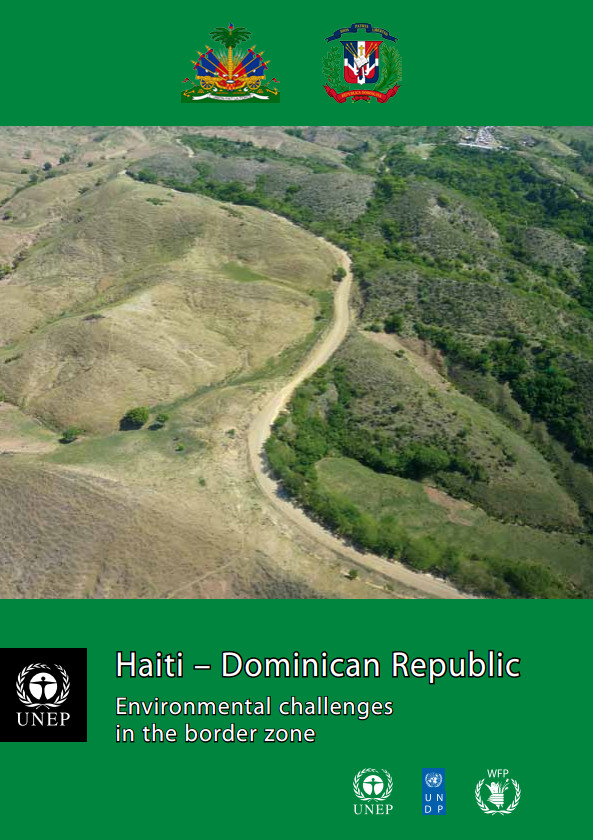
Another is that Haitians themselves did fail on a number of occasions. They never really got proper agricultural techniques, and the Industrial Revolution virtually passed them by. That means respectively that they fuck up too much soil when trying to farm for food, often scorching it in the process, and that their main source of heating is wood, which leads to mass deforestation, as evidenced by pictures of their border with the Dominican Republic. See below.
haiti_and_dominican_replubic.jpg


Finally, following the earthquake in 2010, the UN sent in peacekeepers to help fix the mess. However, some of the peacekeepers came from Nepal and turned out to be carrying cholera, which then found itself in the major Haiti river as waste from the UN peacekeeping base was dumped in it without any precaution. (That and I wouldn't put it past some of them to have shat directly in the river). This led to a major cholera outbreak, the first modern one actually, with nearly 800,000 Haitians infected since, and 9,000 dead (more than the earthquake the UN came to help with btw).
So, thanks for nothing, I guess.
Oh and the UN tried to deny any claim of wrong doing until finally admitting it in 2016, without acknowledging any financial responsibility though. (Gotta save those shekels for future "freedom" missiles).

Anyways, in conclusion to this long ass text, gotta admit that yes, the title "Failed Wakanda" is pretty appropriate, in the sense that it is a failed black state.
However, it is a failed Wakanda not because "black people cannot govern themselves" as has often been suggested throughout the ages, but because "white people get salty at black people for not wanting them anymore, and fuck them over in the ass without lube repeatedly in pursuit of their own interests instead of helping them as the "white man's burden" suggests".
The blame is on both sides there imo. On European nations and especially the US lately for just raping Haiti's deforested corpse, first because "but muh slavery", and then because they get other friends that the US don't like. And on Haiti for being overtly confrontational against white people in the beginning, and then not trying to patch the division between the countryside and the city to try and foster national unity instead of in-fighting.

Also, if you really want to be anal about it, Wakanda is successful because it's self sufficient due to "vibratium" or however the fuck it's called (sorry not really a Marvel nerd). Haiti on the other hand didn't have that luxury. Its main production was sugar and coffee (I think?), and later on t-shirt manufacturing, all of which rely on trade and export to bring in money. So, when other states clench their butt cheeks and be like "nope, we ain't gonna trade with you nignogs", the state, which was still in its infancy and recovering from capital flight and revolutionary war the first time the boycott happened, gets majorly cucked.

Anyways, that's just basic facts about Haitian history as well as my take on it. Links are down below, though as I said, most of the info comes from French text books and the short encyclopedia of voodoo.

 
Yeah, those fucking salty white people all mad just because the insanely corrupt Haitian officials will steal their ships if they dock in a Haitian port. Ohhh, poor whitey, ur not going to trade with Haiti anymore just because you don't want to be robbed or murdered?

I’m not saying Haiti is in the right. They do have a history of violence against white people, and I understand the reticence at trading with a country that literally killed and raped all your compatriots that couldn’t make it off the island in time.

I’m just saying that the first boycott didn’t happen until 30-40 or so years after the Haitian revolution, and was largely motivated by the fact that the European powers and the US feared that hearing about Haiti and black people in power would inspire their own black populations to rise up and revolt.

Haiti wasn’t a good state. And given the lack of education and civilisation as soon as you step out of the capital, clearly its politicians had no idea what the fuck they were doing even back then. But it wasn’t corrupt or as bad as the European pamphlets and propaganda about “those damned barbaric monkeys feasting on white flesh” made it out to be.

And the very first systemic corruption in Haiti was in fact introduced by European powers who wanted to destabilise the regime, leading to a series of coups d’Etat and hostile government takeovers.

I mean, what can you really expect from a country that had 32 coups in two centuries?

Edit: And your comment doesn’t really explain why the US still keep fucking Haiti over to this very day. The “scared for my ships” theory doesn’t hold coming into the 19th, 20th century, not to mention the best example of corruption ever with President Martelly that really just couldn’t stop sucking Clinton’s cock.

Again, black people fucked themselves over - yes. But whiteys helped.
 
well, their first independent government was created and run by people who had been pretty well brutalized and sold and shipped and etc so of course it's not a great history.

have relatives there at the moment, working, who say it's all chaos but that life is going on in the midst of it (kids getting vaccines, milk being brought into town and handed out, etc)
it's a batshit country and always will be.
 
Edit: And your comment doesn’t really explain why the US still keep fucking Haiti over to this very day. The “scared for my ships” theory doesn’t hold coming into the 19th, 20th century, not to mention the best example of corruption ever with President Martelly that really just couldn’t stop sucking Clinton’s cock.

Again, black people fucked themselves over - yes. But whiteys helped.

I'm not talking about historical piracy. Haiti is notorious, today, for stealing boats in port by putting massive leins on them and issuing new papers for stolen boats taken at sea or elsewhere. There's a whole industry of repo men who steal back boats that show up in Haiti, most famous of whom is Max Hardberger. It's definitely more complicated than good guys and bad guys, but Haiti is to blame for Haiti, even if they're not solely to blame.
 
I’m not saying Haiti is in the right. They do have a history of violence against white people, and I understand the reticence at trading with a country that literally killed and raped all your compatriots that couldn’t make it off the island in time.

I’m just saying that the first boycott didn’t happen until 30-40 or so years after the Haitian revolution, and was largely motivated by the fact that the European powers and the US feared that hearing about Haiti and black people in power would inspire their own black populations to rise up and revolt.

Haiti wasn’t a good state. And given the lack of education and civilisation as soon as you step out of the capital, clearly its politicians had no idea what the fuck they were doing even back then. But it wasn’t corrupt or as bad as the European pamphlets and propaganda about “those damned barbaric monkeys feasting on white flesh” made it out to be.

And the very first systemic corruption in Haiti was in fact introduced by European powers who wanted to destabilise the regime, leading to a series of coups d’Etat and hostile government takeovers.

I mean, what can you really expect from a country that had 32 coups in two centuries?

Edit: And your comment doesn’t really explain why the US still keep fucking Haiti over to this very day. The “scared for my ships” theory doesn’t hold coming into the 19th, 20th century, not to mention the best example of corruption ever with President Martelly that really just couldn’t stop sucking Clinton’s cock.

Again, black people fucked themselves over - yes. But whiteys helped.
They choose to rely on whitey.
 
Sorry to revive dead thread for a minute but I'm curious to get some honest sources about the reality of Haiti's history the more I look into it the more people these days want to prop it up as if it was some sort of failed Wakanda Utopia. So I'm interested in any and all sources that will be fair about the reality of what happened without "woke"ly suckin Haiti's dick for having a slave revolt.

I have some history buff friends (mostly lefties) and anytime I bring up Haiti they shit their pants because of the Slave Revolt. So any and all would be interesting for me thank you

Here's the simple reason. The average IQ in Haiti is 67, which is in the range where you'd be considered to have mild mental retardation. If you look at the Dominican Republic which shares the other half of the island (and isn't a complete shithole), the average IQ is 82. You're never going to get a country that builds itself up when over half of your population is incapable of attaining an education beyond a middle school level.
 
whitey crackers weren't the only ones who got massacred during the revolt. Any mulattoes got genocided as well.
anyone who wasn't a field slave basically. real life Django shit. and they did all right after it settled, for a little while. a little while.

it's a really difficult place to live though just in general, like a lot of islands there's lacking dietary needs, natural disasters galore, and interference from other countries. you've got some glorious moments in between tons of shit ones.

right now cholera and dysentery and all kinds of infested-water stuff is going on there, on top of all the rest. no good

but yes the best rum on Earth and really good food and if you're part of any aid effort and not white, you're invited over for family dinners and all the rest, to everyone's house. if it's still standing.
 
Atrás
Top Abajo