article / archive
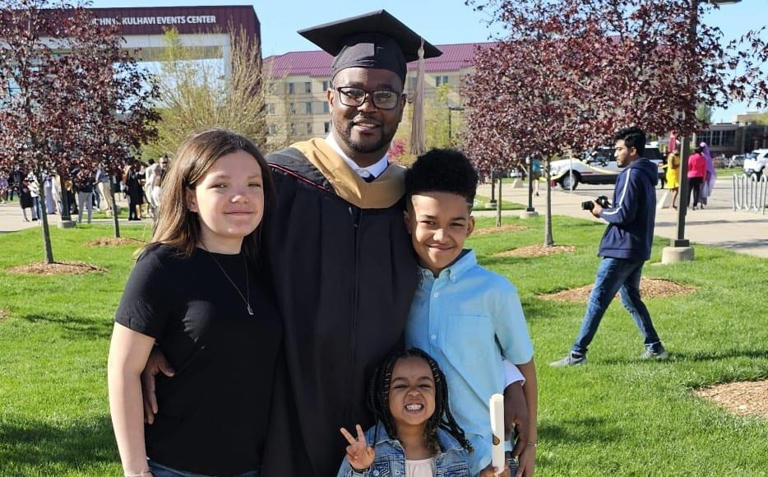
Samuel Kangethe and his three children. Mr Kangethe arrived in the US on a student visa in 2009 and remained in the country legally, but feared being picked up by ICE agents
A father-of-three self-deported after the election of Donald Trump, leaving his wife to raise their three children alone.
Samuel Kangethe, who had been living in the US legally, chose to return to his home nation of Kenya owing to an issue with his green card.
Mr Kangethe feared being picked up by ICE and taken to a third country, or being held in a detention centre far from his home state of Michigan.
He instead took the difficult decision to travel 8,000 miles away to a different continent.
“You don’t plan to get married to see your spouse go to another country. I think it’s something that’s not normal, and obviously it’s life-altering, especially for yourself and the children,” his wife, Latavia, said.
Mr Kangethe arrived in Michigan on a student visa in 2009 and married an American citizen a few years later.

The father-of-three feared being picked up by ICE - Handout
His wife petitioned for a green card, giving him the right to live in the US legally, and a conditional card was granted, lasting two years.
But when it came time to renew, immigration officials said his marriage was fraudulent – an allegation Mr Kangethe strongly denied.
The case went to an immigration court just as the Covid pandemic hit, bringing the proceedings grinding to a halt and leaving Mr Kangethe in legal limbo.
The first marriage ended in divorce, and Mr Kangethe married his second wife, Latavia, in May 2018.
Mr Kangethe was able to stay in the US because, pending a final decision, immigration officials extended his temporary permission to remain, meaning he could work legally.
They seemed to be living the American dream. Both had good jobs, with Mr Kangethe working as an accountant, and Mrs Kangethe a social worker.
In 2024, they bought a four-bedroom house in Lansing, Michigan, in which to raise their daughter, Ella, five, and Mrs Kangethe’s two children from a previous relationship, Hailey, 11 and Dwight, 13.
However, the election of Mr Trump, and his pledge to get tough on immigration, radically changed the landscape.
Masked ICE officers began picking up undocumented immigrants from the street, and green card holders who had committed minor offences years ago were being thrown out of the country.
Although the accountant was in the country legally, his tenuous immigration status and pending court hearing created a climate of anxiety and fear for the Kangethes.
“It wasn’t until the end of last year, just before January of 2025, things really started to take a turn,” Mrs Kangethe, 35, told The Telegraph.
“Sam dealt with some mental health things, probably just based on the fear of all of the political changes that were going on.
“He made the ultimate decision to self-deport back to his home country, which is Kenya, but it wasn’t something that he just decided overnight; it was a lot of different conversations.”
Mr Kangethe could have been deported by the administration because his green card had expired, and there was no guarantee his temporary admission would be renewed the next time he went to an immigration office.
The father-of-three said he even considered not taking his children to school for fear of being picked up by immigration officials — one of the deciding factors in his final decision.
“The biggest fear was our children possibly seeing him get picked up by ICE,” Mrs Kangethe added.
Instead, he took the decision to self-deport ahead of his long-delayed court case, which is due to take place next January.
Leaving the country of his own volition would show good faith, which hopefully would make an immigration judge more sympathetic when it came to ruling on his green card.
There were tears as he prepared to depart.
Friends and family pleaded with him to reconsider, but Mr Kangethe felt there was no alternative. The decision to self-deport was taken in May, and Mr Kangethe flew back to Kenya in August.
“I went through a lot of different emotions, anger, grief, sadness. But I think right now, as I’ve mentioned to many other people, my main focus is my mental health, the children, and making sure that they’re involved in a lot of different things to help them cope,” she added.
“The children are managing as best as they can. The older two have somewhat of a better understanding of the situation; however, they are still missing their dad tremendously.
“There is an absence for them, and it is extremely evident in our youngest child’s behaviour. She is the most emotional [and] distraught out of all three children.
“I’ve gone through the many different steps of grief when it comes to the two of us and then with my children, and to carry that much anger and or frustration would cause me more harm, so I’m trying to be more positive.”
Mr Kangethe told NPR: “For me it has been an absolute privilege to be in this country, like [an] absolute privilege.”
While he said leaving the country is the “safest option,” it was “the decision that is probably going to hurt me the most. It’s hurting me and I feel that it’s because of me that the kids are going to be hurting, too.”
Mrs Kangethe says life has become financially difficult, with her forced to fund legal fees and family other costs on one salary, setting up a GoFundMe campaign to make ends meet while her husband is away.
She hopes the long-delayed court case will pave the way for the family to reunite.
“I truly do feel like documents will get pushed around, people will look at them, but really they don’t understand that behind these documents there are real families and individuals that are not always here to, you know, wrongfully be here to commit crimes or anything like that.
“Ninety per cent of the time, these are just people coming here to make a better life for themselves and their families.”
Samuel Kangethe and his three children. Mr Kangethe arrived in the US on a student visa in 2009 and remained in the country legally, but feared being picked up by ICE agents
A father-of-three self-deported after the election of Donald Trump, leaving his wife to raise their three children alone.
Samuel Kangethe, who had been living in the US legally, chose to return to his home nation of Kenya owing to an issue with his green card.
Mr Kangethe feared being picked up by ICE and taken to a third country, or being held in a detention centre far from his home state of Michigan.
He instead took the difficult decision to travel 8,000 miles away to a different continent.
“You don’t plan to get married to see your spouse go to another country. I think it’s something that’s not normal, and obviously it’s life-altering, especially for yourself and the children,” his wife, Latavia, said.
Mr Kangethe arrived in Michigan on a student visa in 2009 and married an American citizen a few years later.
The father-of-three feared being picked up by ICE - Handout
His wife petitioned for a green card, giving him the right to live in the US legally, and a conditional card was granted, lasting two years.
But when it came time to renew, immigration officials said his marriage was fraudulent – an allegation Mr Kangethe strongly denied.
The case went to an immigration court just as the Covid pandemic hit, bringing the proceedings grinding to a halt and leaving Mr Kangethe in legal limbo.
The first marriage ended in divorce, and Mr Kangethe married his second wife, Latavia, in May 2018.
Mr Kangethe was able to stay in the US because, pending a final decision, immigration officials extended his temporary permission to remain, meaning he could work legally.
They seemed to be living the American dream. Both had good jobs, with Mr Kangethe working as an accountant, and Mrs Kangethe a social worker.
In 2024, they bought a four-bedroom house in Lansing, Michigan, in which to raise their daughter, Ella, five, and Mrs Kangethe’s two children from a previous relationship, Hailey, 11 and Dwight, 13.
However, the election of Mr Trump, and his pledge to get tough on immigration, radically changed the landscape.
Masked ICE officers began picking up undocumented immigrants from the street, and green card holders who had committed minor offences years ago were being thrown out of the country.
Although the accountant was in the country legally, his tenuous immigration status and pending court hearing created a climate of anxiety and fear for the Kangethes.
“It wasn’t until the end of last year, just before January of 2025, things really started to take a turn,” Mrs Kangethe, 35, told The Telegraph.
“Sam dealt with some mental health things, probably just based on the fear of all of the political changes that were going on.
“He made the ultimate decision to self-deport back to his home country, which is Kenya, but it wasn’t something that he just decided overnight; it was a lot of different conversations.”
Mr Kangethe could have been deported by the administration because his green card had expired, and there was no guarantee his temporary admission would be renewed the next time he went to an immigration office.
The father-of-three said he even considered not taking his children to school for fear of being picked up by immigration officials — one of the deciding factors in his final decision.
“The biggest fear was our children possibly seeing him get picked up by ICE,” Mrs Kangethe added.
Instead, he took the decision to self-deport ahead of his long-delayed court case, which is due to take place next January.
Leaving the country of his own volition would show good faith, which hopefully would make an immigration judge more sympathetic when it came to ruling on his green card.
There were tears as he prepared to depart.
Friends and family pleaded with him to reconsider, but Mr Kangethe felt there was no alternative. The decision to self-deport was taken in May, and Mr Kangethe flew back to Kenya in August.
“I went through a lot of different emotions, anger, grief, sadness. But I think right now, as I’ve mentioned to many other people, my main focus is my mental health, the children, and making sure that they’re involved in a lot of different things to help them cope,” she added.
“The children are managing as best as they can. The older two have somewhat of a better understanding of the situation; however, they are still missing their dad tremendously.
“There is an absence for them, and it is extremely evident in our youngest child’s behaviour. She is the most emotional [and] distraught out of all three children.
“I’ve gone through the many different steps of grief when it comes to the two of us and then with my children, and to carry that much anger and or frustration would cause me more harm, so I’m trying to be more positive.”
Mr Kangethe told NPR: “For me it has been an absolute privilege to be in this country, like [an] absolute privilege.”
While he said leaving the country is the “safest option,” it was “the decision that is probably going to hurt me the most. It’s hurting me and I feel that it’s because of me that the kids are going to be hurting, too.”
Mrs Kangethe says life has become financially difficult, with her forced to fund legal fees and family other costs on one salary, setting up a GoFundMe campaign to make ends meet while her husband is away.
She hopes the long-delayed court case will pave the way for the family to reunite.
“I truly do feel like documents will get pushed around, people will look at them, but really they don’t understand that behind these documents there are real families and individuals that are not always here to, you know, wrongfully be here to commit crimes or anything like that.
“Ninety per cent of the time, these are just people coming here to make a better life for themselves and their families.”


