Whisper it quietly in the city’s wine bars or mutter it across the trading floors in Canary Wharf, but the phrase is floating in the air again: “IMF bailout.”
It’s the kind of phrase that sends shivers down the spine of anyone old enough to remember 1976, when Britain, broke, battered, and humiliated, had to beg the International Monetary Fund for a rescue package. Back then, it was Labour’s crisis.
Now, almost half a century later, the fear is that Britain’spolitical chaos and economic stagnation could put it back on the IMF’s radar.
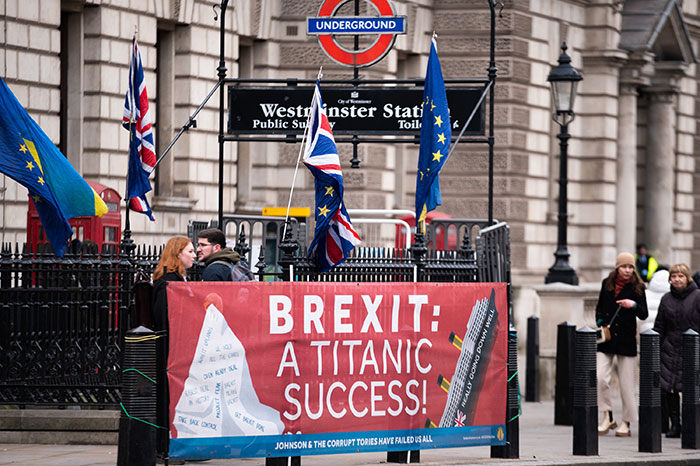
Brexit has adversely affected the UK.
It’s not just a fever dream. Sterling’s volatility, debt-to-GDP ratios climbing like ivy on Whitehall, and persistent current account deficits have turned Britain into the awkward guest at the global economic party.
The Financial Times has already published cautious editorials about “external assistance.” Meanwhile, credit agencies murmur about “structural weaknesses.”
For ordinary people, all this high-level hand wringing translates into painfully tangible realities: higher food bills, shrinking job opportunities, and energy prices that turn winter into a budgeting exercise worthy of a Victorian workhouse.
So, what went wrong? Why is a G7 nation even entertaining the possibility of repeating one of its most humiliating post-war moments? Let’s break it down.
According to the Office for Budget Responsibility (OBR), Brexit is expected to shave around 4% off UK GDP in the long term. Trade with the EU (still the UK’s biggest partner) has slumped, with exports facing customs checks, tariffs, and bureaucratic delays.
A study by the London School of Economics estimated that UK households were paying an additional £6 billion annually in food costs because of Brexit-related trade barriers.
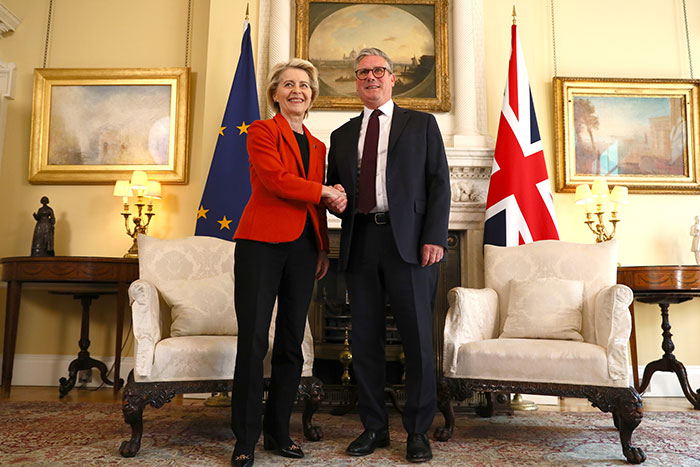
British Prime Minister Keir Starmer with European Commission President Ursula von der Leyen at 10 Downing Street in April 2025 in London, England.
That’s not abstract macroeconomics. That’s why a loaf of bread costs 15p more than it used to, why tomatoes disappeared from supermarket shelves in 2023, and why small exporters in Yorkshire or Kent quietly shuttered after being unable to navigate customs paperwork written in Brussels-ese.
Brexit also made Britain less attractive to foreign investment. International companies, especially in finance and manufacturing, have drifted toward Frankfurt, Paris, and Dublin.
The “Global Britain” dream of flourishing outside the EU has not materialized. Instead, the country looks increasingly isolated, hamstrung by the very sovereignty it celebrated.
About 38% of its gas was said to come indirectly from Russia, through Europe; however, that has lessened through LNG supply from the likes of Norway. It did not stop the effect of sanctions. Supply disruptions and soaring wholesale prices meant UK households were suddenly staring at annual energy bills north of £3,000.
Government subsidies blunted the pain somewhat, but the effect on inflation was brutal. At its 2022 peak, inflation topped 11%, which is a 40-year high.
Even now, core inflation in the UK remains sticky, higher than in the Eurozone or the US. Every electricity bill became a reminder of geopolitics. Every liter of petrol is a reflection of Britain’s exposure.
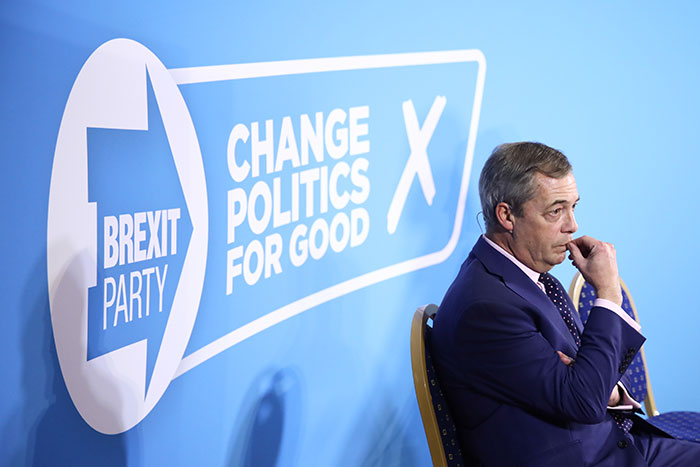
Former Brexit Party leader Nigel Farage during a press conference in 2019.
For UK manufacturers, the math is brutal: pay higher tariffs to sell abroad, or watch as competitors in the US or EU pocket government-backed subsidies. It’s little wonder Britain’s once-proud manufacturing sector, which already represents less than 10% of GDP, continues to wither.
The disastrous “mini-budget” of Liz Truss in 2022 still haunts financial markets. That brief experiment with trickle-down economics spooked bond markets so badly that gilt yields surged, the Bank of England had to intervene, and mortgage rates skyrocketed.
Even under Rishi Sunak and his successors, the credibility gap remains. Investors don’t trust that Britain has a long-term growth plan. Taxes are at their highest share of GDP since the post-war era, yet public services look starved.
The NHS is on its knees, schools are closing buildings due to concrete safety fears, and rail strikes have become a seasonal tradition. If this is stability, one shudders to imagine chaos.

Migrants boarding a boat to cross the English Channel in Wimereux, Northern France.
Net migration hit record highs in 2022, but it’s still not plugging shortages fast enough. Employers from Cornish farms to London hospitals report chronic staff gaps, pushing wages up in some sectors but straining capacity in others.
At the same time, productivity, which is Britain’s Achilles heel, remains stubbornly flat. The UK produces 20% less per hour worked than France or Germany. Some of this is down to chronic underinvestment in infrastructure and skills.
Some is structural: Britain no longer makes enough of what the world wants. Manufacturing reliance on imports, particularly from China, has hollowed out domestic supply chains. When Beijing sneezes—whether through supply chain shocks, rare earth restrictions, or simply slowing growth—Britain catches a cold.
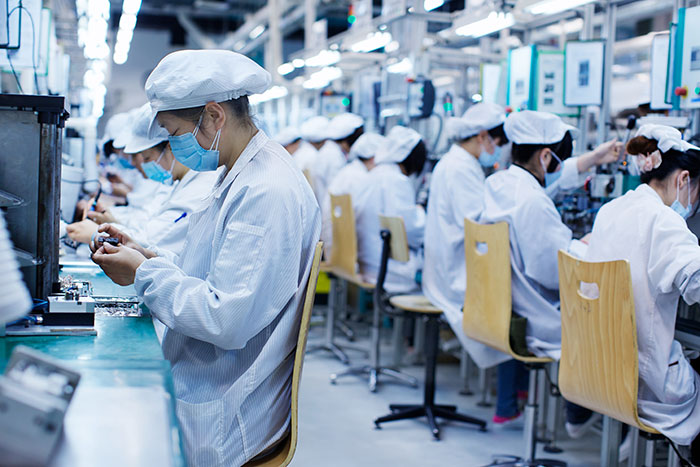
Manufacturing reliance on Chinese imports have hit the UK’s domestic supply chains.
On paper, an IMF bailout should be unthinkable. Yet the whispers persist for a reason.
The UK’s current account deficit remains close to 4% of GDP. Public debt has passed 100% of GDP, the highest in generations. Interest payments on that debt are rising, as higher gilt yields bite. If markets lose confidence, if sterling faces a sharp selloff, or foreign investors retreat, then emergency financing might not be optional. It’s not imminent, but it’s not unimaginable either.
Think of it less as Britain “going bust” and more as Britain looking like an aging rockstar who still headlines Glastonbury but needs a lot of auto-tune and painkillers backstage. The IMF is the ambulance parked nearby, just in case.
Young people face a bleak landscape: unaffordable housing, ballooning student debt, and jobs increasingly offered on precarious contracts. For many, the idea of a stable middle-class life feels like a period piece from a BBC drama.

A homeless woman begs on a pavement in London.
Older generations worry their pensions won’t stretch far enough in an era of high living costs. Families rely on food banks at record levels: the Trussell Trust handed out nearly 3 million emergency food parcels in 2023-24, double the figure from just five years earlier.
This isn’t simply a “cost of living crisis.” It’s a slow erosion of the social contract. The deal used to be: work hard, pay your taxes, and the state will ensure a minimum level of security.
Now, people see higher taxes but threadbare services, higher bills but lower certainty, and higher promises but lower delivery.
The IMF may never step in. But the fact that experts even whisper the possibility shows how fragile Britain’s standing has become.
In a way, the real bailout Britain needs is not from Washington, D.C. or Brussels, but from itself. A bailout of political vision. A bailout of industrial strategy. A bailout of honesty with its own citizens about what kind of country it wants to be outside the EU.
Until then, the whispers will continue. And every trip to the supermarket, every energy bill, every rent increase will remind ordinary Britons that the macroeconomic numbers aren’t abstract. They’re painfully, expensively real.
Article Link
Archive
It’s the kind of phrase that sends shivers down the spine of anyone old enough to remember 1976, when Britain, broke, battered, and humiliated, had to beg the International Monetary Fund for a rescue package. Back then, it was Labour’s crisis.
Now, almost half a century later, the fear is that Britain’spolitical chaos and economic stagnation could put it back on the IMF’s radar.
Brexit has adversely affected the UK.
It’s not just a fever dream. Sterling’s volatility, debt-to-GDP ratios climbing like ivy on Whitehall, and persistent current account deficits have turned Britain into the awkward guest at the global economic party.
The Financial Times has already published cautious editorials about “external assistance.” Meanwhile, credit agencies murmur about “structural weaknesses.”
For ordinary people, all this high-level hand wringing translates into painfully tangible realities: higher food bills, shrinking job opportunities, and energy prices that turn winter into a budgeting exercise worthy of a Victorian workhouse.
So, what went wrong? Why is a G7 nation even entertaining the possibility of repeating one of its most humiliating post-war moments? Let’s break it down.
The Brexit hangover
The obvious culprit is Brexit. While politicians continue to squabble over “sovereignty” versus “economic freedom,” the numbers tell a stark story.According to the Office for Budget Responsibility (OBR), Brexit is expected to shave around 4% off UK GDP in the long term. Trade with the EU (still the UK’s biggest partner) has slumped, with exports facing customs checks, tariffs, and bureaucratic delays.
A study by the London School of Economics estimated that UK households were paying an additional £6 billion annually in food costs because of Brexit-related trade barriers.
British Prime Minister Keir Starmer with European Commission President Ursula von der Leyen at 10 Downing Street in April 2025 in London, England.
That’s not abstract macroeconomics. That’s why a loaf of bread costs 15p more than it used to, why tomatoes disappeared from supermarket shelves in 2023, and why small exporters in Yorkshire or Kent quietly shuttered after being unable to navigate customs paperwork written in Brussels-ese.
Brexit also made Britain less attractive to foreign investment. International companies, especially in finance and manufacturing, have drifted toward Frankfurt, Paris, and Dublin.
The “Global Britain” dream of flourishing outside the EU has not materialized. Instead, the country looks increasingly isolated, hamstrung by the very sovereignty it celebrated.
Gas, geopolitics, and the Russia-Ukraine fallout
Then came Putin. The invasion of Ukraine in February 2022 sparked an energy crisis that hit the UK disproportionately hard. Unlike France, with its nuclear-heavy grid, or Norway, sitting on a mountain of gas, Britain depends heavily on imported natural gas.About 38% of its gas was said to come indirectly from Russia, through Europe; however, that has lessened through LNG supply from the likes of Norway. It did not stop the effect of sanctions. Supply disruptions and soaring wholesale prices meant UK households were suddenly staring at annual energy bills north of £3,000.
Government subsidies blunted the pain somewhat, but the effect on inflation was brutal. At its 2022 peak, inflation topped 11%, which is a 40-year high.
Even now, core inflation in the UK remains sticky, higher than in the Eurozone or the US. Every electricity bill became a reminder of geopolitics. Every liter of petrol is a reflection of Britain’s exposure.
Former Brexit Party leader Nigel Farage during a press conference in 2019.
Tariffs and transatlantic tensions
The UK’s “special relationship” with the US hasn’t shielded it from protectionism, either. American tariffs on steel, aluminum, and agricultural products, imposed by Trump, have lingered. Biden’s much-vaunted Inflation Reduction Act, with subsidies for green industries, is sucking investment across the Atlantic while leaving Britain scrambling to create its own incentives.For UK manufacturers, the math is brutal: pay higher tariffs to sell abroad, or watch as competitors in the US or EU pocket government-backed subsidies. It’s little wonder Britain’s once-proud manufacturing sector, which already represents less than 10% of GDP, continues to wither.
Political paralysis and policy whiplash
Then there’s the politics. Or the lack thereof. Since the Brexit referendum in 2016, the UK has cycled through five prime ministers before Keir Starmer, each promising stability and delivering the opposite.The disastrous “mini-budget” of Liz Truss in 2022 still haunts financial markets. That brief experiment with trickle-down economics spooked bond markets so badly that gilt yields surged, the Bank of England had to intervene, and mortgage rates skyrocketed.
Even under Rishi Sunak and his successors, the credibility gap remains. Investors don’t trust that Britain has a long-term growth plan. Taxes are at their highest share of GDP since the post-war era, yet public services look starved.
The NHS is on its knees, schools are closing buildings due to concrete safety fears, and rail strikes have become a seasonal tradition. If this is stability, one shudders to imagine chaos.
Migrants boarding a boat to cross the English Channel in Wimereux, Northern France.
Immigration, productivity, and the ‘China Problem’
Immigration is politically toxic but economically central. The UK’s tight labor market desperately needs workers, especially in healthcare, hospitality, and agriculture. Yet, immigration debates are framed in terms of “small boats” rather than economic necessity.Net migration hit record highs in 2022, but it’s still not plugging shortages fast enough. Employers from Cornish farms to London hospitals report chronic staff gaps, pushing wages up in some sectors but straining capacity in others.
At the same time, productivity, which is Britain’s Achilles heel, remains stubbornly flat. The UK produces 20% less per hour worked than France or Germany. Some of this is down to chronic underinvestment in infrastructure and skills.
Some is structural: Britain no longer makes enough of what the world wants. Manufacturing reliance on imports, particularly from China, has hollowed out domestic supply chains. When Beijing sneezes—whether through supply chain shocks, rare earth restrictions, or simply slowing growth—Britain catches a cold.
Manufacturing reliance on Chinese imports have hit the UK’s domestic supply chains.
Is the IMF really on speed dial?
Here’s the sobering part. Britain still issues debt in its own currency, unlike Argentina or Turkey. It has deep capital markets, a central bank with global clout, and one of the world’s largest economies.On paper, an IMF bailout should be unthinkable. Yet the whispers persist for a reason.
The UK’s current account deficit remains close to 4% of GDP. Public debt has passed 100% of GDP, the highest in generations. Interest payments on that debt are rising, as higher gilt yields bite. If markets lose confidence, if sterling faces a sharp selloff, or foreign investors retreat, then emergency financing might not be optional. It’s not imminent, but it’s not unimaginable either.
Think of it less as Britain “going bust” and more as Britain looking like an aging rockstar who still headlines Glastonbury but needs a lot of auto-tune and painkillers backstage. The IMF is the ambulance parked nearby, just in case.
The human cost: A nation squeezed
For ordinary Britons, all of this macroeconomic theater translates into a grinding daily reality. Inflation means groceries cost 20% more than they did two years ago. Energy bills, while lower than their wartime peak, are still historically high. Mortgage holders are paying hundreds more each month. Rents are at record levels. Wages, meanwhile, are stagnant in real terms.Young people face a bleak landscape: unaffordable housing, ballooning student debt, and jobs increasingly offered on precarious contracts. For many, the idea of a stable middle-class life feels like a period piece from a BBC drama.
A homeless woman begs on a pavement in London.
Older generations worry their pensions won’t stretch far enough in an era of high living costs. Families rely on food banks at record levels: the Trussell Trust handed out nearly 3 million emergency food parcels in 2023-24, double the figure from just five years earlier.
This isn’t simply a “cost of living crisis.” It’s a slow erosion of the social contract. The deal used to be: work hard, pay your taxes, and the state will ensure a minimum level of security.
Now, people see higher taxes but threadbare services, higher bills but lower certainty, and higher promises but lower delivery.
Post-Brexit Britain
So, is Britain really on the brink? Perhaps not in the sense of imminent collapse. But it is teetering on the edge of something subtler: long-term decline.The IMF may never step in. But the fact that experts even whisper the possibility shows how fragile Britain’s standing has become.
In a way, the real bailout Britain needs is not from Washington, D.C. or Brussels, but from itself. A bailout of political vision. A bailout of industrial strategy. A bailout of honesty with its own citizens about what kind of country it wants to be outside the EU.
Until then, the whispers will continue. And every trip to the supermarket, every energy bill, every rent increase will remind ordinary Britons that the macroeconomic numbers aren’t abstract. They’re painfully, expensively real.
Article Link
Archive


