D.C. is forcing e-bikes to slow down, citing teen crime
The Washington Post (archive.ph)
By Rachel Weiner
2025-11-13 11:00:16GMT
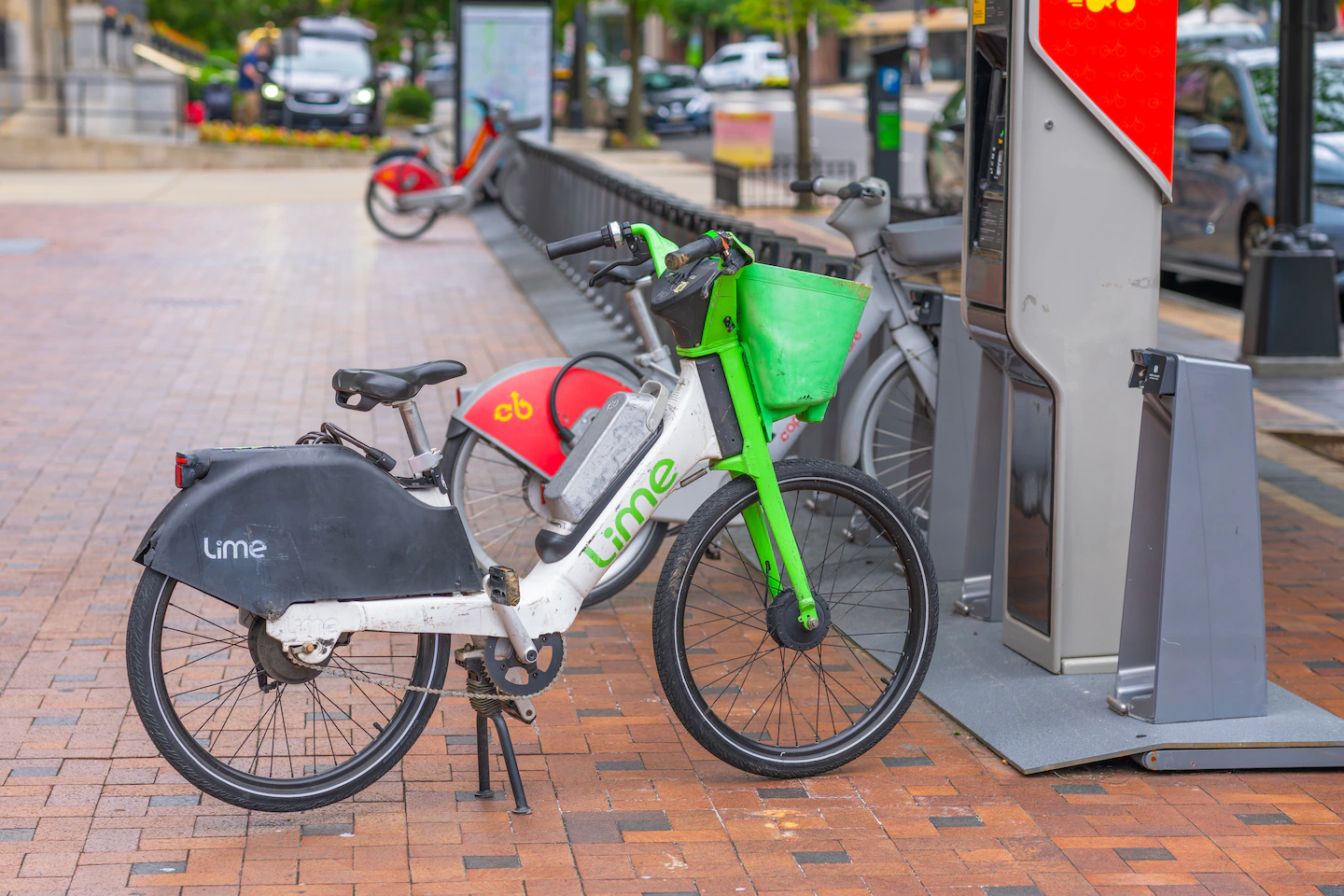
D.C. has seen huge growth over the past few years in both the city’s Capital Bikeshare program and private competitors like Lime. (Hanna Tornyai/Getty Images)
D.C.’s dockless electric bikes have become slower, and in some cases more expensive, after police raised concerns that the rental vehicles are enabling teen crime and misbehavior.
In mid-October, e-bike rental companies Lime and Veo agreed to lower the maximum speed boost on their e-bikes across the city. In certain crowded nightlife areas where teenagers congregate, all rented e-bikes are being slowed down even further.
D.C.’s dockless electric bikes have become slower, and in some cases more expensive, after police raised concerns that the rental vehicles are enabling teen crime and misbehavior.
In mid-October, e-bike rental companies Lime and Veo agreed to lower the maximum speed boost on their e-bikes across the city. In certain crowded nightlife areas where teenagers congregate, all rented e-bikes are being slowed down even further.
“Anecdotally, we have some concerns about some of the shared transportation equipment being used in — to commit crime,” Mayor Muriel E. Bowser (D) said at a news conference Wednesday morning. “We want to make sure that all the bicycles can be available for the purpose that they are intended and curb any misuse.”
While people younger than 18 are not allowed to use the shared e-bikes, enforcing those limitations can be difficult. Police did not provide data on teen use of Lime bikes or crimes involving them but in recent weeks have described suspects in several recent robberies as fleeing on Lime bikes.
“Lime was becoming a getaway vehicle for juvenile suspects in robberies and assaults,” D.C. police spokesman Tom Lynch said.
D.C. Department of Transportation Director Sharon Kershbaum said officials were also responding to residents’ concerns about e-bikes flying past them on trails and sidewalks: “We’re getting a lot of complaints now, same as with reckless drivers,” she said.
Unlike New York City, which recently put a blanket speed limit of 15 mph on e-bikes in response to similar speeding complaints, D.C. is only lowering the maximum speed assistance from a bike’s motor. Electric assistance will now only go as high as 15 miles an hour on Veo bikes and 18 mph on Lime bikes.
Capital Bikeshare e-bikes are harder to speed on, DDOT spokesman German Vigil said, and data shows most riders go 15 mph or less. Around Howard University and in Chinatown, Navy Yard, the U Street area and the Wharf, all shared e-bikes are now limited to 8 mph of motor speed. (Electric kick scooters are already restricted to 10 mph in D.C.)
The restrictions come as the local problem of juvenile crime, an issue in D.C. since the pandemic, has become a matter of national politics and power. President Donald Trump has long portrayed D.C. as riddled with crime, and in August, after two teens were arrested for attempting to carjack a 19-year-old former DOGE staffer, he declared a “crime emergency” and seized temporary control of D.C.’s police department. Although the emergency has officially ended, both U.S. National Guard troops and federal officers continue to patrol the city.
Over the summer, the city imposed temporary curfews to limit large nighttime gatherings of youths, particularly around U Street and the waterfront. After a Halloween gathering at Navy Yard where police said fighting broke out and nine juveniles were arrested, the city approved a continuation of that policy, noting that several other chaotic incidents involving teens occurred once the summer curfews expired. The curfews remain a point of contention between Bowser and some members of the D.C. Council, who have argued that the city needs a more holistic approach to violence among teens.
In addition to the speed restrictions, Lime also raised the price of its “Lime Access” program, which offers low-income residents unlimited rides with no time limit. Police did not ask for that change but identified long rides as a potential method for suspects to flee crime scenes, Lynch said. Lime initially raised its monthly prices from $5 to $30 a month, but cut it to $15 last week.
Lime spokesperson Jacob Tugendrajch said the decision was made not only because of police concerns but also because the program’s popularity had made it hard to maintain the bikes. Use of the program went from 50,000 rides across 2022 to over 1.5 million already this year. Capital Bikeshare also recently raised its prices, citing similar rising costs.
“Following feedback from riders, Lime Access users, and community partners, we worked with the City to find what we hope will be an appropriate balance on speed limits, and sustaining our Lime Access program over the long term,” said Tugendrajch.
Lime has also begun asking users to take a selfie as part of the sign-up process. Previously, the company only required users to upload a copy of their IDs. Tugendrajch said in a statement that Lime has “long been working with the city on best practices for age verification.”
Beyond the slow zones, DDOT is experimenting with signs on the Metropolitan Branch Trail that show a smiling face when bikers go by at below 15 mph and a frowning face when they go above it.
“If it works, it’s something we’ll use more broadly,” Kershbaum said.
Charles Allen (D-Ward 6), who chairs the council’s transportation committee, said he was concerned about barriers to e-bike access.
“This was a push from MPD [Metropolitan Police Department] to try to change behavior, maybe rather than addressing the behavior,” Allen said. “I’d rather hold the person doing the harm accountable than making it so people can’t use the bikes to get around when they need to.”
Allen said he understood the speed limits, because he has also seen a spike in complaints about high speeds, where bikers are “hitting pedestrians and coming close to crashing into pedestrians.” But he said the Lime Access price increase was “a huge overcorrection.”
The issues are with “a minuscule amount of Lime e-bike riders,” Allen said. “It just really stands out when someone is riding one unsafely, just like when somebody’s driving a car unsafely.”
The District has seen huge growth over the past few years in both the city’s bike-share program and private competitors. Capital Bikeshare use doubled in the past three years from 2.3 million in 2022 to 5.3 million so far this year, with e-bikes driving the rise. Over a million rides have been taken on Veo this year and there were over a million on Lime e-bikes and scooters in June 2025 alone, the companies said.
Of over 300 traffic fatalities in the city over the past decade, according to DDOT data, only one involved no motor vehicles — a collision between two e-bike riders last year that left one dead.
The Washington Post (archive.ph)
By Rachel Weiner
2025-11-13 11:00:16GMT
D.C. has seen huge growth over the past few years in both the city’s Capital Bikeshare program and private competitors like Lime. (Hanna Tornyai/Getty Images)
D.C.’s dockless electric bikes have become slower, and in some cases more expensive, after police raised concerns that the rental vehicles are enabling teen crime and misbehavior.
In mid-October, e-bike rental companies Lime and Veo agreed to lower the maximum speed boost on their e-bikes across the city. In certain crowded nightlife areas where teenagers congregate, all rented e-bikes are being slowed down even further.
D.C.’s dockless electric bikes have become slower, and in some cases more expensive, after police raised concerns that the rental vehicles are enabling teen crime and misbehavior.
In mid-October, e-bike rental companies Lime and Veo agreed to lower the maximum speed boost on their e-bikes across the city. In certain crowded nightlife areas where teenagers congregate, all rented e-bikes are being slowed down even further.
“Anecdotally, we have some concerns about some of the shared transportation equipment being used in — to commit crime,” Mayor Muriel E. Bowser (D) said at a news conference Wednesday morning. “We want to make sure that all the bicycles can be available for the purpose that they are intended and curb any misuse.”
While people younger than 18 are not allowed to use the shared e-bikes, enforcing those limitations can be difficult. Police did not provide data on teen use of Lime bikes or crimes involving them but in recent weeks have described suspects in several recent robberies as fleeing on Lime bikes.
“Lime was becoming a getaway vehicle for juvenile suspects in robberies and assaults,” D.C. police spokesman Tom Lynch said.
D.C. Department of Transportation Director Sharon Kershbaum said officials were also responding to residents’ concerns about e-bikes flying past them on trails and sidewalks: “We’re getting a lot of complaints now, same as with reckless drivers,” she said.
Unlike New York City, which recently put a blanket speed limit of 15 mph on e-bikes in response to similar speeding complaints, D.C. is only lowering the maximum speed assistance from a bike’s motor. Electric assistance will now only go as high as 15 miles an hour on Veo bikes and 18 mph on Lime bikes.
Capital Bikeshare e-bikes are harder to speed on, DDOT spokesman German Vigil said, and data shows most riders go 15 mph or less. Around Howard University and in Chinatown, Navy Yard, the U Street area and the Wharf, all shared e-bikes are now limited to 8 mph of motor speed. (Electric kick scooters are already restricted to 10 mph in D.C.)
The restrictions come as the local problem of juvenile crime, an issue in D.C. since the pandemic, has become a matter of national politics and power. President Donald Trump has long portrayed D.C. as riddled with crime, and in August, after two teens were arrested for attempting to carjack a 19-year-old former DOGE staffer, he declared a “crime emergency” and seized temporary control of D.C.’s police department. Although the emergency has officially ended, both U.S. National Guard troops and federal officers continue to patrol the city.
Over the summer, the city imposed temporary curfews to limit large nighttime gatherings of youths, particularly around U Street and the waterfront. After a Halloween gathering at Navy Yard where police said fighting broke out and nine juveniles were arrested, the city approved a continuation of that policy, noting that several other chaotic incidents involving teens occurred once the summer curfews expired. The curfews remain a point of contention between Bowser and some members of the D.C. Council, who have argued that the city needs a more holistic approach to violence among teens.
In addition to the speed restrictions, Lime also raised the price of its “Lime Access” program, which offers low-income residents unlimited rides with no time limit. Police did not ask for that change but identified long rides as a potential method for suspects to flee crime scenes, Lynch said. Lime initially raised its monthly prices from $5 to $30 a month, but cut it to $15 last week.
Lime spokesperson Jacob Tugendrajch said the decision was made not only because of police concerns but also because the program’s popularity had made it hard to maintain the bikes. Use of the program went from 50,000 rides across 2022 to over 1.5 million already this year. Capital Bikeshare also recently raised its prices, citing similar rising costs.
“Following feedback from riders, Lime Access users, and community partners, we worked with the City to find what we hope will be an appropriate balance on speed limits, and sustaining our Lime Access program over the long term,” said Tugendrajch.
Lime has also begun asking users to take a selfie as part of the sign-up process. Previously, the company only required users to upload a copy of their IDs. Tugendrajch said in a statement that Lime has “long been working with the city on best practices for age verification.”
Beyond the slow zones, DDOT is experimenting with signs on the Metropolitan Branch Trail that show a smiling face when bikers go by at below 15 mph and a frowning face when they go above it.
“If it works, it’s something we’ll use more broadly,” Kershbaum said.
Charles Allen (D-Ward 6), who chairs the council’s transportation committee, said he was concerned about barriers to e-bike access.
“This was a push from MPD [Metropolitan Police Department] to try to change behavior, maybe rather than addressing the behavior,” Allen said. “I’d rather hold the person doing the harm accountable than making it so people can’t use the bikes to get around when they need to.”
Allen said he understood the speed limits, because he has also seen a spike in complaints about high speeds, where bikers are “hitting pedestrians and coming close to crashing into pedestrians.” But he said the Lime Access price increase was “a huge overcorrection.”
The issues are with “a minuscule amount of Lime e-bike riders,” Allen said. “It just really stands out when someone is riding one unsafely, just like when somebody’s driving a car unsafely.”
The District has seen huge growth over the past few years in both the city’s bike-share program and private competitors. Capital Bikeshare use doubled in the past three years from 2.3 million in 2022 to 5.3 million so far this year, with e-bikes driving the rise. Over a million rides have been taken on Veo this year and there were over a million on Lime e-bikes and scooters in June 2025 alone, the companies said.
Of over 300 traffic fatalities in the city over the past decade, according to DDOT data, only one involved no motor vehicles — a collision between two e-bike riders last year that left one dead.


