Creepy Unsolved Mysteries - From unsolved murders to unidentified people to unexplained supernatural events, what are some of the creepiest unsolved mysteries you've ever heard of?

This is the third part of a series of posts I'm devoting to the Frankford Slasher.

Frankford-Slasher-Suspect.webp


Click the links to read the previous posts:

Part 1

Part 2


Thursday, January 29, 1987-


It had been 20 days since someone had murdered Jeanne Durkin out on the streets near Goldie's Bar. It just so happened that 28-year-old Catherine M. Jones was also a regular at Goldie's, and on this evening was walking on her way home located on the 3900 block of 8th street. Very little is known about Catherine. What is known is that she went by the name "C.J." and was the eldest of three children. Her parents, Joseph and Ruth had two girls, Catherine and Charlotte, an a son named Fred. It's also known that "C.J." had worked as a waitress at a restaurant in the area.

At about 10:45 A.M. a witness discovers her dead in a snowbank on the sidewalk located on the 900 block of North 2nd Street located near Poplar Street, about a mile from her home. She was partially clothed and severely beaten on the head with a blunt instrument, crushing her skull and breaking her jaw. In addition, she was strangled to death.

Crime scene location.jpg
(Crime scene location.)

A few minor articles appeared regarding her death on January 30th, reporting that she may have been stabbed, but there was very little news coverage regarding her murder.

A funeral is held for Catherine on Tuesday, February 3rd at the DiPinto-Mehl Funeral Home located at 5700 Rising Sun Avenue. She was buried at Hillside Cemetery and Memorial Gardens.

It was uncertain on if her death was connected to the other deaths. In three of the four previous cases the killer had acquired the murder weapon from the victim. In Anna Carroll's death, the killer took a knife from her kitchen, and in Susan Olszef's case the killer again acquired a knife from the victim's kitchen. In the Jeanne Durkin case, the murder weapon was a knife that Durkin carried on her for protection. What all the victims had in common was that they all had been patrons of the Golden Bar, and Jones, much like Patent and Durkin had been attacked on the street in what appeared to be sexually motivated murders.


Sources-

The Philadelphia Daily News Philadelphia, Pennsylvania · Friday, January 30, 1987

The Philadelphia Inquirer Philadelphia, Pennsylvania · Friday, January 30, 1987

Philidelphia Daily News Philadelphia, Pennsylvania · Saturday, January 21, 1989

Philidelphia Inquirer Philadelphia, Pennsylvania · Saturday, January 21, 1989

"The Encyclopedia of Unsolved Crimes" - Michael Newton

"Hearts of Darkness: Serial Killers, the Behavioral Science Unit, and My Life as a Woman in the FBI"- Jana Monroe

"From the Files of True Detective Magazine: Bizarre Murders II" Edited by Rose G. Mandelsberg

"Homicide Detective: Volume 1 Number 6, March 4, 2024"- Duke Fox & Editor in Chief Barry Bowe

"TruTV Crime Library: Frankford Slasher" - Katherine Ramsland

Thursday, January 7, 1988-

It had been almost a year since the police began their investigation into the four murders connected to the Golden Bar, and the newspaper, The Philadelphia Inquirer ran a story about what progress had been made in these still unsolved slayings. Capt. Robert Grasso, told the paper that regards to the most recent murder, Jeanne Durkin all the typewritten records and interviews with the police "fill boxes and boxes." But in the year since Durkin's crime there had been no significant developments and no suspects.

"It is still a mystery," he said.

Grasso discussed with the press the theory that Durkin's killer had also murdered Helen Patent, Anna Carroll, and Sue Olszef, and downplayed the idea that there was any connection. "We don't know that," he said. "We don't have any suspicions or inclinations, but we are still working on that group of homicides."

Speaking to the Inquirer Jeanne Durkin's mother expressed her feelings about her daughter's murder, saying "This has changed everyone... It makes you realize how vulnerable you are and that you don't have any control over a situation."

According to Durkin's family, in the year since Jeanne's death, homicide detectives had only contacted them a single time and had not given them any updates on the case.

"That's OK because we've kind of pushed it to the back of our minds, into the background," her mother said. "You couldn't survive otherwise."

Since her death, many well-wishers have contacted Durkin's family, sending them sympathy cards, poems, flowers, letters from strangers and donations for the homeless from those who were overwhelmed by grief. Someone had even planted two trees in Israel in Jeanne's honor.


Thursday, October 20, 1988-

The Philidelphia Inquirer runs a brief mention that the murders of Helen Patent, Anna Carroll, Susan Olszef, and Jeanne Durkin all remain unsolved. The paper also published a photo of the Golden Bar, mentioning the common connection between the victims and their last known location.


Thursday, November 10, 1988-

The city seemed to no longer care that a serial killer had claimed the lives of at least four women. It had been almost two years since those murders, and the killer had still eluded Detectives. Even more people had forgotten the murder of Catherine Jones.

66-year-old Margaret Mary Vaughan had also been known to spend time at the Golden Bar, but not recently. Vaughan, who preferred to go by the name "Marge," was well known in a half dozen Frankford Avenue bars between Bridge and Margaret streets. Those who knew her said that she always work dark glasses and resembled the actress Bette Davis, and was usually accompanied by a younger man, who most people assumed to be her son. According to a friend named Mary Lally, most people assumed the man was her son, but he was actually her 33-year-old boyfriend, who she had been living with her in an apartment on the 4900 block of Penn Street. Those that knew her described her as "nice' and "pleasant."

8.jpg
(Possible photo of Margaret Vaughan from a news story.)

"Marge was a nice woman who never bothered nobody," said Mary Lally, a regular patron at the Pat McGuiness Tavern, on Frankford Avenue. She added, "She was a sweet woman. I lived around the corner from her. She brought my children gifts."

"She was only in here a few times, but she was very personable-- the type who would strike up a conversation," said Bruce Appel, the owner of the Trolley Stop Tavern at Frankford Avenue and Platt Street.

A barmaid at the Beefhouse Tavern on Frankford Avenue said, "Everyone here knew Marge. She was very nice, very friendly... she always drank Schaefer draft beer. She would come and go practically every day."

At the Jolly Post Tavern located on the 1522 Arrot Street, a 51-year-old female bar regular who went by the alias of "Sandy Beach," said that she had been close friends with Marge, but had a falling out with her over a man.

A neighbor of Vaughan's said that her friendliness was her downfall, "She would bring home some of the people she met at the bars back to her apartment... I always felt she was taking a big chance."

That day Marge had been evicted from her Frankford apartment at around noon that Thursday. She had lived there for several years on the third floor of the building, which was a 19th-century style house that had been converted into Apartments. Marge's husband John William Vaughan had recently passed away in February at the age of 68. An a new owner had recently purchased her apartment building shortly after her husband died and asked all the tenants to leave so they could refurbish the building. Vaughan however refused to leave and remained at the apartment living rent-free until she was evicted and forced to live on the street. She had nobody to fall back on, as she did not work and had at least one adult child; a daughter named Mary who lived outside of Frankford. Following the eviction the landlord immediately changed the lock on her door according to Marge's neighbor.

With nothing else to do, Margaret spent her time socializing in the bars that evening. At 6:30 P.M. a barmaid at one bar witnessed Vaughan drinking with a middle-aged white man who wore glasses and had a slight limp when he walked. Later in the night Vaughan attempted to return to her apartment building, hoping that her key to her apartment still worked, so she could have a place to spend the night. Upon trying the lock, she found that her key didn't work. She then attempted to keep warm by standing in the vestibule.

At 1:05 A.M. two nursing students who attended classes at a near-by nursing school arrived at the apartment building, where they were renting a room. When they entered the small vestibule area, they immediately located the bloody remains of Margaret Vaughan lying on the carpet between the front door and an inner door. She had been stabbed numerous times in the chest, head, neck, and torso, and disembowled. She had allegedly been stabbed 29 times.

The students immediately ran outside and notified a police officer who was parked in a patrol car nearby.

Friday, November 11th-

While students were attending classes across the street at the Frankford Hospital School of Nursing which sits at 4918 Penn Street, detectives interviewed residents along the block and began searching sewers for the murder weapon. Vaughan apparently had $200 on her and robbery was therefore not a motive.

A neighbor who lived near the apartment building said, "She was a nice lady," and "I didn't hear a thing. I can't believe that... my dog didn't even bark."

Speaking to the press, Lt. James Henwood of the Homicide Unit said "We're stuck for a motive." According to Henwood, Vaughan's body did not show signs of sexual assault, and her killer ignored the $200 that was found in her clothing, ruling out rape or robbery as the simple motive.

Detectives would not comment to the press about whether there was a connection between Vaughan's murder and the other homicides connected to the Golden Bar. A male patron from the Beefhouse Tavern remarked to the press that "She was a very nice, outgoing person." And stated that unlike the other stabbing victims, "She was no street person."


Sources-

Philidelphia Inquirer Philadelphia, Pennsylvania · Thursday, January 07, 1988

Philidelphia Inquirer Philadelphia, Pennsylvania · Thursday, October 20, 1988

Philidelphia Daily News Philadelphia, Pennsylvania · Saturday, November 12, 1988

Philidelphia Inquirer Philadelphia, Pennsylvania · Saturday, November 12, 1988

Centre Daily Times State College, Pennsylvania · Sunday, November 13, 1988

The Daily News Lebanon, Pennsylvania · Sunday, November 13, 1988

The Philadelphia Inquirer Philadelphia, Pennsylvania · Sunday, January 29, 1989 21


"The Encyclopedia of Unsolved Crimes" - Michael Newton

"Hearts of Darkness: Serial Killers, the Behavioral Science Unit, and My Life as a Woman in the FBI"- Jana Monroe

"From the Files of True Detective Magazine: Bizarre Murders II" Edited by Rose G. Mandelsberg

"Homicide Detective: Volume 1 Number 6, March 4, 2024"- Duke Fox & Editor in Chief Barry Bowe

"TruTV Crime Library: Frankford Slasher" - Katherine Ramsland

Wednesday, January 18, 1989-

It's difficult for strangers to understand the mentally ill, they may write them off as simply "stupid," and expect them to behave or act "normal," as if they're not sick. One such person was a woman who lived on the third floor of a run-down building located at 1516 Arrott Street, that had ragged curtins in the windows and dirty paint that was flaking off the building. It was a three floor apartment building containing three units, with a tenant on each floor, and a 4th unit for the building's manager. The building was Section 8 housing, subsized by the government. A couple tenants of the building had frequent screaming matches and the police were often called because of domestic disturbances. The place had been vacant for years until a new owner purchased it last spring.
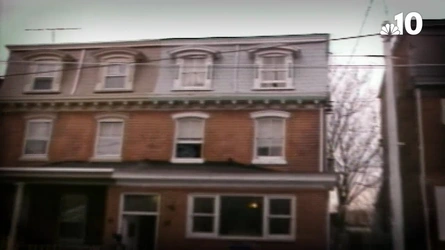
apartment crime scene.jpg apartment crime scene2.jpg
(1516 Arrott Street in 1989.)

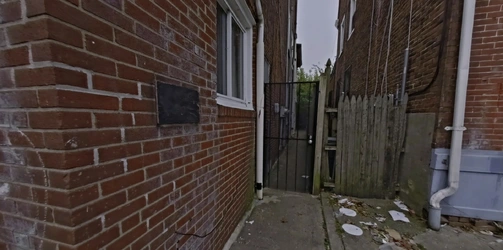
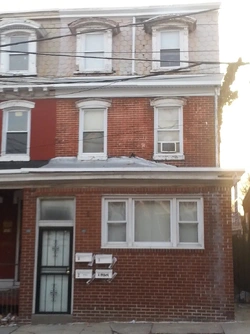
residence.jpg Residence2.jpg Side gate.jpg Exterior.jpg
(Photos of the building today.)


That October Theresa Sciortino, a 29-year-old single mother moved into the third floor apartment. Her birth name was Theresa G. Volio and she was born on August 19, 1958 to Carmen Volio an auto mechanic from South Philadelpha and his wife Theresa M. Volio, who worked as a seamstress. She was described as 5-foot-1, 123-pounds, with chestnut brown hair, which she wore down to her shoulders. She was known to dress in simple clothes, often sweatpants or jeans.

11.jpg
(Possible photo of Theresa Sciortino from a news story.)

There's very little to say about her likes or interests, just the names of family and faces she once knew. It's known that she came from a large Italian family and was the sixth oldest of nine children; five boys and four girls. She had three sisters, Mary, Rochelle, and Josephine, and four brothers; Peter, Carmen, Michael, Robert, and Joseph. It's also known that they were Catholics and had originally lived in South Philadelphia, but the family moved to South-West Philadelphia on Wheeler street when Theresa was a teenager.

When Theresa was 12-years-old her family experienced a terrible tragedy. One day Carol Volio, who was the 24-year-old wife of Theresa's brother Peter, had fallen asleep with her 3-year-old son Robert on the living room sofa. She was then awakened just before noon and found the kitchen filled with smoke and fire and her son Robert was missing. She tried to search the first floor of the home, but couldn't find her son. She then tried to climb the stairs to access a bed-room on the second floor, but flames prevented her, burning her arms. In her panic, she fled to the home of a neighbor. The residents there were William Leonard and his wife, who were both in their 70's and unable to do anything but call for help. When fire-fighters arrived they found Robert dead of smoke inhalation on the second floor.

It's unknown how Robert's death affected Theresa or her family, but around the age of 18 she married a man named Emilio Joseph Sciortino and soon became pregnant, giving birth to a daughter named Rachel. About a year later, Emilio and her had divorced.

Theresa was now a 29-year-old mental patient with a cocaine addiction. Public records show that on February 16, 1985 she was arrested on a series of charges listed as "Simple Assault," "Harassment-Physically Strike Kick etc," and "Terroristic threats." Her daughter Rachel was now 11-years-old and lived with Theresa's parents in Southwest Philadelphia. Despite that her daughter was not in her care, she was very devoted to her and would visit her, but was desperately trying to turn her life around so she could bring her daughter to live with her. She was actively trying to get a steady job as a waitress, but she could never hold onto a job for very long. She was fired from three neighborhood restaurants over the past three months.

According to the owner of the Frankford Colonial Restaurant, located off Foulkrod Street, she had a hard time keeping orders straight, "She couldn't keep up with it." She only worked there for a few weeks in October.

At the Liberty Bell Restaurant on Frankford Avenue near Pratt Street, she only lasted two days according to the night manager. She showed up for work in heels, he knew from her choice in footwear that she had exaggerated about her experience. According to him, savvy waitresses wear rubber-soled, flat shoes.

"You felt like she was a space cadet," said the hostess of the New Riviera Restaurant and Cocktail Lounge, on Frankford near Margaret street, where Sciortino worked as a waitress for less than a day before being fired. "She was out there among the stars. She wasn't on Earth with you."

She had a boyfriend for awhile, but according to her second floor neighbor, Judy Kaiser she would call him at work and repeatedly ask him, "Are you with somebody else?... Are you sure you don't have a girl with you?"

In November she checked into the Eastern Pennsylvania Psychiatric Institute on Henry Avenue for three weeks. She had also been treated at Friends Hospital on Roosevelt Boulevard, and according to her family she suffered from bouts of acute depression, and had been in and out of mental institutions since she was a young adult and was taking medication for her mental illness. She was currently receiving outpatient treatment for psychiatric treatment and receiving social security for mental problems.

"She wasn't a terrible person... She was just a mixed-up person, a troubled person," a family member described her. "[She was] trying to make the best of her life, always trying to bounce back."

"I would describe her as a little bit pathetic but not hopeless. It's a tragedy, really."

Two buildings from Theresa's residence stood the Jolly Post Tavern at 1522 Arrott Street, where she was a regular. Patrons there described her as abrasive and difficult to like. According to Tony Tierno, she would approach men directly, stare until they noticed, then ask if they'd buy her a beer. One of the bartenders, a woman named Cindy considered Theresa attractive, but according to her, men were typically put off by her manner and declined. After rejection, she'd systematically move to the next bar stool, and then the next until she'd approached all twenty patrons sitting around the counter.
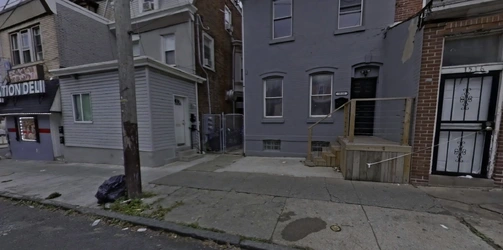
Jolly Tap Tavern.jpg
(Today the Jolly Post Tavern is a Deli, which sits two doors down from Theresa Sciortino's apartment.)
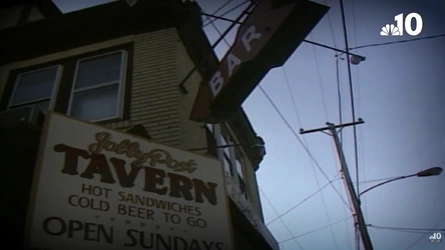
Jolly Post Tavern.jpg
(Photo of the Jolly Post Tavern,)

"She used to walk in, stand there, and just stare at you, waiting for you to pick her up," said Jim Obst, a regular. "It was a scary look. A weird look. I'd say she had some kind of problem."

"She had a male company every night... She had a lot of company," said Sandra Ward, who shared the second-floor apartment with her roommate Judy Kaiser, directly below Theresa's.

"She's been bringing men up there every day and every night," Judy Kaiser added. "Young boys, older men... We knew something was going to happen."

Following her usual routine of loneliness, Theresa arrived at the Jolly Post Tavern sometime Wednesday afternoon. She drank a few Cokes, conversed with several men, then ordered a Budweiser draft around 6 P.M. according to bartender, Cindy. She ordered another beer from Debbie, another bartender who was just starting her shift.

Theresa then finished her Budweiser, set the glass down, and left alone around 6:30 P.M. A witness then saw her walking toward her home accompanied by a white, middle-aged man.

At some time between 6:40 and 7 P.M., Sandra Ward, the 38-year-old neighbor in the second-floor apartment directly below Theresa's, heard two loud thumping sounds from upstairs.

"That scared me," Ward said at the time. "It sounds like somebody threw her against the door," she told her roommate, Judy Kaiser.

"Nah," Kaiser replied. "She's just moving furniture around again."

Ward described the noise more vividly: "I heard a big thump... and I said to my roommate, 'it sounds like somebody just picked her up and threw her down on the floor.'"

"I said, 'That scares me,'" Ward continued. "She said, 'Don't get involved. Because they might be after us.' And I got scared."

Despite hearing footsteps descending the stairs afterward, neither woman called the police.

It wasn't until 9 P.M. that they notified Rocky Wardell, the 33-year-old manager of the converted four-unit house, about what they had heard and asked if he could check on Theresa.


Thursday, January 19th-


At 12:30 A.M. Wardell went and investigated, finding the victim propped up against a door.

"He found her," Ward said. "He called the police and then came down. He said she was stabbed. A lot... There was blood all over. Rocky was very upset."

Theresa was found naked, face up on the kitchen floor, wearing only her socks. Stabbed 25 times. Blood was everywhere. She was stabbed in the face, slashed in the chest, neck, arms and head, with her stomach ripped open. She had also been sexually assaulted with a 3 1/2-foot-long piece of wood that was found leaning against the kitchen sink. The wood was a piece of the doorjamb from the entrance to her apartment, which had been broken off from the door frame.

84a99eb884df0cda55809df68c49c7f5l-f3053421354rd-w2048_h1536.webp
(Photo of a kitchen from inside her apartment building. The photo may be her apartment or a photo of Apartment 2, because the same photo is used for both apartments in online listings.)

Detectives were summoned to the crime scene. Reporters soon followed.

Detective Lt. James Henwood of the Homicide Division said there were signs of a vicious struggle. "There was a battle in there," Henwood said. "The fight moved from one room to another. There was a large amount of bleeding."

Plastic bags containing drugs were found in the apartment, along with a syringe. Sciortino had visible needle marks on both of her arms, and had been injecting cocaine.

Detectives had the Water Department employees search the sewers for possible murder weapons, and crime-lab investigators were seen carrying plastic bags filled with items from the building.

A nervous Sandra Ward stood outside the building, speaking to reporters as she smoked a cigarette, "I'm scared," she said.

Joan Kennedy, a neighbor of Sciortino's told a reporter that she had only seen the woman once or twice before, but that she knew a previous victim, Jeanne Durkin, "she used to visit a friend in a building where I used to live."


Friday, January, 20th-


Detectives announced to the press that they're now investigation a connection between the murders of Helen Patent, Anna Carroll, Susan Olszef, Jeanne Durkin, Margaret Vaughan, and Theresa Sciortino. They also inform reporters that Catherine M. Jones might also be connected. Police had earlier tried to link the Jones murder to murderer, Gary Heidnik who had allegedly bragged that he had killed six women.

Speaking of the Jones murder Homicide Captain Robert Grasso stated, "I'd be foolish to say I can rule [the Jones case] out, but there are a lot of circumstances that we uncovered in her background that make me feel as though it is not related."

"We're looking into the possibility that these crimes were committed by the same person," said police spokesman Captain. Richard DeLise. "Like all such cases, we can not positively say it is one person but there is so much similarity that we are very, very suspicious a serial killer could be involved, someone who likes to duplicate his crimes."

"The similarities provide the link. You have multiple stabbings. You have women who have been known to frequent the same bars in one neighborhood, and all the victims were slashed numerous times."

However Captain Grasso was dismissive about the possibility that the crimes were linked. "There are as many dissimilarities among the cases as there are similarities," said Grasso. "There is no signature on each individual one."

Contradicting Grasso, Assistant Medical Examiner Paul Hoyer said there was indeed a pattern to the wounds that linked them all together, but declined to say to the press what it was. Hoyer would also comment that there was a great rage in each of the murders that went beyond just simply killing the victims. "The first four or five [stab wounds] are enough to stop a person from moving," he said. "The other 45 are just from anger."

Hoyer would however downplay the idea that the murders were the work of a serial killer, stating that the frequency of the crimes seemed "way too low" for them to be the work of a serial killer. "It almost makes one think that they might not be related."

Serial killers in his opinion killed "every couple weeks, perhaps even more than that."

Speaking of Sciortino, Detective Lt. James Henwood dismissed claims that Sciortino was involved with prostitution, saying "She did have frequent male callers and did on occasion hustle [for money]," but added that she was not a prostitute.

"I hope they catch this person before he kills more women," said Catherine Jones' mother, Ruth. "It's terrible to think that he's out there alive... just enjoying life."


Monday, January, 23rd-

A viewing is held at 7 P.M. for Theresa at Kish Funeral home located at 6506 Elmwood Avenue in Southwest Philadelphia. A mass of Christian burial was held the next day at 9:30 A.M, at St. Barnabas Roman Catholic Church on 63rd Street and Buist Avenue. She was buried at Saints Peter and Paul Cemetery in Springfield, Pennsylvania.


Sunday, January, 29th-

The papers now identify the killer by a series of names, which locals used to label the killer. The most common being "The Slasher." Other names being used were "The Knifer," or "Jack the Ripper." It's unclear how many of the victims were involved with sex work, but prostitutes became the major focus of the case as potentially venerable targets of the "Slasher."

Police sketches of the killer now appeared plastered on city streets, depicting an older middle-aged man who wears glasses. The same individual had been seen with both Margaret Vaughan and Theresa Sciortino just before each victim turned up dead.


Sister on facebook.jpg

(Theresa's sister on Facebook, still mourning her sister.)


Sources-

Philidelphia Daily News Philadelphia, Pennsylvania · Friday, January 20, 1989

Philidelphia Inquirer Philadelphia, Pennsylvania · Friday, January 20, 1989

Philidelphia Daily News Philadelphia, Pennsylvania · Saturday, January 21, 1989 part 2

Philidelphia Inquirer Philadelphia, Pennsylvania · Saturday, January 21, 1989 part 1

The Daily News Lebanon, Pennsylvania · Saturday, January 21, 1989

The Morning Call Allentown, Pennsylvania · Saturday, January 21, 1989

The Philadelphia Inquirer Philadelphia, Pennsylvania · Sunday, January 29, 1989 2


"The Encyclopedia of Unsolved Crimes" - Michael Newton

"Hearts of Darkness: Serial Killers, the Behavioral Science Unit, and My Life as a Woman in the FBI"- Jana Monroe

"From the Files of True Detective Magazine: Bizarre Murders II" Edited by Rose G. Mandelsberg

"Homicide Detective: Volume 1 Number 6, March 4, 2024"- Duke Fox & Editor in Chief Barry Bowe

"TruTV Crime Library: Frankford Slasher" - Katherine Ramsland
 
Última edición:
Seeing him be called tacky, even back then, did wonders for my soul. Retroactively, of course.
Any joy was immediately snatched away by the realization that I was seeing his toes. EWWWWW.

------------
And for the youngfags, part of what made the Hugh Grant thing hi-fucking-larious is that he had the reputation for playing cute, squeaky-clean, upper-class dorks.

And then he's caught with a hooker.

If it had been a Heidi Fleiss $1,000-an-hour escort, it would have been a little scandal, but nothing career shattering.

This was not a Heidi Fleiss $1,000-an-hour escort.

Divine Brown.

She's actually not as busted as I remember her being, but still.

Divine Brown.

s-l1200.jpg
 
Any joy was immediately snatched away by the realization that I was seeing his toes. EWWWWW.

------------
And for the youngfags, part of what made the Hugh Grant thing hi-fucking-larious is that he had the reputation for playing cute, squeaky-clean, upper-class dorks.

And then he's caught with a hooker.

If it had been a Heidi Fleiss $1,000-an-hour escort, it would have been a little scandal, but nothing career shattering.

This was not a Heidi Fleiss $1,000-an-hour escort.

Divine Brown.

She's actually not as busted as I remember her being, but still.

Divine Brown.

Ver archivo adjunto 9012931
God, I'm old. I actually remember this when it was new and it was my first introduction to Hugh Grant.

Anyways, time for his apology tour video.

 
And for the youngfags, part of what made the Hugh Grant thing hi-fucking-larious is that he had the reputation for playing cute, squeaky-clean, upper-class dorks.
AND, he was dating Elizabeth Hurley for years at that point. He cheated on one of the most beautiful women in the world (IMO) with a busted-looking cheap hooker.
 
Just finished a podcast on this very disturbing unsolved mystery; the murder of the "Precious Hope" Jane Doe. Precious Hope is the name given to a young black girl aged 8 to 11 who was found bound and cleanly decapitated in an abandoned basement in St Louis, Missouri on February 28th 1983. Bruising on what was left of her neck suggested that she had been strangled to death, and she had also been raped. Hope had been tall for her age, standing at 4'10 without a head, and her fingernails had been painted sometime prior to her death. Her body had been in the basement where it was found for about 2-3 days, but given the lack of blood in the area investigators believed that Hope had been killed elsewhere before being abandoned there.

1000062544.webp1000062545.webp1000062546.webp1000062547.jpg

Hope's case is less of a "whodunit" and more of how the fuck could this have happened. The only suspect in this case was black serial killer Vernon Brown who targeted black women and girls; he lived in Missouri at the time of Hope's disappearance and typically killed his victims in abandoned buildings. After his arrest for a separate crime Vernon confessed to several other murders, but never Hope's. He was executed in 2005 and basically all leads died with him - Hope's head was never found, and no one has come forward to claim her. Hope had been previously well cared for prior to her murder, and yet nobody seems to know who she is. Investigators expended a lot of effort in contacting school districts and canvassing black neighbourhoods and magazines to find leads, and it was all for naught. Her body was exhumed it 2013, with isotope testing suggesting that she lived most of her life in either Florida, Georgia, Alabama, Mississippi, Louisiana, Arkansas, Texas, Tennessee or the Carolina states. Hope's case isn't even similar to The Boy in the Box case, as not only was Joseph much younger but was likely passed around to adoptive families (in an era where that wasn't uncommon) before being murdered. My personal belief is that Hope was likely murdered by one of her parents, most likely a single mother estranged from her family and childhood town who got involved with some pedo that she either let or possibly helped murder her daughter, after which she moved on with her life. Such a chaotic family background is the only reason that makes sense to me as why Hope was never claimed by anyone. Until one of Hope's relatives uploads their DNA to a database somewhere I don't think this case will ever be solved.
 
Until one of Hope's relatives uploads their DNA to a database somewhere I don't think this case will ever be solved
I believe they did find a couple of distant relatives but they all refused to talk to the investigators, as is common among black communities. That poor girl will never get her name back until people stop tiptoeing around the problems in that community.
 
the murder of the "Precious Hope" Jane Doe.

The whole Jane Doe and John Doe thing is fascinating. Imagine disappearing and dying and nobody will ever know what happened to you.
There was actually another precious Jane doe, also in Missouri that was beheaded.

This one was solved though


Also someone should make a true crime thread for solved cases.
 
The whole Jane Doe and John Doe thing is fascinating. Imagine disappearing and dying and nobody will ever know what happened to you.
that's why the advancement of DNA technology is so great, it gives a lot of these people their names back. i also find it amusing when some old fuck gets booked for something they did decades ago. there are so many people out there who never faced justice but know they left DNA behind and that their clock is ticking. could be tomorrow, could be next year, but one day the knock on the door will come.
 
that's why the advancement of DNA technology is so great, it gives a lot of these people their names back. i also find it amusing when some old fuck gets booked for something they did decades ago. there are so many people out there who never faced justice but know they left DNA behind and that their clock is ticking. could be tomorrow, could be next year, but one day the knock on the door will come.
I'm waiting for the inevitable wave of deathbed confessions to come.
 
I'm waiting for the inevitable wave of deathbed confessions to come.
unfortunately a lot of these scumbags take it to the grave with them as one last act of control / fuck you to their victims. the good thing about DNA is that a lot of offenders who are already dead still get named and shamed (like robert eugene brashers who was responsible for the austin yogurt shop murders, amongst other killings / assaults), so the living ones get to think about the damage they'll do to their own families if they get identified after death.
 
Stolen_727-flash.jpg

It’s May 25th, 2003, at around 5:00 pm, Boeing 727-223, N844AA begins erratically taxiing onto a runway at Quatro de Fevereiro Airport in Luanda, Angola. Its lights are off and it does not have clearance to leave the airport. Air traffic controllers attempt to hail the plane on the radio but receive no response. Its transponder is has been deactivated. The plane takes off and flies west over the Atlantic ocean.

N844AA was manufactured in 1975 and was sold to American Airlines. It had an unremarkable career as a passenger airliner until the year 2000. It was then retired and purchased by Aerospace Sales & Leasing, Inc. a Miami-based company that often purchased retired American Airlines planes in part due to the airline’s stellar maintenance record. In February, 2002, AS&L president, Maury Joesph, brokered a deal with Keith Irwin who was embarking on a joint venture with Cargo Air Transport Systems. Irwin, an entrepreneur from South Africa, had lined up a contract to supply fuel to Angolan diamond mining operations. Due to a long history of instability and civil unrest, Angola lacks the infrastructure needed to supply fuel to these operations via ground transportation.

Joseph sold N844AA to Irwin and CATS for $1 million. As part of the deal, almost all seats were removed and massive diesel storage tanks were installed. Irwin made a down payment of $125,000 and had the plane flown to Luanda, Angola. This deal soon proved disastrous. The mining company Kuwachi Dundo was supposed to have handled all the permits and fees to fly into and out of Quatro de Fevereiro Airport, but they simply did not. The plane was impounded and the crew stuck in Angola for weeks.

The deal completely fell apart and the plane remained at the airport incurring ever increasing fees for 14 months while all parties involved attempted to make deals with other mining companies and the airport authorities. In the end, a South African named Jeff Swain agreed to purchase N844AA from AS&L so that he could remove the engines and scrap the rest of the plane with was essentially worthless at this point. All Joseph had to do was get the plane to Johannesburg. Joseph hired Air Gemini, an Angolan airline that offered repair services. Air Gemini sent Ben Padilla, and American flight engineer and mechanic, to Luanda to get the plane operational along with Congolese mechanic John Mutantu.

The repairs go well. Joseph flies to South African to sign all the paperwork with Swain. That’s where Joseph is on May 26th when he receives an angry phone call from Air Gemini at Quatro de Fevereiro Airport demanding to know why his plane took off without clearance the night prior. Joseph is shocked. The pilots he hired to fly the plane to South Africa haven’t even arrived at the airport yet. They’re due later that day. He immediately notifies the FBI. US authorities fear the plane could have been hijacked by terrorists who intend to fill the fuel tanks and turn the plane into a giant petrol bomb. Soon the CIA, FBI and CENTCOM are scrambling to find the plane. They never find a trace of it. Nothing on satellite photos, no evidence that it crashed into the Atlantic ocean or the Angolan jungle. All reported sightings are investigated and all turn out to be false alarms. They initially suspect Joseph is attempting to commit insurance fraud, but find no evidence to support this.

Ben Pedilla’s fiancée and two kids back in Florida never hear from him again. His brother and sister have spoken to the media attempting to keep the case alive. There’s essentially no evidence as to what happened. Employees at the airport saw two men, likely Pedilla and Mutantu, enter the plane. Routine engine tests were being run and then the plane just took off. Pedilla held a private pilot’s licence but was not qualified to fly an airliner. Mutantu was not a pilot. The 727 requires a qualified crew of three to operate.
 
singsitweb.png Screenshot 2026-05-18 120746.png

It’s Saturday, September 24th, 2005, Phillip Sit is a 17 year old high school student living in Scarborough, Ontario, a suburb of Toronto. Phillip tells his parents that he is going out with his friends. When he doesn’t return the next morning, he is reported missing to the Toronto Police Service. It’s unclear if any genuine effort was made to find him as almost nothing about the investigation has been made public. On August 8th, 2006, skeletal remains are found in a field near King and Weston Roads in King Township which is roughly 50 km (31 miles) northwest of the Sit home. Two weeks later, police identify the remains of those of Phillip Sit. York Regional Police have jurisdiction over the case and have ruled the death a homicide. All other details have been withheld.

dcc157ca94a16c3d7f5651e02ec1fc5a49082691.webp b743e9e2ca40abd5650a73f641e272199e3279a5.webp 14ec1b578af28a270644aa006424de1f0e045943.webp

It’s Monday, August 14th, 2006, 16 year old Toronto high school student Yee Wah “Eve” or "Eva" Ho is at her 17 year old boyfriend Jackie Li’s house in Scarborough. It’s around 7:30 PM. Eve talks to a friend on her mobile phone and is about to leave to meet another friend at Eaton Centre, a large mall in Downtown Toronto. Jackie gets a phone call from his mom. She is working late and asks him to run an errand for her. Eve never makes it to Eaton Centre. Her friend is concerned as this is completely out of character. Eve doesn’t respond to texts or phone calls. Her social media activities stop that night. She’s reported missing when she doesn’t come home.

Jackie’s mother comes home late. He’s not there. All of his things are there except his phone and wallet. She reports him missing. Neither Eve nor Jackie have a history of running away. There’s no history of them acting out or engaging in criminal behaviour. There’s no activity on their bank accounts after this. Neither had a job nor access to a vehicle.

e7c784afd92e880c0d2748a50c8c677103faedb3.webp

Around the same time Jackie and Eve disappear, Jackie’s friend Kevin Lim, also 17, leaves his Scarborough home. He tells his grandmother that he is going to a convenience store down the street to get a drink. He asks her not to lock the door. He doesn’t take his phone, wallet, or house keys. He just takes a few dollars with him. He’s never seen again. Like Eve and Jackie, he has no history of behavioural problems, had no job and no car. His online activity stops that day.

The Toronto Police quickly conclude that the three ran away possibly going to Mainland China or Hong Kong. There is no evidence of this. Jackie and Kevin left their passports at home. Eve never even had a passport and never seems to have left Canada before. The police search their computers and find nothing. Their friends know nothing about plans for the three to run away. Police express frustration at the lack of leads they receive.

Nine days after the three disappear, York Police identify their John Doe as Phillip Sit. Police then speculate that the three knew something about his murder. He and Eva went to the same school and he was friends with Jackie and Kevin. Some sources claim they were good friends while others suggest they were closer to being acquaintances who barely knew each other.

The parents have all made public appeals for the return of their children. By 2009, Constable Scott Mills admitted that the police had absolutely no leads. The most common speculation remains that the three somehow knew something about the murder of Phillip Sit, and fled to China with forged documents. There’s no explanation as to how they could obtain fake passports, support themselves financially or even know that Sit’s body had been found as he would not be identified for more than a week after they disappear.

 
Atrás
Top Abajo