Link (Archive)
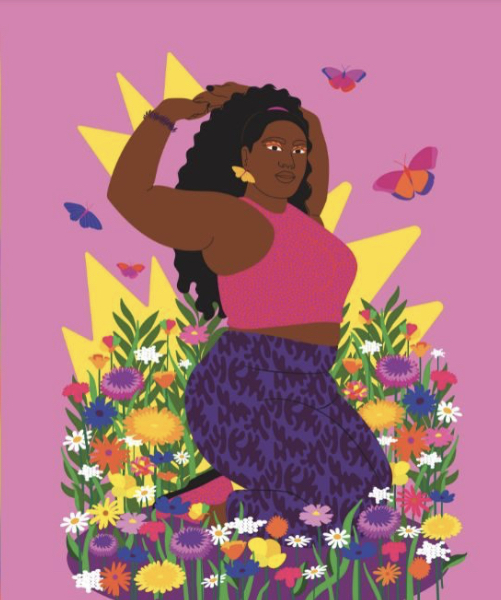
In my early 20s, I found myself becoming something I had long been told to fear and even hate: I was getting fat.*
No matter what I did, comments were made about my body, from a family member questioning me about my being “too fat” for an outfit, to doctors insisting all my problems would disappear if I shed a few pounds. At every step, people of all sizes reminded me that being fat was less than ideal.
All sorts of advice came my way on how to avoid the dreaded fate of being fat. I learned how to pose and hold in my stomach for pictures. I found out what clothes to wear to hide my flabby arms. I limited how much I ate, until the thought of eating grossed me out.
At my thinnest, I was still worried about my weight. I even complimented friends for looking slimmer, not realizing the backhanded nature of my words. All my life, my experiences with fatness had been negative, and it would be years before I learned how hatred and fear of fat were linked to white supremacy.
My journey through this mess began with body positivity. Body positivity is exactly what it sounds like: feeling positive about your body, no matter what you look like. In my early 20s, I taped a sign on my mirror saying, “You look so beautiful today.” I documented my outfits on Instagram and tried to be my own hype person. And for a while, it made a difference. I started to feel a self-confidence that I never had before.
But it soon became limiting. The body positivity movement was all about fashion and feeling pretty as a plus-size — but not too big — modern woman. Was being beautiful all that there was to aspire to?
In short, body positivity was not addressing the problems I and other fat people were running into.
Need an example? My partner and I, both fat Black queers, went to see Beyoncé last year at the Rogers Centre in Toronto. We had been looking forward to the Renaissance Tour experience for months. We splurged on lower bowl seats and picked out our fiercest outfits. My partner wore a shimmering silver getup with a bedazzled cowboy hat while I donned a sheer dress with embroidered lingerie underneath. We were on top of the world.
When we got to our seats that July night, there was a problem: they were not wide enough to fit my partner’s hips. We anxiously found guest services. It was less than an hour to showtime, and we had nowhere to sit. Two other plus-size concertgoers showed up with the exact same problem. The stadium’s only solution was to move us to a standing-room-only section with a terrible view. We had spent hundreds of dollars on lower bowl seats only to be moved because society caters to people with smaller bodies.
The demotion to a standing-room-only section felt like a punishment for not adhering to the narrowness of the seats. It didn’t matter how fierce and sexy we felt in our outfits — body positivity alone couldn’t make concert seats bigger.
So I began to ask myself: what is really going on here?
***
One of the people I discovered in my search for answers is Danni Adams. She is a Los Angeles-based influencer and body image coach. She regularly posts about her everyday experiences as a fat, dark-skinned Black woman. She seemed to understand why I was feeling let down by body positivity.
“Body positivity says, ‘We should all love our bodies.’ And it doesn’t get down to the root,” Adams tells me in our Zoom interview. The root is fatphobia. And fatphobia feeds on the complicated relationship between thinness and skin colour. Fatphobia relies on hierarchies of body shape and race. Thin bodies are better. Fair skin is better.
Fatphobia is one of the last legal forms of discrimination. Here’s how the Boston Medical Center puts it: “Fatphobia…is the implicit and explicit bias of overweight individuals that is rooted in a sense of blame and presumed moral failing. Being overweight and/or fat is highly stigmatized in Western Culture. Anti-fatness is intrinsically linked to anti-Blackness, racism, classism, misogyny, and many other systems of oppression.”
It surprised me to see “anti-Blackness” and “classism” in the definition. While I had experienced those forms of hatred in tandem with fatphobia, seeing it written out like that felt validating.
Seeking out stories of people who experienced fatphobia in their daily lives (it’s not hard to find them; 30 percent of Canadian adults are plus-size), I was suddenly able to see how fatphobia had even infiltrated the body positivity movement. The women posing on Instagram and magazine covers under the body positive banner all fit within a narrow category: they were curvy in the right places, “acceptably fat” plus-size women with light to medium skin. Where were the “death fat” (so called to mock the idea that the very fat will collapse and die), dark-skinned, unambiguously Black women?
London Blackwood is the owner of Chubby Fem Thrift, an online thrift store based in Edmonton. They recognize that tiering skin tone and fatness creates a hierarchy that privileges lighter, slimmer people. “There’s an acceptable kind of fat….Now you’re categorizing us because you want to be one of the good ones. You forgot the reason why this movement started in the first place.”
Adams agrees that the body positivity movement has been stuck on clothes and harmful in its lack of inclusion. “We got to take it a step further and say, ‘What are we really advocating for?’ And I think it’s freedom.”
Freedom for fat people. But, freedom from what?
***
I started reading. And what I found is that the roots of fatphobia lie in colonialism.
American feminist philosopher Kate Manne, author of the recent Unshrinking: How to Face Fatphobia, explores how fatphobia was born along with colonialism as British and French people tried to differentiate their white bodies from the Black bodies of the enslaved.
“It’s not that fatness was first derogated, and then Black bodies were associated with fatness. It went the other way. Fat bodies and Black bodies were associated, and that was used to impugn fat bodies and fat Black bodies specifically shortly thereafter,” she writes.
American sociologist Sabrina Strings, who published Fearing the Black Body: The Racial Origins of Fat Phobia in 2019, also connects the dots between Blackness and fatphobia. She writes about so-called race scientists creating categories (outside of skin tone) to further show white people as superior, and everyone else as lower beings.
Describing these racist European ideals in an interview with National Public Radio in 2020, Strings said, “When we’re in the colonies, we’re noticing that Africans are sensuous. They love sex, and they love food. And for this reason, they tend to be too fat. Europeans, we have rational self-control. This is what makes us the premier race of the world. So in terms of body size, we should be slender, and we should watch what we eat.”
Strings shares the notorious case of Saartjie Baartman, a fat Black Khoikhoi woman of South Africa. Baartman was enslaved and paraded around 19th-century Europe in various human zoos, where she was fetishized, touched, poked and prodded by fascinated white Europeans. Her mistreatment made fatness “an intrinsically Black, and implicitly off-putting form of feminine embodiment in the European scientific and popular imagination,” Strings writes.
This colonial fatphobia is still with us, says Manne, and leads to systemic issues today like lower pay — a discrepancy known as the “obesity wage gap” — and worse access to medical care for plus-size people, among other things.
The colonial view of fat Black bodies is not only held by white people. Black people have internalized this racism and fatphobia as well. Blackwood recalls being told, at age eight, to “suck in” their belly by their mother. I’m Jamaican too, and I know how they felt.
Though it was often under the guise of concern about my health, most criticism about my body was others’ fatphobia being projected onto a child. While our parents thought they were being conscious of our growing bodies, the underlying theme was that we shouldn’t stray too far from idealized whiteness.
And just as people of colour have long pointed out that white fragility prevents real dialogue about racism, so too does fatphobia prevent real conversation across body types. “You can’t have emotions,” Adams says. “You can’t say somebody hurt your feelings. You gotta be nice.”
As I see it, when fatness became associated with Blackness, ill health and ugliness, pressure mounted on certain people to not take up too much space in society, both metaphorically and literally. Everyday things like chairs, hospital beds and concert seats are not made for people who should not exist. Though fat people are physically more visible, they are also made invisible in society. Fat people are dehumanized.
***
So how to end discrimination and embrace fat liberation? Facts can help. Some scientific work is being done on why being fat is not such a terrible thing health-wise. A much-cited study of mice published in 2007 in the Journal of Clinical Investigation roundly disputed the idea that fatness must equal illness. Fat can protect against some disease. And a study published in Psychological Science in 2015 found that discrimination based on weight led to an increased risk of dying, rather than actual body size, suggesting the stigma of fatness is more harmful than the fat itself. Human rights advocacy is important too. The work of fat liberation began in the late 1960s at a “fat in” in New York City’s Central Park led by radio personality Steve Post. It continued with the creation of the National Association to Aid Fat Americans, which positioned weight bias as a civil rights issue.
Nearly 60 years later, it feels as if the movement is still just getting off the ground. If fat liberation is to enter the mainstream, it will need to focus less on individuals and more on what work needs to be done to make sure fat people have the same opportunities, rights and advantages as the thin.
Systemic change is what will really bring about fat liberation. Adams, the body image coach, is making a start on the systems by training and certifying professionals who serve fat clients on the job. She says the movement needs to go much further, making us free politically, socially and economically.
And to get there, fat people must be listened to. It’s not enough to include fat models on runways or fat actors in movies. We need to be heard when we go to the doctor’s office, instead of being told to lose weight. We need the same pay as everyone else. Fat people are doing the work, and it’s time for allies, governments, employers, faith communities and others to finally listen to what we have to say.
***
*This essay will be using the word “fat” freely, instead of other euphemisms like “curvy” or “fluffy.” A big part of grappling with fat is realizing that “fat” is not a bad or dirty word. It is a neutral word and only becomes pejorative when used in a negative context. For example, you may have heard someone say they “feel fat today.” But fatness is not a feeling. What they’re doing is negatively commenting on their body and internalizing a fear of fat. When we use the word “fat” to only talk about literal fatness and fat people, we are reclaiming it from being the negative descriptor that society has made it.
Body positivity won’t achieve fat liberation
In my early 20s, I found myself becoming something I had long been told to fear and even hate: I was getting fat.*
No matter what I did, comments were made about my body, from a family member questioning me about my being “too fat” for an outfit, to doctors insisting all my problems would disappear if I shed a few pounds. At every step, people of all sizes reminded me that being fat was less than ideal.
All sorts of advice came my way on how to avoid the dreaded fate of being fat. I learned how to pose and hold in my stomach for pictures. I found out what clothes to wear to hide my flabby arms. I limited how much I ate, until the thought of eating grossed me out.
At my thinnest, I was still worried about my weight. I even complimented friends for looking slimmer, not realizing the backhanded nature of my words. All my life, my experiences with fatness had been negative, and it would be years before I learned how hatred and fear of fat were linked to white supremacy.
My journey through this mess began with body positivity. Body positivity is exactly what it sounds like: feeling positive about your body, no matter what you look like. In my early 20s, I taped a sign on my mirror saying, “You look so beautiful today.” I documented my outfits on Instagram and tried to be my own hype person. And for a while, it made a difference. I started to feel a self-confidence that I never had before.
But it soon became limiting. The body positivity movement was all about fashion and feeling pretty as a plus-size — but not too big — modern woman. Was being beautiful all that there was to aspire to?
In short, body positivity was not addressing the problems I and other fat people were running into.
Need an example? My partner and I, both fat Black queers, went to see Beyoncé last year at the Rogers Centre in Toronto. We had been looking forward to the Renaissance Tour experience for months. We splurged on lower bowl seats and picked out our fiercest outfits. My partner wore a shimmering silver getup with a bedazzled cowboy hat while I donned a sheer dress with embroidered lingerie underneath. We were on top of the world.
When we got to our seats that July night, there was a problem: they were not wide enough to fit my partner’s hips. We anxiously found guest services. It was less than an hour to showtime, and we had nowhere to sit. Two other plus-size concertgoers showed up with the exact same problem. The stadium’s only solution was to move us to a standing-room-only section with a terrible view. We had spent hundreds of dollars on lower bowl seats only to be moved because society caters to people with smaller bodies.
The demotion to a standing-room-only section felt like a punishment for not adhering to the narrowness of the seats. It didn’t matter how fierce and sexy we felt in our outfits — body positivity alone couldn’t make concert seats bigger.
So I began to ask myself: what is really going on here?
***
One of the people I discovered in my search for answers is Danni Adams. She is a Los Angeles-based influencer and body image coach. She regularly posts about her everyday experiences as a fat, dark-skinned Black woman. She seemed to understand why I was feeling let down by body positivity.
“Body positivity says, ‘We should all love our bodies.’ And it doesn’t get down to the root,” Adams tells me in our Zoom interview. The root is fatphobia. And fatphobia feeds on the complicated relationship between thinness and skin colour. Fatphobia relies on hierarchies of body shape and race. Thin bodies are better. Fair skin is better.
Fatphobia is one of the last legal forms of discrimination. Here’s how the Boston Medical Center puts it: “Fatphobia…is the implicit and explicit bias of overweight individuals that is rooted in a sense of blame and presumed moral failing. Being overweight and/or fat is highly stigmatized in Western Culture. Anti-fatness is intrinsically linked to anti-Blackness, racism, classism, misogyny, and many other systems of oppression.”
It surprised me to see “anti-Blackness” and “classism” in the definition. While I had experienced those forms of hatred in tandem with fatphobia, seeing it written out like that felt validating.
Seeking out stories of people who experienced fatphobia in their daily lives (it’s not hard to find them; 30 percent of Canadian adults are plus-size), I was suddenly able to see how fatphobia had even infiltrated the body positivity movement. The women posing on Instagram and magazine covers under the body positive banner all fit within a narrow category: they were curvy in the right places, “acceptably fat” plus-size women with light to medium skin. Where were the “death fat” (so called to mock the idea that the very fat will collapse and die), dark-skinned, unambiguously Black women?
London Blackwood is the owner of Chubby Fem Thrift, an online thrift store based in Edmonton. They recognize that tiering skin tone and fatness creates a hierarchy that privileges lighter, slimmer people. “There’s an acceptable kind of fat….Now you’re categorizing us because you want to be one of the good ones. You forgot the reason why this movement started in the first place.”
Adams agrees that the body positivity movement has been stuck on clothes and harmful in its lack of inclusion. “We got to take it a step further and say, ‘What are we really advocating for?’ And I think it’s freedom.”
Freedom for fat people. But, freedom from what?
***
I started reading. And what I found is that the roots of fatphobia lie in colonialism.
American feminist philosopher Kate Manne, author of the recent Unshrinking: How to Face Fatphobia, explores how fatphobia was born along with colonialism as British and French people tried to differentiate their white bodies from the Black bodies of the enslaved.
“It’s not that fatness was first derogated, and then Black bodies were associated with fatness. It went the other way. Fat bodies and Black bodies were associated, and that was used to impugn fat bodies and fat Black bodies specifically shortly thereafter,” she writes.
American sociologist Sabrina Strings, who published Fearing the Black Body: The Racial Origins of Fat Phobia in 2019, also connects the dots between Blackness and fatphobia. She writes about so-called race scientists creating categories (outside of skin tone) to further show white people as superior, and everyone else as lower beings.
Describing these racist European ideals in an interview with National Public Radio in 2020, Strings said, “When we’re in the colonies, we’re noticing that Africans are sensuous. They love sex, and they love food. And for this reason, they tend to be too fat. Europeans, we have rational self-control. This is what makes us the premier race of the world. So in terms of body size, we should be slender, and we should watch what we eat.”
Strings shares the notorious case of Saartjie Baartman, a fat Black Khoikhoi woman of South Africa. Baartman was enslaved and paraded around 19th-century Europe in various human zoos, where she was fetishized, touched, poked and prodded by fascinated white Europeans. Her mistreatment made fatness “an intrinsically Black, and implicitly off-putting form of feminine embodiment in the European scientific and popular imagination,” Strings writes.
This colonial fatphobia is still with us, says Manne, and leads to systemic issues today like lower pay — a discrepancy known as the “obesity wage gap” — and worse access to medical care for plus-size people, among other things.
The colonial view of fat Black bodies is not only held by white people. Black people have internalized this racism and fatphobia as well. Blackwood recalls being told, at age eight, to “suck in” their belly by their mother. I’m Jamaican too, and I know how they felt.
Though it was often under the guise of concern about my health, most criticism about my body was others’ fatphobia being projected onto a child. While our parents thought they were being conscious of our growing bodies, the underlying theme was that we shouldn’t stray too far from idealized whiteness.
And just as people of colour have long pointed out that white fragility prevents real dialogue about racism, so too does fatphobia prevent real conversation across body types. “You can’t have emotions,” Adams says. “You can’t say somebody hurt your feelings. You gotta be nice.”
As I see it, when fatness became associated with Blackness, ill health and ugliness, pressure mounted on certain people to not take up too much space in society, both metaphorically and literally. Everyday things like chairs, hospital beds and concert seats are not made for people who should not exist. Though fat people are physically more visible, they are also made invisible in society. Fat people are dehumanized.
***
So how to end discrimination and embrace fat liberation? Facts can help. Some scientific work is being done on why being fat is not such a terrible thing health-wise. A much-cited study of mice published in 2007 in the Journal of Clinical Investigation roundly disputed the idea that fatness must equal illness. Fat can protect against some disease. And a study published in Psychological Science in 2015 found that discrimination based on weight led to an increased risk of dying, rather than actual body size, suggesting the stigma of fatness is more harmful than the fat itself. Human rights advocacy is important too. The work of fat liberation began in the late 1960s at a “fat in” in New York City’s Central Park led by radio personality Steve Post. It continued with the creation of the National Association to Aid Fat Americans, which positioned weight bias as a civil rights issue.
Nearly 60 years later, it feels as if the movement is still just getting off the ground. If fat liberation is to enter the mainstream, it will need to focus less on individuals and more on what work needs to be done to make sure fat people have the same opportunities, rights and advantages as the thin.
Systemic change is what will really bring about fat liberation. Adams, the body image coach, is making a start on the systems by training and certifying professionals who serve fat clients on the job. She says the movement needs to go much further, making us free politically, socially and economically.
And to get there, fat people must be listened to. It’s not enough to include fat models on runways or fat actors in movies. We need to be heard when we go to the doctor’s office, instead of being told to lose weight. We need the same pay as everyone else. Fat people are doing the work, and it’s time for allies, governments, employers, faith communities and others to finally listen to what we have to say.
***
*This essay will be using the word “fat” freely, instead of other euphemisms like “curvy” or “fluffy.” A big part of grappling with fat is realizing that “fat” is not a bad or dirty word. It is a neutral word and only becomes pejorative when used in a negative context. For example, you may have heard someone say they “feel fat today.” But fatness is not a feeling. What they’re doing is negatively commenting on their body and internalizing a fear of fat. When we use the word “fat” to only talk about literal fatness and fat people, we are reclaiming it from being the negative descriptor that society has made it.


