Crime AP: California Has Most ‘Mass Slayings’ in 2019 Despite Stringent Gun Control - An Associated Press column notes that California has more gun control than any state yet witnessed the most "mass slayings" for any state


1577605327906.png

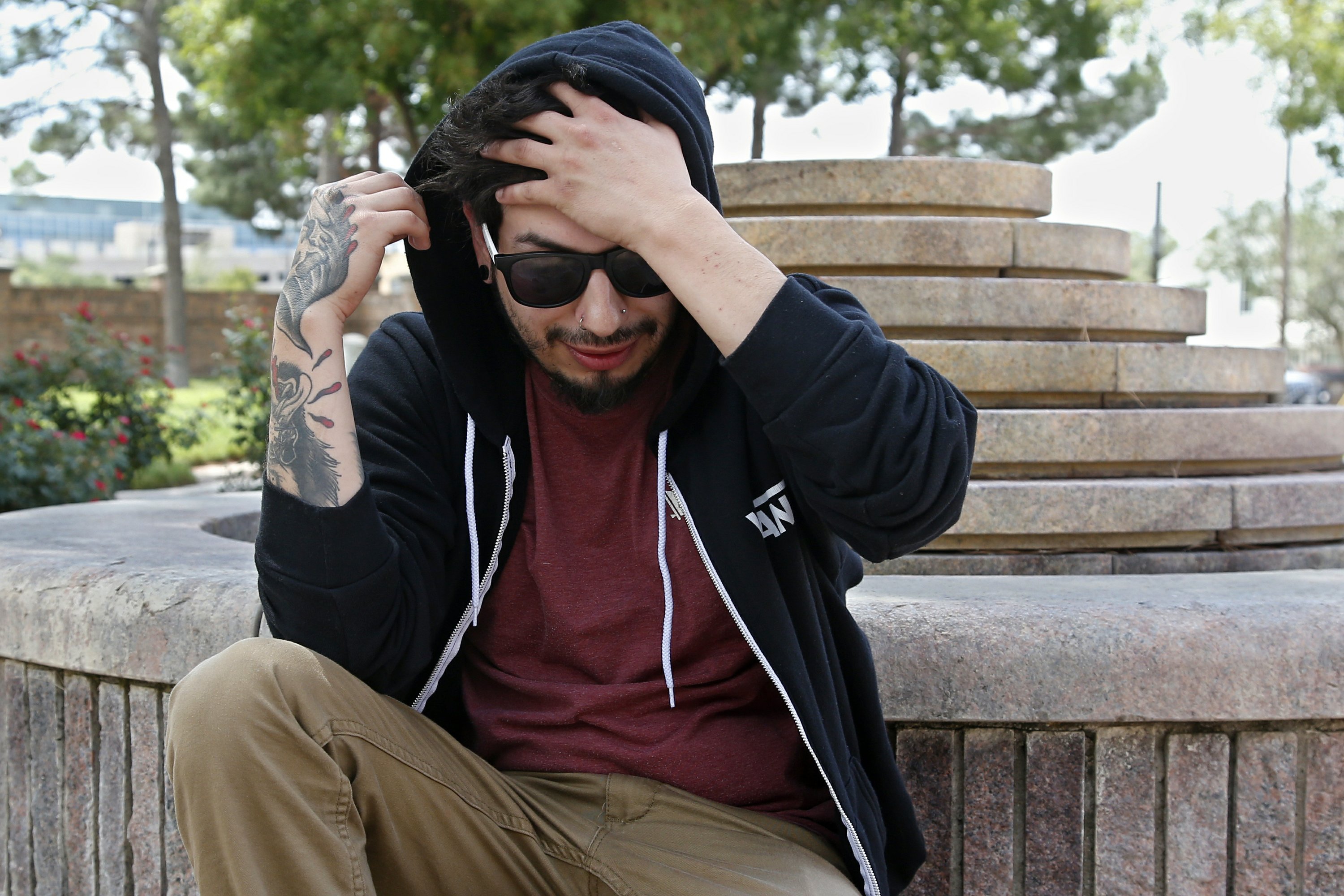
Daniel Muñoz talks about his experience being injured in Saturday's shooting incident during an interview in a park in Odessa, Texas, Sunday, Sept. 1, 2019.

The first one occurred 19 days into the new year when a man used an ax to kill four family members including his infant daughter. Five months later, 12 people were killed in a workplace shooting in Virginia. Twenty-two more died at a Walmart in El Paso in August.

A database compiled by The Associated Press, USA Today and Northeastern University shows that there were more mass killings in 2019 than any year dating back to at least the 1970s, punctuated by a chilling succession of deadly rampages during the summer.

In all, there were 41 mass killings, defined as when four or more people are killed excluding the perpetrator. Of those, 33 were mass shootings. More than 210 people were killed.

Most of the mass killings barely became national news, failing to resonate among the general public because they didn’t spill into public places like massacres in El Paso and Odessa, Texas; Dayton, Ohio; Virginia Beach, Virginia; and Jersey City, New Jersey.

The majority of the killings involved people who knew each other — family disputes, drug or gang violence or people with beefs that directed their anger at co-workers or relatives.

In many cases, what set off the perpetrator remains a mystery.

That’s the case with the very first mass killing of 2019, when a 42-year-old man took an ax and stabbed to death his mother, stepfather, girlfriend and 9-month-old daughter in Clackamas County, Oregon. Two others, a roommate and an 8-year-old girl managed to escape; the rampage ended when responding police fatally shot the killer.

The perpetrator had had occasional run-ins with police over the years, but what drove him to attack his family remains unknown. He had just gotten a job training mechanics at an auto dealership, and despite occasional arguments with his relatives, most said there was nothing out of the ordinary that raised significant red flags.

The incident in Oregon was one of 18 mass killings where family members were slain, and one of six that didn’t involve a gun. Among other trends in 2019:

— The 41 mass killings were the most in a single year since the AP/USA Today and Northeastern database began tracking such events back to 2006, but other research going back to the 1970s shows no other year with as many mass slayings. The second-most killings in a year prior to 2019 was 38 in 2006.

— The 211 people killed in this year’s cases is still eclipsed by the 224 victims in 2017, when the deadliest mass shooting in modern U.S. history took place in Las Vegas.

— California, with some of the most strict gun laws in the country, had the most, with eight such mass slayings. But nearly half of U.S. states experienced a mass slaying, from big cities like New York, to tiny towns like Elkmont, Alabama, with a population of just under 475 people.

— Firearms were the weapon in all but eight of the mass killings. Other weapons included knives, axes and at least twice when the perpetrator set a mobile home on fire, killing those inside.

— Nine mass shootings occurred in a public place. Other mass killings occurred in homes, in the workplace or at a bar.

James Densley, a criminologist and professor at Metropolitan State University in Minnesota, said the AP/USA Today/Northeastern database confirms and mirrors what his own research into exclusively mass shootings has shown.

“What makes this even more exceptional is that mass killings are going up at a time when general homicides, overall homicides, are going down,” Densley said. “As a percentage of homicides, these mass killings are also accounting for more deaths. ”

He believes it’s partially a byproduct of an “angry and frustrated time” that we are living in. Densley also said crime tends to go in waves with the 1970s and 1980s seeing a number of serial killers, the 1990s marked by school shootings and child abductions and the early 2000s dominated by concerns over terrorism.

“This seems to be the age of mass shootings,” Densley said.

He and James Alan Fox, a criminologist and professor at Northeastern University, also expressed worries about the “contagion effect,” the focus on mass killings fueling other mass killings.

“These are still rare events. Clearly the risk is low but the fear is high,” Fox said. “What fuels contagion is fear.”

The mass shootings this year include the three in August in Texas and Dayton that stirred fresh urgency, especially among Democratic presidential candidates, to restrict access to firearms.

While the large death tolls attracted much of the attention, the killings inflicted a mental and physical toll on dozens of others. The database does not have a complete count of victims who were wounded, but among the three mass shootings in August alone, more than 65 people were injured.

Daniel Munoz, 28, of Odessa, was caught in the crossfire of the shooting that took place between a 10-mile (16-kilometer) stretch in West Texas. He was on his way to meet a friend at a bar when he saw a gunman and the barrel of a firearm. Instinctively, he got down just as his car was sprayed with bullets.

Munoz, who moved to Texas about a year ago to work in the oil industry, said he had actually been on edge since the Walmart shooting, which took place just 28 days earlier and about 300 miles (480 kilometers) away, worried that a shooting could happen anywhere at any time.

He remembers calling his mother after the El Paso shooting to encourage her to have a firearm at home or with her in case she needed to defend herself. He would say the same to friends, telling them before they went to a Walmart to bring a firearm in case they needed to protect themselves or others during an attack.

“You can’t just always assume you’re safe. In that moment, as soon as the El Paso shooting happened, I was on edge,” Munoz said.

Adding to his anxiety is that, as a convicted felon, he’s prohibited from possessing a firearm.

A few weeks later, as he sat behind the wheel of his car, he spotted the driver of an approaching car wielding a firearm.

“My worst nightmare became a reality,” he said. “I’m the middle of a gunfight and I have no way to defend myself.”

In the months since, the self-described social butterfly steers clear of crowds and can only tolerate so much socializing. He still drives the same car, still riddled with bullet holes on the side panels, a bullet hole in the headrest of the passenger seat and the words “evidence” scrawled on the doors. His shoulder remains pocked with bullet fragments.

---


Really makes you think...!
 
Criminals don't give a shit about the law, whouda thunk it.

And absolutely the media's race to give mass murderers air time is fueling the problem. Experts agree that media coverage that spreads the names of killers nationwide for a week is a problem and contributes to the mass shooting cycle. We all saw how disappointed MSM was that nobody shot up the Joker movie. But nothing will happen to MSM throwing blood in the water.
 
“You can’t just always assume you’re safe. In that moment, as soon as the El Paso shooting happened, I was on edge,” Munoz said.
This is the attitude a lot of my friends and family have had for years. You can't always assume your safe. That the police will protect you, that no one can hurt you. It's idiotic, it's arrogant.

Animals fight and kill, and humans are better at it than any other species. I carry a gun to protect myself, my wife does, and so do most of my neighbors. It's not something that should be a political slapfight. Right, Left, and Center should agree on the very simple fact that an armed populace is infinitely better off than an unarmed one.

It is pure and simple an attempt to use violence to restrict rights, and not address the actual problems causing said violence. Mental illness. Poverty. Desperation. And a lack of purpose.

So many people these days drown themselves in their own delusion of inadequacy. Incels being just one of many examples. No one believes they can attain what those before them have. Owning a home, a happy, loving relationship, a career to feel passionate for.

These and many other issues are what contributes to how our society is functioning, it's disfunction. What can be done to fix it is debatable, but what should not be up for debate is that our people, regardless of speech, race, or belief have rights that must be maintained. And it takes much more than an old piece of paper to ensure they are.
 
Focusing on homicidal rampages is silly when most homicides in the USA are related to the illegal drug trade, but that's not something that lets the media do 24 hour, 7 days a week coverage of whatever annoying little faggot decided to go on the warpath this time.

It isn't very effective fear mongering, nor does it help perpetuate the endless culture war between red and blue to point out that some random person shooting you is actually incredibly unlikely statistically speaking, and that unless you are selling illicit narcotics, your odds of being murdered are actually incredibly small in the US.
 
I'm legitimately interested in what the Densley fellow meant by us living in an "angry and frustrated time". You can draw a lot of conclusions no matter which side of the debate you fall upon, but the article doesn't press further on that (probably because he himself doesn't have an answer). It could obviously be related to political/racial motivations like the Black Hebrew Israelite wannabes in Jersey City, but then it gets confusing when you note that the perpetrator of a family slaughter in Elkmont is their 14-year-old son, who could've either been secretly a victim or just a psychopath in early bloom.

It doesn't help that the article raises the possibility that "mass killings" are essentially the new fashion for your standard homicide, just with more collateral. Is the current thought process just, "Why not kill just one guy when you can do four?"

Also, geez that is a complicated issue for Munoz there. I'm not sure for what reason he was in jail for, but felons being barred from firearms is usually the first thing moderates would ask for in support of gun control - it's only "common sense" after all. And now he's become paranoid...

Just a side note, but is it possible to find more connecting traits between mass killings if you isolate the ones involving "people who knew each other" versus the ones involving "complete strangers"?
 
Whenever I've brought up points like this before, the usual response is "well the neighboring states are real lax on guns."

Gee, it's almost like California could use some border control...
 
Criminals ignore laws in order to perpetrate ongoing crime. Law-abiding citizens to be punished in accordance. More at 11...
 
I thought New York and soon to be Virginia had stronger gun control laws than we do? Well they still passing more gun laws next year here anyways that limit number of guns you can buy in a year. The suburbia where I live in California, only place to buy guns is Big 5 Sporting Goods or the only gun store in town right across from city hall. The problem I see with the pro gun crowd is that they make themselves look fearful with the whole bugaloo talk when normies who also want to buy guns don't care about losing the comforts of their lifestyle to go full guerrilla warfare on Uncle Sam or that god forsaken smug faced prick sitting in Sacramento, who destroyed SF before he became governor. I do see people of different races and creeds work and shop at the gun store, problem is that it looks unappealing to shop at compared to the Big 5, their selection of guns is roughly the same but for the gun store, everything looks dusty, disorganized and you got old flyers in the store. Fix it up so that more people can get introduced to the world of guns, drop the hoodie jackets and jeans for a shirt and tie since suburbanites like everything pretty and I get it you love Trump and Sexy babe calenders, put that shit in the back. This is just my view of it living in suburban America, rural america wouldn't care about what I said but suburban america like to be full of themselves. Plus they didn't know jackshit about these laws that about to be in effect next year when I asked the guy at the gun store about them, so either they fools or just given up on challenging the gun control activists.

----------------------------------------------------------------------------------------------------------

New gun restrictions coming to California in 2020. Here’s what lawmakers passed this year (archive)

California lawmakers had another busy year passing gun-related legislation. Gov. Gavin Newsom, a staunch proponent of gun control, signed more than a dozen bills one day this fall.

Most of this this year’s gun laws expand existing regulations, but the changes they enact could have sweeping repercussions for gun owners. They increase fees, expand the state’s “red flag” and gun-storage laws, raise the legal purchase age and set caps on the number of guns Californians can buy.

New gun laws, widely supported by the state’s large politically liberal population, haven’t always gone smoothly for California’s estimated 4.2 million gun owners and another 3.1 million adults who live with them.

Recently, tens of thousands of gun owners have been blocked from buying ammunition under the spate of gun-control laws that Newsom championed as he was gearing up to run for governor.

The Sacramento Bee first reported earlier this month that one in five Californians have been denied buying ammunition, usually for errors and omissions in the database used in the state’s new background check program, which took effect July 1.

Here’s a list of the gun laws California lawmakers passed this year and when they take effect.

NEW GUN LAWS FOR 2020
  • If you have a gun-violence restraining order, you’ll be prohibited from buying a firearm for up to five years, under AB 12 by Assemblywoman Jacqui Irwin, D-Thousand Oaks. It takes effect Sept. 1.
  • An employer, coworker, employee or teacher can seek a gun-violence restraining order from a court, allowing police to remove firearms from someone making threats, under AB 61 by Assemblyman Phil Ting, D-San Francisco. It takes effect Sept. 1.
  • You can’t buy guns in California if you are prohibited from buying guns in another state, under AB 164 by Assemblywoman Sabrina Cervantes, D-Corona. The bill takes effect Jan. 1.
  • California law enforcement agencies before Jan. 1, 2021 must develop and adopt written policies and standards regarding the use of gun violence restraining orders under Irwin’s AB 339.
  • Suicide warning labels must be on gun packages and in gun stores by June 1, under Irwin’s AB 645. The handgun safety certificate test also will cover the topic of suicide.
  • Certain gun “precursor” parts must be sold through a licensed vendor under AB 879 by Assemblyman Mike Gipson, D-Carson. Provisions of the bill begin to take effect Jan. 1, but others don’t until July 1, 2024 or 2025.
  • No more firearms and ammunition can be sold at the Del Mar Fairgrounds in San Diego after Jan. 1, 2021, under AB 893 by Assemblyman Todd Gloria, D-San Diego.
  • The $100 cap on processing fees for concealed firearm licenses is going away with the passage of AB 1297 by Assemblyman Kevin McCarty, D-Sacramento. County sheriffs can now charge “an amount equal to the actual costs for processing the application,” according to the bill, which takes effect Jan. 1.
  • If you have a gun-violence restraining order against you, you can fill out a form that says you’re willing to relinquish your guns, under Ting’s AB 1493. The bill takes effect Sept. 1.
  • Nonprofits “that are at high risk of terrorist attack due to ideology, beliefs, or mission” can apply for state grants of up to $200,000 from a newly formed State Nonprofit Security Grant Program to beef up their onsite security. The bill, AB 1548 by Assemblyman Jesse Gabriel, D-San Fernando Valley, was in response to mass shootings at mosques, churches and synagogues.
  • Starting Jan. 1, the fees Californians pay the state when purchasing a firearm will climb to $38.19, with the passage of AB 1669 by Assemblyman Rob Bonta, D-Alameda. The bill also updated California’s legal code to reflect that gun show regulations apply to ammunition vendors.
  • If you’re younger than 21, you can’t buy a semiautomatic center-fire rifle starting Jan. 1. SB 61 by State Sen. Anthony Portantino, D-La Cañada Flintridge, also prohibits Californians from buying more than one semiautomatic center-fire rifle in a 30-day period beginning on July 1, 2021.
  • Beginning Jan. 1, the owner of any unlocked gun taken out of a home by a child or a “prohibited person” can be charged with a crime and penalized with a 10-year ban on gun ownership under Portantino’s SB 172. The bill also set gun storage requirements for nursing homes.
  • The number of transactions a gun seller can make without a firearms dealer license is now limited to six per year under SB 376. Portantino’s bill also sets a cap of 50 total firearms within those six transactions. The bill takes effect Jan. 1.
 
We all saw how disappointed MSM was that nobody shot up the Joker movie.
I just want to point out how utterly baffling this sentence would've been only five years ago. Jesus Christ.

Agreed with the rest though. Just make it illegal for the press to release the name, photo and mantra of these attention whores. Make them nobodies, because that's what they are.
 
I just want to point out how utterly baffling this sentence would've been only five years ago. Jesus Christ.

Agreed with the rest though. Just make it illegal for the press to release the name, photo and mantra of these attention whores. Make them nobodies, because that's what they are.
I wonder if we could, you know, make crime illegal?
Seriously. Ban murder and murder weapons. All of them. No more murder weapons I say. None.
 
Atrás
Top Abajo