Science 1642 Scientists Blast Trump’s ‘Absurd’ Anti-Trans Memo

Rewire News

More than 1,600 scientists released an open letter Thursday opposing the Trump administration’s memo erasing legal protections for trans people.

The letter, signed by over 700 biologists, 100 geneticists, and nine Nobel laureates, pushed back on the administration’s claim that defining sex according to observed genitals at birth or a genetic test is grounded in science. “This proposal is fundamentally inconsistent not only with science, but also with ethical practices, human rights, and basic dignity,” read the letter. “The proposal is in no way ‘grounded in science’ as the administration claims. The relationship between sex chromosomes, genitalia, and gender identity is complex, and not fully understood.”

For the scientists behind the letter, it was important to step forward and oppose a policy that they felt was misinterpreting the scientific understanding of sex and gender. “It appears the Trump administration is trying to eliminate the entire concept of gender as a thing separate from sex, in the sense that they believe that they can stop allowing transgender people to self-identify as transgender by requiring everybody to be defined as a binary sex from birth,” said Rachael French, a biology professor at San Jose State University.

“They’ve suggested at least two things: what your genitalia look like when you’re born or whether you have a Y chromosome,” she said in an interview with Rewire.News. “You can’t even test for what sex a person is, let alone be able to define what gender a person is based on their chromosomes. The entire idea from a biological standpoint is ridiculous.

French said trans people won’t be the only ones negatively affected by the sex definition proposed by the administration. She worried that intersex people could be forced into painful and unnecessary surgeries as children in order to make their genitals conform to the legal definitions of sex being pushed by the Trump administration. Even cisgender people with natural genetic variations could be legally forced into another sex thanks to an invasive government genetics test.

The open letter wasn’t the only response to the anti-trans memo from the scientific community since it was first reported by the New York Times. Science journal Nature pushed back on the administration’s scientific justification for discrimination in an editorial, saying the memo “has no basis in science” and calling for the move to be “abandoned.” A piece in Scientific American called the proposed policy “scientifically absurd.” And Trump’s Centers for Disease Control director, Robert Redfield, said the stigma against the trans community stemming from the policy is “not in the interest of public health.”

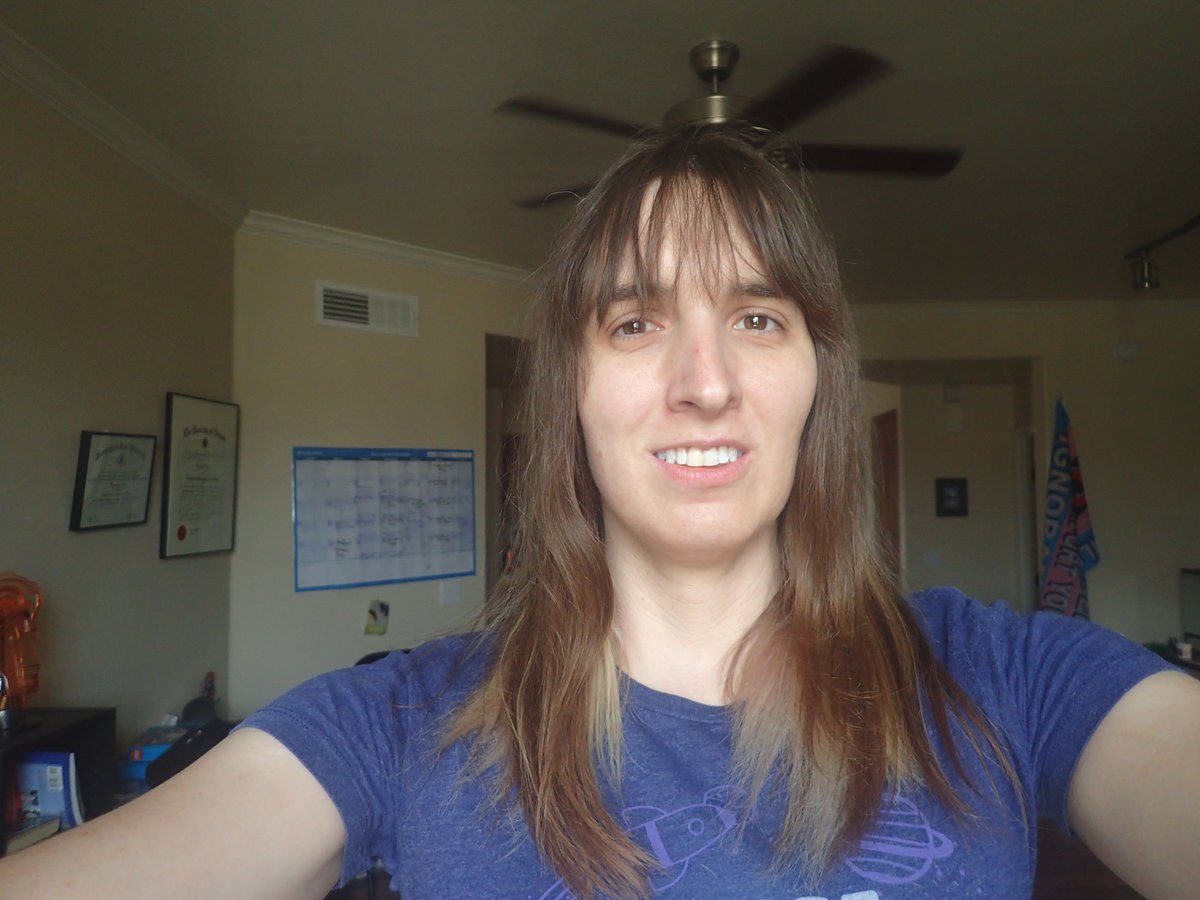
For trans women like Tessa Fisher, a third year PhD student at Arizona State University studying astrobiology, coverage of Trump’s anti-trans memo made her feel “scared but also furious.”

The response from her scientific peers has been heartening. “It’s been really amazing,” she told Rewire.News. “Partially because these people are my peers for the most part, and it’s a really nice thing, [it’s] sort of affirming that a lot of the people out there that I work with and I read their papers and I’m sort of doing the same things they are respect who I am. Which is really, really encouraging. It’s a great show [of] genuine allyship.”

With everyone in her life perceiving her as female, Fisher pointed to the sheer impracticality of the plan to erase trans people from existence. “From like a day-to-day point of view [it] makes absolutely no goddamn sense whatsoever. It would literally be pointless for me to call myself male, even if I wanted to, because no one would see me as that.

[Positron's note: let's see?]
DbvV3bQV0AAENhP.jpg


Dq5VotkVsAUJz3e.jpg


dd.png


2.png
[Continue article]

Fisher is particularly frustrated about the way those who oppose trans rights have tried to co-opt science for their own means. “There’s the presumption that they know more about the scientific research than I do, even though I’m the one working on a PhD in that,” she said. “In a lot of cases, it’s at the same time kind of shocking how shallow their understanding of science is. The best example I’ve ever had of that is that some Twitter troll who had been picking a fight with me earlier actually tweeted at my advisor and the profile for my program to complain that they had not taught me taxonomy correctly. Which was creepy and also kind of pathetic.”

The public seems to hold overly simplistic ideas about the science of sex and gender, according to scientists. “There is zero scientific evidence for anybody to feel that people, children or anybody else, should have to choose one particular gender,” Mollie Manier, a biology professor at George Washington University, told Rewire.News. Manier’s research focuses on the evolutionary genetics of reproduction.

If you look across multiple cultures, and apparently even within the history of the U.S., there’s a lot of gender fluidity .… When people are allowed to be more gender-fluid culturally, they often are, and that’s reflecting more of a biological reality that gender is not a binary always,” she said.

Manier, who helped draft the letter, reiterated that there is no genetic test that could conclusively determine a person’s sex or gender. “Even if there were, it is totally inappropriate to use that in order to override an individual’s lived experience of what they think in their heart of hearts they are.”

+++
Positron's notes:
1. The letter is here (in case you don't notice the link buried in the article). 1642 "scientists" is a very small number considering these include PhD candidates.
2. Nature, despite being the scientific journal with the second or third highest impact factor, has always been very cucked and anti-Trump; it seems Trump's inauguration has pushed them back to the 50s, when Nature was a brewing ground of crackpot theories.
3. "Gender determination is complex!"; "How about the intersex?!?!?!"; "trannies have been in multiple cultures!!!!". I thought science education trains independent thinkers, not NPCs
4. Science is fucked.
 
Última edición:
Well, it is Nature, what did you expect? A little off-topic, the recently published gem of this book review.

BOOKS AND ARTS
25 September 2018
Genetic determinism rides again
Nathaniel Comfort questions a psychologist’s troubling claims about genes and behaviour.

Blueprint: How DNA Makes Us Who We Are Robert Plomin Allen Lane (2018)

It’s never a good time for another bout of genetic determinism, but it’s hard to imagine a worse one than this. Social inequality gapes, exacerbated by climate change, driving hostility towards immigrants and flares of militant racism. At such a juncture, yet another expression of the discredited, simplistic idea that genes alone control human nature seems particularly insidious.

And yet, here we are again with Blueprint, by educational psychologist Robert Plomin. Although Plomin frequently uses more civil, progressive language than did his predecessors, the book’s message is vintage genetic determinism: “DNA isn’t all that matters but it matters more than everything else put together”. “Nice parents have nice children because they are all nice genetically.” And it’s not just any nucleic acid that matters; it is human chromosomal DNA. Sorry, microbiologists, epigeneticists, RNA experts, developmental biologists: you’re not part of Plomin’s picture.

Crude hereditarianism often re-emerges after major advances in biological knowledge: Darwinism begat eugenics; Mendelism begat worse eugenics. The flowering of medical genetics in the 1950s led to the notorious, now-debunked idea that men with an extra Y chromosome (XYY genotype) were prone to violence. Hereditarian books such as Charles Murray and Richard Herrnstein’s The Bell Curve (1994) and Nicholas Wade’s 2014 A Troublesome Inheritance (see N. Comfort Nature 513, 306–307; 2014) exploited their respective scientific and cultural moments, leveraging the cultural authority of science to advance a discredited, undemocratic agenda. Although Blueprint is cut from different ideological cloth, the consequences could be just as grave.

The scientific advance this time is the genome-wide association study (GWAS). Invented in 1996, GWAS has gained massively in predictive power with the advent of ‘polygenic scores’, a statistical tool that in recent years has lured social scientists to the genome, with the promise of genetic explanations for complex traits, such as voting behaviour or investment strategies. As Plomin notes, it was something they had been trying to do for a long time.

Plomin’s predecessors tried to get monogenic risk scores. For example, Henry Goddard, an educational psychologist who from 1906 to 1918 directed the New Jersey Training School for Feeble-Minded Girls and Boys in Vineland, claimed he had found the gene for low intelligence. With Charles Davenport, a prominent US eugenicist, whispering in his ear, Goddard suggested that learning disabilities resulted from a single Mendelian recessive gene. Scanning the swathes of pedigrees he had collected (progressive-era ‘big data’; see D. Dobbs Nature 558, 28–29; 2018), he identified what seemed to be a unit character: an apparent recessive “gene for” learning disability. When he factored in behaviours thought to result from that condition — such as criminality and promiscuity — the alleged association went sky-high. Goddard’s pedigrees bloomed with antisocial traits, which he believed were passed down the generations as a Mendelian recessive gene. He never seems to have questioned whether a single gene for such a complex trait made sense biologically. It doesn’t.

No one is so foolish as to believe in a single gene for learning disability any more. As has been well established, the genetic contribution to complex traits is spread over many genes, each contributing a minuscule sliver of the variability for the trait. Polygenic risk scores sum and weight these many tiny effects, creating what some researchers have called a “monogenic equivalent”— a “gene for” by proxy.

A polygenic score is a correlation coefficient. A GWAS identifies single nucleotide polymorphisms (SNPs) in the DNA that correlate with the trait of interest. The SNPs are markers only. Although they might, in some cases, suggest genomic neighbourhoods in which to search for genes that directly affect the trait, the polygenic score itself is in no sense causal. Plomin understands this and says so repeatedly in the book — yet contradicts himself several times by arguing that the scores are, in fact, causal.

Plomin deploys a standard feint in hereditarian psychology, insisting on the trivial so‑called first law of behavioural genetics: that no psychological trait is entirely unaffected by genetics. But he insists that “genetics is the main systematic force in life”, often mediating both gene–environment effects and even environmental effects, such as breastfeeding and TV-watching on school achievement. If all you have is a polygenic score, everything looks like a gene. Blueprint is uncritical DNA boosterism, and Plomin “unabashedly a cheerleader” by his own admission.

Polygenic scores do suggest some things to cheer about. We should applaud the broad-based shift across biomedicine from monogenic to polygenic causation. This approach analyses behaviour in a much more complex, surgical way than the crude stabs of Goddard’s ilk. The method is finding wide application, from precision medicine to field biology. For example, polygenic scores have been shown to improve risk predictions for prostate, ovarian and breast cancers. They can point to traits that might have been influenced by local adaptation, and gauge the pace of evolutionary change.

Plomin adopts the language of personalized medicine to call for DNA-driven advances in education policy — “personalized learning”. He argues that we should think of personality traits as we do autism or attention-deficit hyperactivity disorder: as existing on spectra. He urges psychologists to move away from the language of disorders and to talk instead of graded “dimensions”— personality traits, such as introversion or agreeableness. “All children have special needs,” he once told the newspaper The Guardian. In a book so filled with retrograde ideas about genes, I was pleasantly surprised to find this strong, welcome biological support for the idea of neurodiversity.

In fundamental ways, however, Plomin’s argument is just old hereditarian wine pipetted into thousands of tiny polygenic bottles. In 1969, educational psychologist Arthur Jensen dropped a pseudo-statistical bombshell in the Harvard Educational Review. He argued that genetics was responsible for the notional IQ gap between African Americans and white people (not bias baked into the test or environmental effects) and that remedial education was pointless. Jensen’s arguments and much of his ‘data’ were old, part of a dark tradition of hereditarian social science that would subsequently emerge in books such as The Bell Curve. Blueprint uses language, imagery, rhetoric, conclusions and numbers that will be familiar to readers who have, like me, slogged through all these works. A sobering theme of most, Blueprint included, is their aspiration of shaping social policy.

Like much of that literature, Blueprint plays fast and loose with the concept of heritability. Sometimes Plomin treats it (correctly) as a variable property of a population in a given environment. As population geneticist Richard Lewontin pointed out in a scathing critique of Jensen’s approach in 1970, in times of plenty, height is highly heritable; in a famine, much less so (R. C. Lewontin Bull. Atom. Sci. 26, 2–8; 1970). But elsewhere, Plomin, like Jensen, treats heritability wrongly as a property inherent in a trait.

Blueprint does depart from much prior hereditarian social science in not explicitly mentioning race — the hot-button issue of many earlier works. It instead looks at class. Plomin uses a data set of mostly white British twins, most of whom attended English grammar schools. Yet, given Plomin’s extensive experience and his footnotes, the absence of any explicit mention of race (to disavow it, say, or to allude to intersectionality) is conspicuous.

The most troubling thing about Blueprint is its Panglossian DNA determinism. Plomin foresees private, direct-to-consumer companies selling sets of polygenic scores to academic programmes or workplaces. Yet, as this “incorrigible optimist” assures us, “success and failure — and credit and blame — in overcoming problems should be calibrated relative to genetic strengths and weaknesses”, not environmental ones. All is for the best in this best of brave new worlds.

Plomin likes to say that various components of nurture “matter, but they don’t make a difference”. But the benefits of good teaching, of school lunches and breakfasts, of having textbooks and air-conditioning and heating and plumbing have been established irrefutably. And they actually are causal: we know why stable blood sugar improves mental concentration. Yet Plomin dismisses such effects as “unsystematic and unstable, so there’s not much we can do about them”.

Ultimately, if unintentionally, Blueprint is a road map for regressive social policy. Nothing here seems overtly hostile, to schoolchildren or anyone else. But Plomin’s argument provides live ammunition for those who would abandon proven methods of improving academic achievement among socio-economically deprived children. His utopia is a forensic world, dictated by polygenic algorithms and the whims of those who know how to use them. People would be defined at birth by their DNA. Expectations would be set, and opportunities, resources and experiences would be doled out — and withheld — a priori, before anyone has had a chance to show their mettle.

To paraphrase Lewontin in his 1970 critique of Jensen’s argument, Plomin has made it pretty clear what kind of world he wants.

I oppose him.

Nature 561, 461-463 (2018)

doi: 10.1038/d41586-018-06784-5

Dn82sFfWkAIFN2A.jpg
 
Wow 1642 new ret.ards and potential lolcows, i'm still not tired of winning

not just bias, also peer pressure and institutional pressure.
even the greatest minds can be manipulated into publically supporting the most ridiculous shit - nazi germany made lots of physicists denounce einsteins relativity theory as jewish quackery, and the USSR coerced its biologists into denying mainstream genetics in favor of fucking Lysenkoism, to the great detriment of their agricultural development.
:offtopic:Lysenkoism?
 
Última edición por un moderador:
Manier, who helped draft the letter, reiterated that there is no genetic test that could conclusively determine a person’s sex or gender. “Even if there were, it is totally inappropriate to use that in order to override an individual’s lived experience of what they think in their heart of hearts they are.”

Ladies and gentletroons, I present to you the progressive reimagining of the scientific method in the year AD 2k18.

"What you feel in your :feels: of :feels:s" :heart-full::heart-empty:
 
If that "woman" quoted in the article said she was a man, I'd absolutely believe her and so would anyone else, because "she" looks like a crossdresser.

If you look hard enough you can probably find just as many "scientists" who support creationism.

There are, some of whom have phDs (from secular universities and not diploma mills/fundie schools) in astronomy, biology, geology, etc. IIRC Answers in Genesis put out a big list of scientists who supported young Earth creationism. Clearly, if a biologist with a PhD from Brown University like David Menton tells you that evolution is nonsense, then it must be true.
 
One of the best things about the "Trannies are universal across many cultures thing" is that there were a few Native American words for "Transgender" but they were massive insults rather than genders, it's like saying we have 4 genders since we call people fags and dykes.
Troons aren't universal. Faggotry isn't universal either. The gay and troon identities are very recent byproducts of 20th century Western feminism, when genitals, appearance, choice of sexual partner, and social role became (somewhat) separate things.

For all the screeching, I've never heard of a culture allowing males to become wives or women to become husbands. Asian hijras and kathoey are submissive homosexual male prostitutes. Iranian troons are homosexual males who choose castration over capital punishment and can only have sex with men with dicks (no rat kings there). Ancient Greek hetairai were unmarriageable females who had sex in exchange for "love gifts" as primary or supplementary income. Ancient Chinese eunuchs were personal and civic servants who couldn't start a family. Albanian sworn virgins are females who get men's civic rights in exchange for promising to never ever debase themselves by taking it up any hole. Monks, nuns and their cultural equivalents took (or were forced to take) vows of celibacy with severe consequences for breaking them, e.g. a Vestal ex-virgin would be buried alive. Culturally accepted genderspecials could be high status or low status, promiscuous or celibate, mad, mysterious and deceptive or reasonable, practical and trustworthy. The only universal thing among cultures is their absolute disbarment from the communities of normal (family) men and women.

It's also tautologically true that no culture accepted a nonconforming person's self-identification - that's what nonconforming means. Jeanne D'Arc wreaked havoc all over France but the only charge that stuck was wearing men's clothing. Many women pretended to be men to get men's rights and opportunities. The autogynephilic emperor Elagabalus was universally despised and ended up assassinated at 18 by his own grandmother and bodyguards (note: some historians say it was a character assassination that followed the regular assassination; true or false, it's clear trooning out wasn't acceptable).

And even nonconforming people did what they did for a reason: as members of their birth sex, they were barred from something they wanted that normal people these days consider a human right (choice of consenting sexual partner, freedom of movement, right to own property, profession, education, appearance and clothing options). 21st century troons explicitly reject this. The only historicity they can lay claim to is "depraved whims of the privileged class".
 
"What you feel in your :feels: of :feels:s"

I can't think of anything more unscientific. They are literally using a 'feels before reals' argument and trying to claim that science is backing it up.

And it's like they've never heard of mental illnesses. People who in 'their heart of hearts' have an altered perception of reality. Someone with schizophrenia may believe in 'their heart of hearts' that they are the next prophet because they hear the voice of god - it doesn't mean we accept it.

It's such a damaging, dismissive argument, one can only hope the ludicrous nature of it prompts a few more people to question this narrative about trans existence they're trying so hard to push.
 
It sounds very serious, but what does it really mean? Trans people aren't going to disappear suddenly. It's not going to be like a doctor who episode where everyone forgets they were ever there. They still exist, whatever the government calls them. They remind us they exist every day.
By not agreeing with them you violate their human rights. Despite not actually doing anything to, y'know, infringe any of their rights.

These people have no fucking idea what rights actually are. You don't need to put the "human" part in front of it. Rights are inherent in humans. Life. Liberty. Property. What's being denied here?

Rights are universal (i.e. other people get them too). You don't get to pick and choose whose you respect and whose you deny. Everybody gets them. Therefore your right to believe you are a pretty princess carries as much weight as my right to tell you to go screw.

They neither know nor care for rights. Their idea of "rights" are just another ingredient in their perpetually offended victimhood word salad.

I think the marine ecology one is my favorite.
 
Última edición:
There are scientists who believe the earth is 6,000 years old, so yeah... Never underestimate a person’s ability to bend reality to fit their personal beliefs.
 
So I follow an intersex advocate of twitter, and she says intersex people are all men or women who have developmental disorders of sexual development. She said its really offensive to pretend their disorders make them a third sex, it makes intersex people feel like freaks that aren't male or female to talk like thar. She talked about every intersex diagnosis, each is indicative of one of two sexes. These 1600ish academics are assholes.
 
Apparently there's also a similar open letter circulated to the March for Science Facebook page. At least one person has signed both documents (Benji Kessler) https://old.reddit.com/r/GenderCrit...entists_opposed_to_defining_human_sex_as_sex/
We oppose the DHHS memo and the notion of “administrable” definitions of a person's sex On October 21st 2018, the New York Times published an internal memo from the Department of Health and Human Services (DHHS) stating their intention to define a person’s sex “on a biological basis that is clear, grounded in science, objective and administrable”(1). We the undersigned, as members of the scientific community, fully reject this planned policy and its underlying logic. First, we dispute the DHHS memo’s suggestion that there is a definitive biological definition of sex. Contemporary science has demonstrated that sex is a multifaceted and dynamic trait that is neither binary nor unambiguously definable (2). Further, scientific understandings of sex fully invalidate the notion that sex is “unchangeable, and determined by the genitals that a person is born with…”, as the The New York Times has reported the agency’s proposed definition to suggest (3). The relationship between sex and gender is not mutual; by implying otherwise the DHHS memo weaponizes genitalia as the main determinant of gender.

Most importantly, we write in solidarity with trans people (4). As scientists and scholars, we reject the DHHS’ claims to scientific authority when such claims are neither grounded in scientific understanding nor informed by the lived experiences of people whom they most directly affect. The DHHS memo misunderstands “scientific objectivity” and distorts the term into a tool of exclusion, harm, and erasure. We intentionally intervene in this use and abuse of science for institutionalized oppression (5). The United States bears a long and tragic history of science being used for violence— eugenics being a prominent and relevant example within biology—and we collectively demand that this end now.

We stand with transgender activists and scientists who have long argued that attempts to reduce sex and gender to “clear” and “objective” definitions harms human health, and particularly the health of trans and intersex people, and trans and intersex people of color especially (6). We offer this letter as an opportunity for scientists to publicly oppose the DHHS’ proposed policy changes, as represented in the recently reported memo. We unequivocally support the right for transgender people to define their own existence, and we stand in clear opposition to the blatant, structural transphobia exemplified by the DHHS memo.

This letter was collaboratively written by members of UC Berkeley’s Queer Ecologies and Feminist Biologies working group. For any questions please email info.QEFB@gmail.com
"UC Berkeley's Queer Ecologies and Feminist Biologies working group" :story:
So I follow an intersex advocate of twitter, and she says intersex people are all men or women who have developmental disorders of sexual development. She said its really offensive to pretend their disorders make them a third sex, it makes intersex people feel like freaks that aren't male or female to talk like thar. She talked about every intersex diagnosis, each is indicative of one of two sexes. These 1600ish academics are assholes.
You mean Mrkhtake2? Her insights are pretty interesting.
 
The chromosome test is flawed, we've known that for years. It's perfectly possible for a female to have the SRY gene and not express it, for example. That's why hormone levels are used to test female athletes rather than genetic screening. If you want to consider the dozens of genes that influence sex development and the varying degrees of intersex conditions that can potentially result, I guess you could argue that gender is non-binary. Going from there to normalizing troon culture is a massive fucking reach, but the idea that trans people might have a biological wire or two crossed isn't crazy. Either way I think we can all agree that mutilation as a first line treatment for dysphoria is fucking exceptional.

The % of the population with SRY mutations etc is so low that they can handle those cases on a person to person basis without issue. There's not really a need to set a federal position on edge cases and outliers.
 
The % of the population with SRY mutations etc is so low that they can handle those cases on a person to person basis without issue. There's not really a need to set a federal position on edge cases and outliers.

Agreed, but the whole thing would be a non issue if the troons weren't making such a ruckus in the first place. Generally speaking it isn't even actual intersex people sperging about muh gender identity anyway. AFAIK in extreme intersex cases doctors wait to see how the child identifies before they start trying to operate on their genitals, though I wouldn't be shocked if there are cases where parents force the issue and the child ends up essentially trans because they were assigned wrongly. As you said though those cases are pretty rare, most intersex people don't even know it until they have issues with fertility or something later in life. The troons are just using these people to try and discredit the whole idea of a gender binary, which again, is fucking retarded.
 
Easy, ask them to drop their pants. I can’t believe I’m smarter than 1642 scientists.
This is no jest. Imagine you have a test for a condition -- be it cancer, ischemic heart disease, Zika virus infection, schizophrenia... -- that has a 99+% accuracy (by which I mean both sensitivity and specificity in medical parlance). The test will immediately be feted as the Gold Standard. The Drop Pants test for gender is exactly that. It also needs no equipment (apart from maybe a light), costs nothing, takes mere seconds, requires little training, and has no adverse effects. But no, this test should never be performed again because "gender is more complicated than that!!!"

Troons aren't universal. Faggotry isn't universal either. The gay and troon identities are very recent byproducts of 20th century Western feminism, when genitals, appearance, choice of sexual partner, and social role became (somewhat) separate things.
At least no one seems to brandish Margaret Mead's long-discredited studies on New Guinea tribes anymore.

So I follow an intersex advocate of twitter, and she says intersex people are all men or women who have developmental disorders of sexual development. She said its really offensive to pretend their disorders make them a third sex, it makes intersex people feel like freaks that aren't male or female to talk like thar. She talked about every intersex diagnosis, each is indicative of one of two sexes. These 1600ish academics are assholes.
I can imagine some intersex people are mosaics, having some cells with XX and other cells with XY, and with a gonad that is a mixture of testes and ovaries. But this is hypothetical.

If you look hard enough you can probably find just as many "scientists" who support creationism.
They call it Intelligent Design now. But to be fair, the debates against Intelligent Design has made the scientific community as a whole more savvy about biochemistry and information science, so it has not been in vain.
 
Última edición:
They call it Intelligent Design now. But to be fair, the debates against Intelligent Design has made the scientific community as a whole more savvy about biochemistry and information science, so it has not been in vain.
Evidence points to the opposite of that being true. 1642 pieces of evidence.
 
Astrobiology as a field is legit. It investigates whether extra-terrestrial environments have what it takes to support life, and much of the research actually directs us back to Earth. By studying Earth lifeforms in extreme environments (anoxia, low temperatures, methane-and-sulphur enriched environments), we have a clearer idea about the limits of life and thus be more prepared to devise tests to determine their possible presence in space.

Hmmm this sounds oddly like a niche research someone with autism would like...and he's a troon. Hrmmm.

:thinking:
 
Atrás
Top Abajo