I think the long term goal is to starve China of resource generating allies.
I think Trump has the concept of a long-term goal against China. Offering Vietnam a generous deal on tariffs for instance takes on a new context when you realise
Vietnam is 2nd behind China in terms of exporting electronics to the USA meaning Trump is incentivising tech companies to just abandon China for a friendlier but equally cheap ally to manufacture in.

(Japan exports mostly cars, Vietnam is computers and electronics)
China's "resource generating
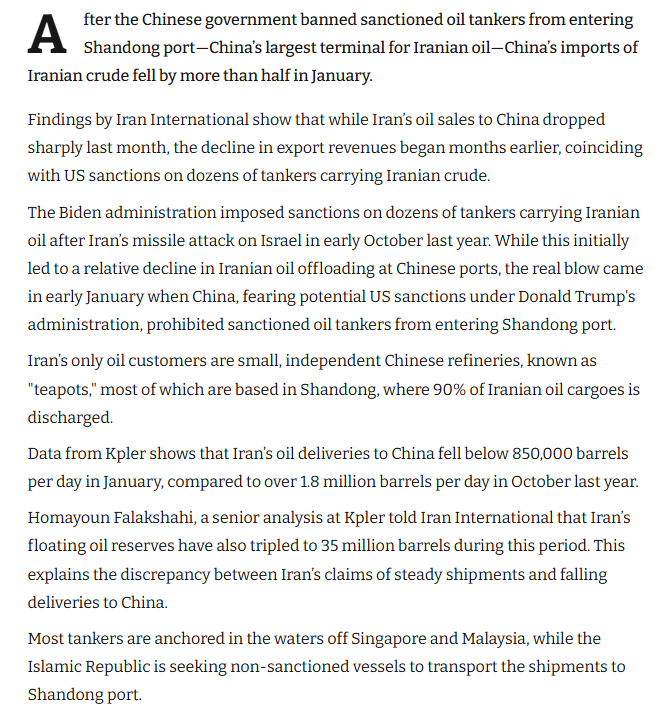
ally" is Russia. But besides them they're most dependent on the USA for fuel and fuel-replacements. Iran's major exports to China is iron ore nowadays. China stopped buying oil from them sometime at the
end of 2024/start of 2025.
(
Just in case you had any doubts over China's implicit subservience to the USA, China did this out of fear of American sanctions)
I don't know if many of your recall, but when China tried to reciprocate on the USA's tariffs – they applied indiscriminately – the jump in fuel prices
hit them hard because China is so heavily reliant on America to keep the heart of its manufacturing alive – both it's consumers and its fuel.

China's big interest in solar, EVs, etc, isn't just because they profit from the world buying their solar cells and turbines blades from there, but because if they to create some measure if fuel independence from American whilst also keeping the cost of energy down because their entire economy more or less relies on it – that's not even mentioning food costs. They buy a shit-ton of corn from the US, which may contribute to its popularity as a crop. However they're stuck in a spiral because their economy is also reliant on constantly growing their manufacturing and increasing their output, which means greater energy/fuel demand, which means they'll stuck trying to play keep up without ever being able to achieve self-sufficiency. They're stuck in a Sisyphean loop.
TLDR: Increased production = increased manufacturing = greater energy demand.
Increased energy demand = Increased energy costs = less manufacturing output = economic contraction & possible industrial downsizing.
China's economy = Western consumer demand + Total energy output/energy affordability + Domestic spending (the more money they can keep within the Chinese economy via consumers buying Chinese-made products, the better, given China's companies are state-owned)
This is also why they can't risk war with the US, something that's also in conjunction with the US being their #1 export market. Without them, the entire Chinese economy would fall in on itself like a house of cards. (
Also maybe the entire global economy but that's neither here or there.)
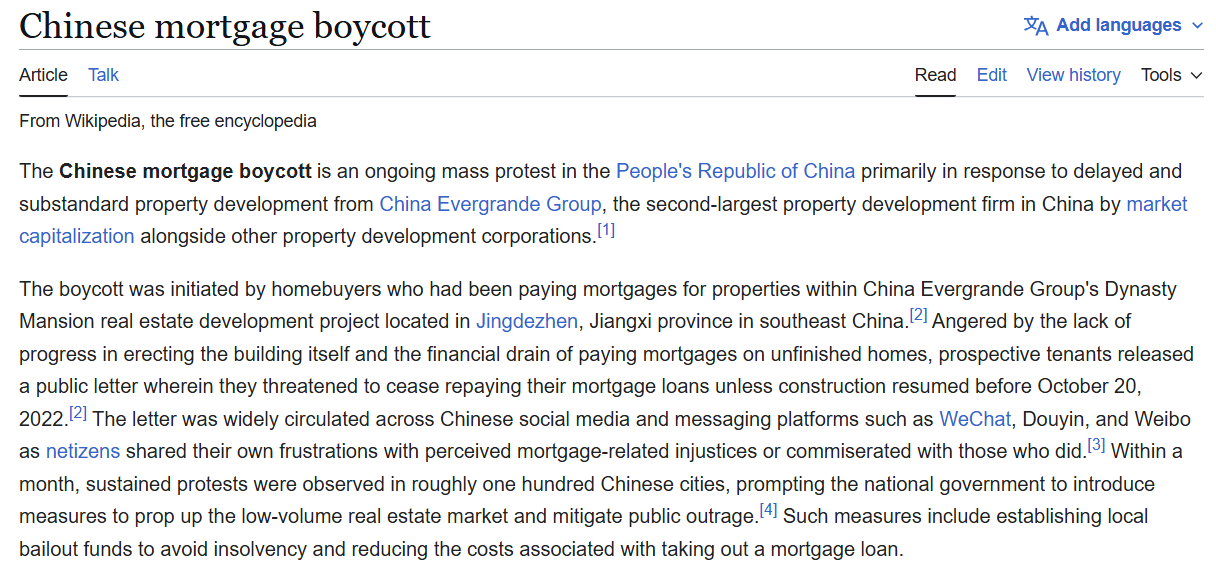
Their real estate market, which contains a lot of their """private""" wealth and further incentivises foreign investment would also go kaput in this event. Mass unemployment, unpaid mortgages, etc.
They're having an issue with their people not wanting to buy shit-boxes for 100k+ as we speak.
Their entire economic
schtick is quasi-autarky mixed with mercantilism and corporatism. For years their strat has been to make their people less reliant on foreign shit off the back of foreign companies and this has been China's plan more or less since the 80s. However they're a bit stuck in the issue of fuel and energy which inexorably links them to the USA and Russia. I know people already have the assessment they're a paper tiger but the actual volatility of their position is largely ignored. For example, if the West had a mass exodus of immigrants back to their home countries, and demand/consumers decreased resulting in a decreased production from Western industries, how badly would that affect the Chinese? 50-80% of Chinese industry isn't owned by China/Chinese themselves, just to give you a rough idea.
China going from 12% to 9% of the USA's imports represented a 130+ billion loss of revenue.
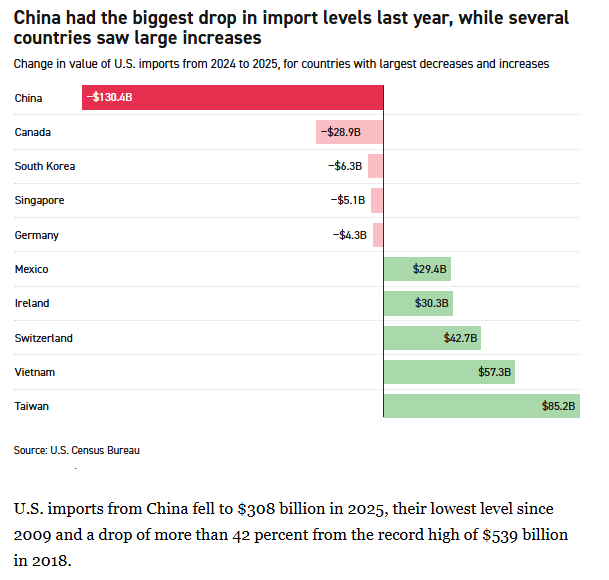
China's fate isn't tied to its own populations discontent, it's tied to consumers and governments of the West.
Israel first at it again.
There is a
contrived but not outright dismissible idea here.
AIPAC: Reliant on "Israel under threat!" to incentivise donations i.e. their influence in lobbying is tied directly to the perceived threat faced by Israel by its neighbours
Egypt, Lebanon, Jordan, Saudi Arabia, Iraq, Oman, etc are all more friendly with the USA and aren't overtly hostile towards Israel.
The final nation with overt/active hostilities whilst also being in the region is Iran.
With no Iran, Israel has no notable hostile enemies, and thus AIPAC has no bogeyman they can use to justify panhandling for donations.
No donations, AIPAC's influence wanes, as does Israel's dominance in the USA's strategic interests in the Middle East.
It might be optimistic of me, but given Trump is trying to sort out Gaza/Hamas and Iran at the same time, it's
possible this could be the beginning of the end of Israeli influence in the USA after this is all sorted out?
I know it sounds crazy but when you look at it, Israel's sway over America's foreign policy in the Middle East has a 1:1 correlation with AIPAC, which rose to prominence as a result of the Yom Kippur war in the 70s. Jews/Israelis will prioritise their own interests over Americans but a lot of it comes down to the amount of money which can be thrown at politicians. There are pro-Mexican lobby groups, pro-Asian ones, ect, but they're not bipartisan like AIPAC is. A lot of the foreign aid to Israel also has the stipulation it buys American-made arms so those industries are also getting kickbacks, but I digress.
If Israel just missile strikes Jordan or something and America* joins in/doesn't object then yeah I don't think I have any optimistic ways of looking at the situation lmao.
*(Politicians, president, special interests, etc - guys who dictate shit without input from the American people)


