(
PDF link)
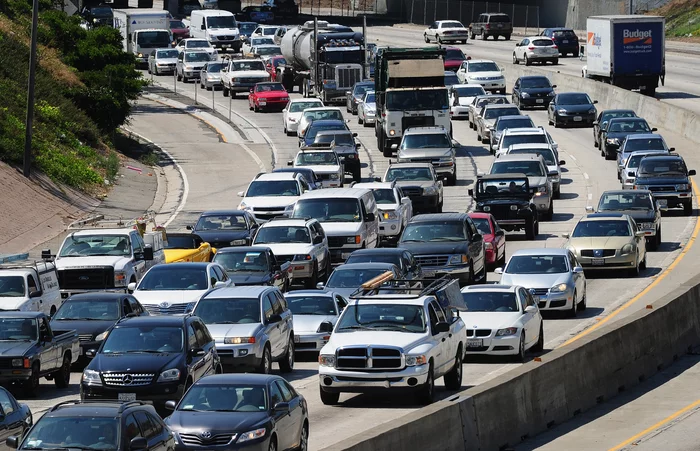
The OreGo pilot program charges all participating vehicles a at fee per mile driven.
By David Z. Morris July 17, 2015
As Congress continues to wrangle over solutions to the nation’s ongoing highway funding issues, the Oregon Department of Transportation is rolling out a fairly radical alternative.
The federal Highway Trust Fund has been destabilized, primarily, by declining revenues
from the gasoline tax—a continuing trend caused by in action, pricier construction
materials, and rising fuel efficiency. So instead, Oregon is implementing a per-mile road
usage charge that’s the same for a panel van as for a hybrid car.
The program, called OreGo, is currently voluntary, with space for an initial 5,000
participants. Drivers in the program will install a small dongle into their on-board
diagnostics (OBD) port, standard on all cars after 1996. The device will track miles driven, and report that information via 3G to Azuga, the private company handling the
technology.
ODOT will bill users 1.5 cents per mile driven. But, crucially, program bills will also credit
back any gasoline taxes paid at the pump, which could turn into a refund for those buying the most gas per mile.
Charging gas guzzlers less might seem like a handout to drivers of Hummers and sports
cars. But OreGo spokesperson Michelle Godfrey has a different example:
“You’ve got a single mom with kids who has to drive an older car . . . [under the gas tax],
she’s subsidizing that new Prius owner to the tune of a couple hundred dollars a year. T
evens the playing field.”
The program should also benefit business owners who need larger vans and trucks to
deliver owners or haul construction tools. All vehicles under 10,000 lbs. are eligible for
OreGo, with semis and other freight vehicles handled separately.
ODOT turned to Azuga not just for help with technology, but also because, in the absence of a mandate, it needed business insights to attract participants to what is essentially a new tax.
Azuga is tackling the problem by offering users access to useful data. For now, that
includes driving histories (potentially attractive to parents), and a car locator app. Azuga’s device also offers commercial fleet tracking tools, and new services are in
development.
So far, OreGo is doing surprisingly well, with more than 700 registrants in the first week of the program, according to Godfrey. But that’s the start of a long trip—they’ll need to sign up 1 million drivers before making a dent in federal funding shortfalls.
Oregon has some history in infrastructure funding innovation—it was the first state to
create a gasoline tax, way back in 1919. “Literally, it got us out of the mud,” says Godfrey. “We had no roads.”
She expects OreGo to have a similar impact, reversing the toll taken by years of
inadequate funding. Godfrey says that Oregon has only been able to pave about half as
much highway since the buying power of the gas tax started to fall off in the 1990s.
OreGo could eventually allow for more advanced pricing, such as incentives for fuel
efficient vehicles, integrated tolling, and congestion pricing—charging drivers more for
driving into city centers or during rush hour. That idea was piloted in Portland in 2006
and 2007.
Oregon is ahead of the curve on road usage charge system, but it’s not alone. Nevada,
Washington, Colorado, and Wisconsin have all conducted exploratory studies, while
California is planning a pilot program for 2017.
OreGo will be evaluated by the Oregon legislature in 2017, when legislators will decide
whether to expand or modify the program.
Oregon has led the way in developing an alternative to the gas tax, with a program that levies a fee on vehicle miles traveled. While the Oregon Department of Transportation has spent years developing the mileage-based program and is ready to expand it to all vehicles statewide, it’s not part of the massive transportation spending package under discussion at the legislature.
Federal standards to combat climate change have required that automakers produce increasingly fuel-efficient cars and trucks. While the Trump administration is seeking to stop further progress on fuel-efficiency standards, there’s little it can do to roll back gains that are locked in through 2021.
As cars guzzle less gas, drivers end up paying less in gas taxes. So some states are thinking about charging for every mile driven, not just for every gallon of gas burned.
Oregon, which enacted the country’s first gas tax in 1919, is out in front on the transition to a mileage fee. The state began with a task force in 2001, followed by pilot programs in 2006 and 2012. It launched a permanent program in July 2015, capping participation at 5,000 vehicles.
Car owners who volunteer for the program are charged 1.5 cents per mile, measured by a device added to their car. Participants are refunded for state gas taxes they pay at the pump, and out-of-state travel doesn’t count toward the total.
The math should work out so a driver with a car that gets 20 miles per gallon would pay the same amount in mileage fees as she does with the gas tax. Drivers with efficient cars would pay more than they do with a gas tax, while gas-guzzlers would pay less.
This change creates winners and losers. Rural drivers tend to have less efficient vehicles, so they would save money under a mileage fee system even though they drive longer distances, according to a study last year from Oregon State University [PDF]. Drivers in urban areas, meanwhile, would pay more than they currently do, because they tend to have more fuel-efficient cars.
Over time, as cars become more efficient, a mileage-based program would make up for gas tax shortages, according to a progress report on the program released in April [PDF]. “Compared to fuels tax, a [road usage charge] system would generate an additional $340 million dollars in gross revenue within the next 10 years,” the report says. “This is because the [road usage charge] model is not susceptible to increased
vehicle fuel efficiency.”
Although car owners with efficient vehicles pay more with a mileage fee, they make up a large share of the volunteers in the Oregon program. “People with higher-mileage vehicles tend to enroll first. We’re not sure why that is; they might be early technology adopters,” said Michelle Godfrey, spokesperson for the Oregon DOT’s road usage charge program. “We’ve actually had challenges trying to recruit lower-MPG vehicles into the program.”
Earlier pilot programs assessed higher per-mile fees in congested areas and during rush hours. While it’s something the Oregon DOT is open to considering again, the current program is simply a at per-mile charge. Unlike the earlier versions, the current per-mile charge system, known as OReGO, is slated to continue indefinitely, and ODOT is ready to roll it out on a bigger scale.
“This is ready to go at any time, should the legislature decide that they want us to implement this statewide,” Godfrey said.
Instead, the legislature is weighing a transportation funding package that would, among other things, hike the gas tax, institute a bike tax, and add annual surcharges for both electric vehicles and gas guzzlers. ODOT’s April report on the OReGO program holds a dim few of some of these funding taxes, saying that “raising fuels tax is a short-term x,
not a long-run strategy” and that annual surcharges are “even less fair than the increasingly inequitable fuels tax.”
But it’s unlikely that mileage fees will be added to the legislature’s transportation funding plan, which is the subject of intense debate after a similar funding proposal fell apart two years ago.
“The transportation package that’s being considered this session is pretty big, and it’s probably too big for [road usage fees] to kind of fit in there,” says ODOTs Godfrey. “We’re just following directions from the legislature.”


