On the topic of computer chips (semiconductors) this 2020
McKinsey report has some helpful visual aids.
Exhibit 1 shows supply and demand by country.
South Korea is almost balanced.
Japan supplies twice their own demand, so 1/2 their capacity is exports.
Taiwan has a large supply and a sliver of demand because they mostly export.
Europe, China, and the US gobble up everything they can't produce in-house.
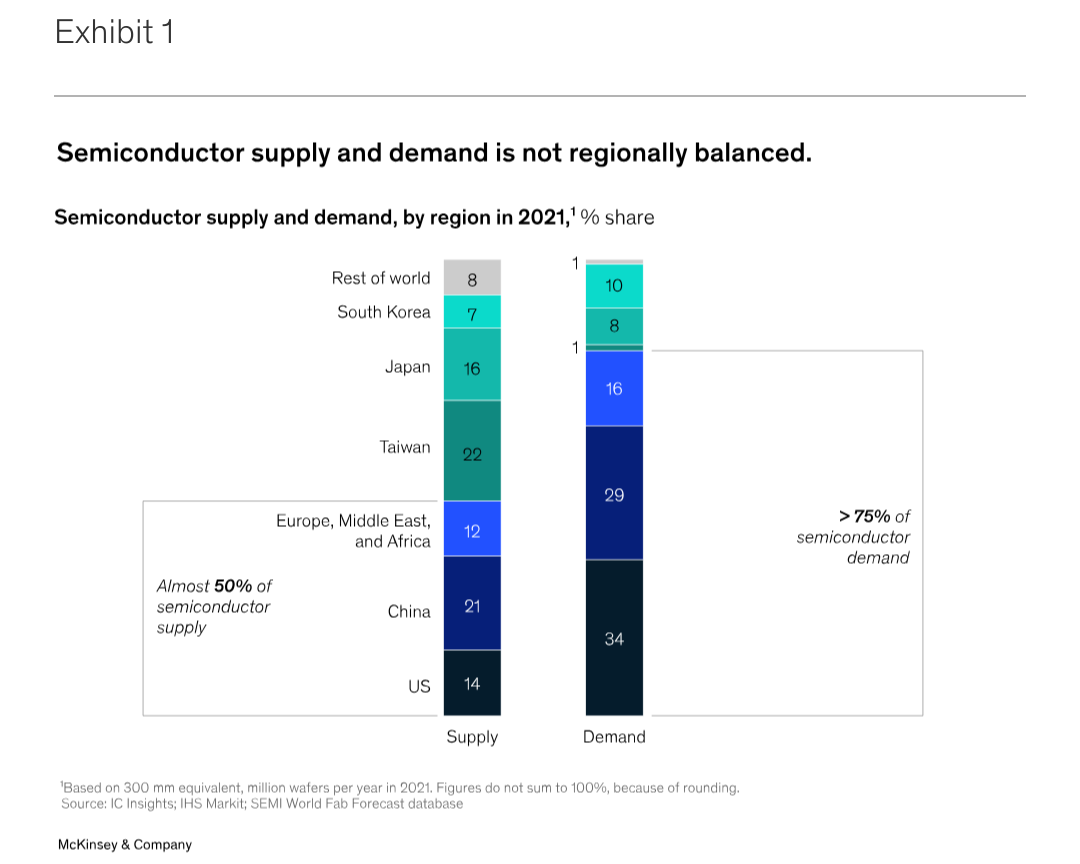
Exhibit 2 shows production by node size (nanometers).
TSMC (Taiwan) and Samsung (S. Korea) produce with the smallest nodes (<10nm).
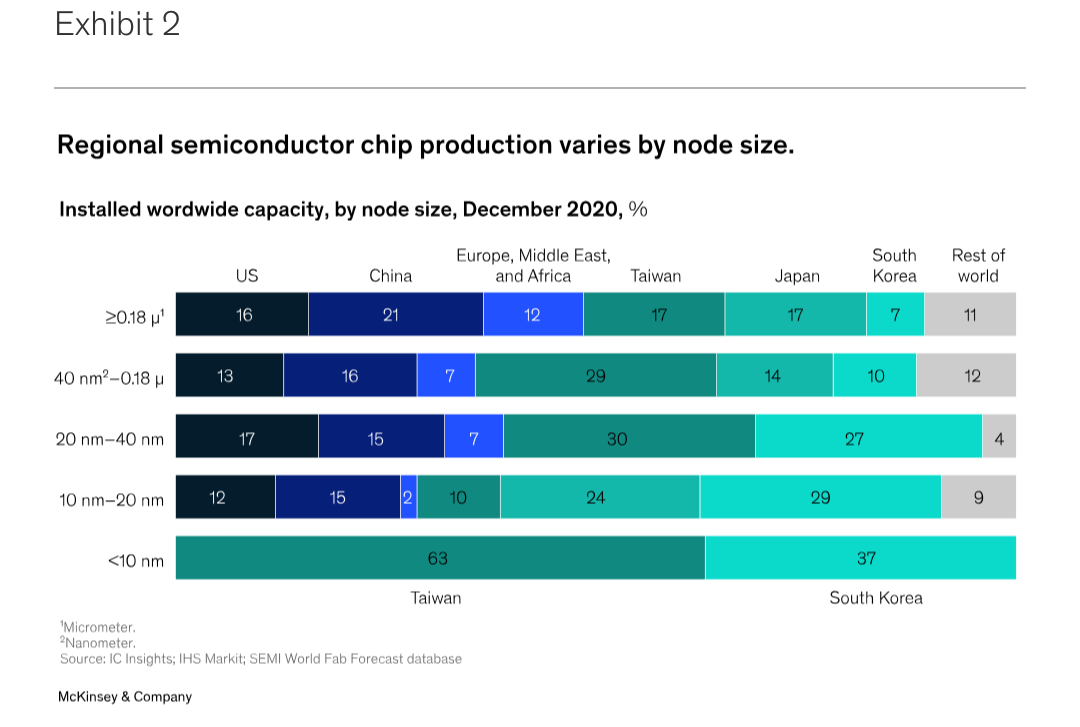
The older bigger process nodes are kept around because the factories already exist and it costs a fortune to build new factories. Humanity has an almost unlimited demand for chips, so after the old factories are "paid off" they basically just print money.
Newer smaller nodes allow for higher efficiency and higher top speeds.

Massively oversimplified example:
You can imagine a 10nm based chip is simply a 20nm chip that is 1/2 as long and 1/2 as wide. That would be 1/4 the size. You would get 100% the speed for 1/4 the electricity. Or you could put 400% the speed in the same area.
It is nowhere near that simple, but I hope that gives an idea on why newer nodes matter.


