Estás usando un navegador desactualizado. Es posible que no muestre este u otros sitios web correctamente. Deberías actualizar o usar un navegador alternativo.
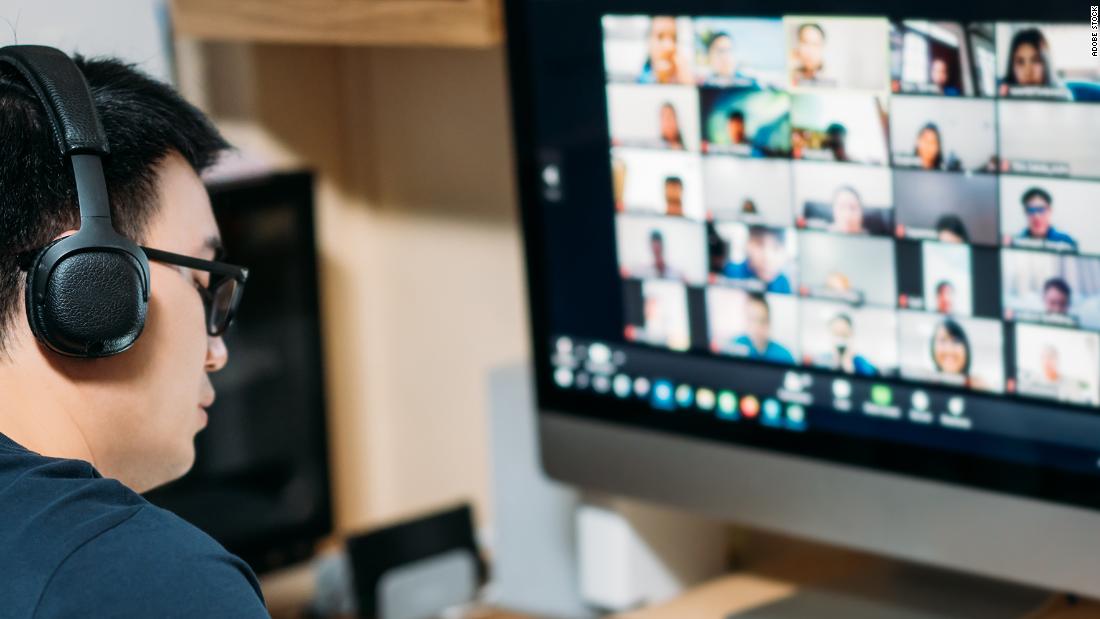
CultureStop making employees turn on webcams during meetings - The latest battle in office life may be over whether or not to keep the camera on during virtual meetings.
The latest battle in office life may be over whether or not to keep the camera on during virtual meetings.
edition.cnn.com
The latest battle in office life may be over whether or not to keep the camera on during virtual meetings.
One woman who works at a New York-based nonprofit told CNN Business she received an HR complaint in August for the first time in her career because she kept her camera off during virtual work meetings. Shortly after, she said she received another HR complaint for the same reason.
"I was on a call with about 15 employees and [the speaker] said everyone should have their camera on because it's company policy and part of our culture now," said the woman, who asked to remain anonymous for fear of company retaliation. She said she has long disliked being in front of a camera, whether it's for pictures or videos, and the meetings only added to that discomfort. "I told them being on camera causes me anxiety and didn't turn it on. I eventually got a doctor's note."
Although she is still required to keep her camera on, she now sits mostly out of frame with only her shoulder showing -- something her company said is acceptable. But she feels this makes things even more awkward. She is currently looking for a new job.
She's not alone in wrestling with the new normal of constant video calls. In interviews with CNN Business, several workers described how leaving the camera on in meetings made it harder to focus on their work, sparked feelings of frustration about having to stay in one place for long periods of time, and created some discomfort about broadcasting their living situations to others. Yet workers can also feel pressure to leave the camera on, whether it's because of an explicit request from the company to do so, or because of the perception -- refuted by one recent study -- that they're less productive and engaged if they have it off.
Lydia Mack, a Los Angeles-based copywriter for brands and startups, said she keeps her webcam off during calls with clients and co-workers because she can concentrate better that way. But she's found there are downsides to this approach, too. "If it's a team meeting and I'm the only one with my camera off for an extended period of time, it can also be a distraction [for others] and leave them wondering if I'm even at my computer, heard the conversation in its entirety, and so on."
Lydia Mack, a copywriter, said she can focus more on work calls if her camera is turned off.
The rise of on-camera meetings -- and misconceptions about it
After the pandemic hit, video conferencing services including Zoom, Webex, Microsoft Teams and Skype emerged not only for virtual meetings and classroom lessons but happy hours, costume parties, church services, brunches, book clubs and dates. But as lockdowns continued, more people experienced exhaustion from virtual meetings, a phenomenon often called Zoom fatigue.
Allison Gabriel, a professor at the University of Arizona, co-authored a study that suggested appearing on camera may contribute to the feeling of Zoom fatigue. The study also found more women experience webcam fatigue.
"Women tend to have higher self-presentation costs than men and are likely to feel heightened pressure to demonstrate competence by appearing extra vigilant on camera," Gabriel said. "Additionally, as women took on disproportionate childcare demands compared to men during the pandemic, they are more likely to have kids in the background, which could unfortunately call into question their ability to be committed to their work and their ability to focus. We also tend to hold women to higher standards for physical appearance. Being on camera can exacerbate all of these things."
Newer employees also feel greater pressure to demonstrate competence and engagement because they feel the need to prove they deserve to be there, Gabriel said.
Contrary to the common assumption that someone with their webcam turned off may be distracted, multitasking or disengaged. Gabriel's research found that switching webcams off during meetings can actually make employees more productive because they're better able to focus on the content and less on how they or others look.
Searching for solutions
Some organizations are now realizing a change is needed, but there are tradeoffs.
Companies such as Citigroup, Dell and New York University responded to the rise of Zoom fatigue by implementing policies such as "no Zoom Fridays," encouraging people to take meetings by email or phone instead. And some universities made it optional for instructors or students to keep webcams on during lessons.
"Students have to 'Zoom in' from a variety of settings, and requiring cameras to be on unfairly magnifies socio-economic differences and is also ableist," said Julia Raz, a communications professor at two California-based colleges. "I wouldn't say it's distracting to have webcams off. It is just rather disheartening and lonely to talk to a screen full of black rectangles."
At the same time, some people may feel more engaged and connected to their colleagues when on camera. That's why solutions need to be put in place to cater to all comfort levels.
Zoom, for example, recently rolled out new tools that help support the hybrid work environment but could also provide some relief to video call fatigue. This includes a collaborative whiteboard tool that puts the focus on the content and less on people's faces.
Jeremy Bailenson, a professor of communication at Stanford University and founding director of the Virtual Human Interaction Lab, advises managers to categorize their meetings into two types: ones in which seeing one another's faces is critical, and others where screen sharing and talking with voices is sufficient. "When executives sit down and go through this process, they realize that there are a handful of meetings where you absolutely need to see faces."
While making meetings with webcams optional may also sound like an effective solution, Bailenson argues the opposite. "This is similar to asking someone if they want to help out on a big project over the weekend," he said. "Many people will prefer not to do it, but all will feel pressure to say yes. The better solution is to make cameras mandatory every once in a while, and prohibit them from the rest."
He added that managers, especially male managers, should turn off cameras during these times or employees will otherwise feel pressure to show their faces.
Well it's a valid suggestion. Even if your bedroom is nice and tidy, maybe you don't want to turn on the camera because you still don't have things set up presentable enough for a squeaky clean "corporate" image.
Isn't there software that allows you to chose a new background without the need for a green screen? I've seen a co-worker do it. Lucky for me, my job has been slow to send out web cams for us to use.
Forcing people to have their webcams on is just another way boomers are trying to cope with "their" employees not being physically present in the office and grasping for some kind of control over them. If you're savvy enough you can just record a 30 second clip of you sitting at your computer and play that on repeat into the webcam output and most people wouldn't notice (if they do you can blame lag).
Isn't there software that allows you to chose a new background without the need for a green screen? I've seen a co-worker do it. Lucky for me, my job has been slow to send out web cams for us to use.
Isn't there software that allows you to chose a new background without the need for a green screen? I've seen a co-worker do it. Lucky for me, my job has been slow to send out web cams for us to use.
Isn't there software that allows you to chose a new background without the need for a green screen? I've seen a co-worker do it. Lucky for me, my job has been slow to send out web cams for us to use.
You just want the camera off because you don’t want to shave, or put on nice clothes, or get caught looking at your phone. We all know, and everyone’s thinking it,
I’ll admit it, occasionally when we had meetings at my job that didn’t make us turn our camera on - especially addresses from our CEO or quartly “team building“ updates, I’d put the laptop on my couch next to me and play Xbox.
Yet one more reason I’m thrilled to be starting a new, non-Work from Home job next week.
You just want the camera off because you don’t want to shave, or put on nice clothes, or get caught looking at your phone. We all know, and everyone’s thinking it,
You’re right, there’s also several legitimate reasons, and that’s one of them. Kids at home being another. Problem is - from management‘s side - there’s no way to know who’s abusing it and who’s not.
I give a lot of companies shit for not understanding how to mitigate lazy employees without penalizing good employees, and there’s definitely some element of that here, but it’s also a more understandable policy here than something like installing keylogger software.
Anyone who actually keeps the camera on, and sits there, as opposed to redirecting the stream to a video of you sitting there on loop is a simp and a fool. Remember, work smarter, not harder. Does no one watch Ducktales any more?!
Forcing people to have their webcams on is just another way boomers are trying to cope with "their" employees not being physically present in the office and grasping for some kind of control over them.
>some kind of control Thats REALLY putting it lightly
Some directors/bosses/suits are SUPER fucking anal about needing to know what their employees are doing at all time. They have ZERO trust in their employees, even the good ones, that they will implement shit like Time Doctor to monitor them every time they use the computer. The webcam thing started to become mandatory as soon as people started working from home and they all started spamming ZOOM as if it was the greatest thing ever invented and totally not a chink-made spyware riddled software. They HAVE to see you actually paying attention to the screen whenever a meeting takes place because heaven forbid you move your eyes to the side for like a few seconds they will think you are not paying attention which equals not doing your job.
Thats how fucking paranoid these fuckers are. The worst part is that it's not just boomers, but karens that are like this as well.
Forcing people to have their webcams on is just another way boomers are trying to cope with "their" employees not being physically present in the office and grasping for some kind of control over them. If you're savvy enough you can just record a 30 second clip of you sitting at your computer and play that on repeat into the webcam output and most people wouldn't notice (if they do you can blame lag).
Qualified managers are capable of gauging performance. The ones who aren't seek to micromanage others to make sure they are working and/or to squeeze every drop of work out of them.
The highest performance employees in our group never turned on their cameras and most of them rarely came into the office. The unqualified managers did and put in effort to get "zoom lighting" in the most expensive looking part of their house.
We spend so much time trying to create standards to distill performance into a metric that we miss why productivity is so poor.
Most of the managerial women here are diversity hires with no experience in the field which makes them a detriment. They would squawk from 9am until lunch and then pester people to have meetings. When the lockdowns happened here, they started to get antsy and would post on Slack all the time. I don't think they had anything to do aside from sit in on meetings occasionally. They ended up turning into bored, overpaid status checkers who made meetings into a social event.
I miss the days when her boss would have responded to that claim by doing a line of coke and telling her to get the fuck out of his building. If being on camera gives you "anxiety" you should be in a mental hospital.
Isn't there software that allows you to chose a new background without the need for a green screen? I've seen a co-worker do it. Lucky for me, my job has been slow to send out web cams for us to use.
Exactly. If you're lazy or don't trust the software just hang a clothesline and a dark sheet behind you. You will have to brush your hair and put on a regular shirt but this shit ain't difficult. You're working from home already, you get to skip the commute and Raj's lunchtime microwave stink bombs, you can toughen up and put on a tie for an hour every week.
We've had fun with the Zoom shit. One guy set his camera background to a dungeon, and he let the boss know he never left his cell. One guy made his background look like a futuristic pod, and he assured the boss he was there, and he just needed to get the anal monitoring probe in securely so that way all the data is accurate.
Teams is a real piece of shit, it goes yellow all the time. I broke down and downloaded "Caffeine.exe" and it silently pushes the F10 or F11 key every 60 seconds for me. My work day(Disgaea 6 grind) has drastically improved.
 edition.cnn.com


