So this is some speculation I have for the future in regards to fossils and scientific fraud -- in particular with paleontological fraud. It's my belief that there will be a major future scandal or incidence involving synthetic fossils that were otherwise nearly impossible to prove as forgeries.
To get more into it, and to set the stage, there have already been a number of cases of fossil fraud in the past and so this is nothing new. The usual way this goes is that fossil hunters in a poorer, shittier country will sell fossils to tourists and non-paleontologists(although sometimes they will buy them) and thus very interesting looking finds go for more money. Anything particularly interesting is either bought up by a paleontologist not wanting to let a potential discovery go into someone's collection to never be properly studied or someone who realizes it may be of some value loans it to some paleontologist(s) or a museum for study. Of course, the most interesting fossils are going to be rare. So why not just make an interesting fossil or lie about the location of a fossil you found? This is in part why paleontologists are skeptical of these finds and don't trust them. This isn't the only case though, as the other path is via academic fraud where an academic forges a fossil or find in order to get funding, prestige, to push some idea(s) or to work towards something like tenure.
Quite a few of these frauds have been found in the past. Both fraudsters selling fake fossils and the more shameful academic fraud. One case was the
Piltdown Man, where academic fraud had been committed in the finding of a supposed human missing link. The same man who had done this had also made the fossil forgery of a mummified toad in a rock, pic related.
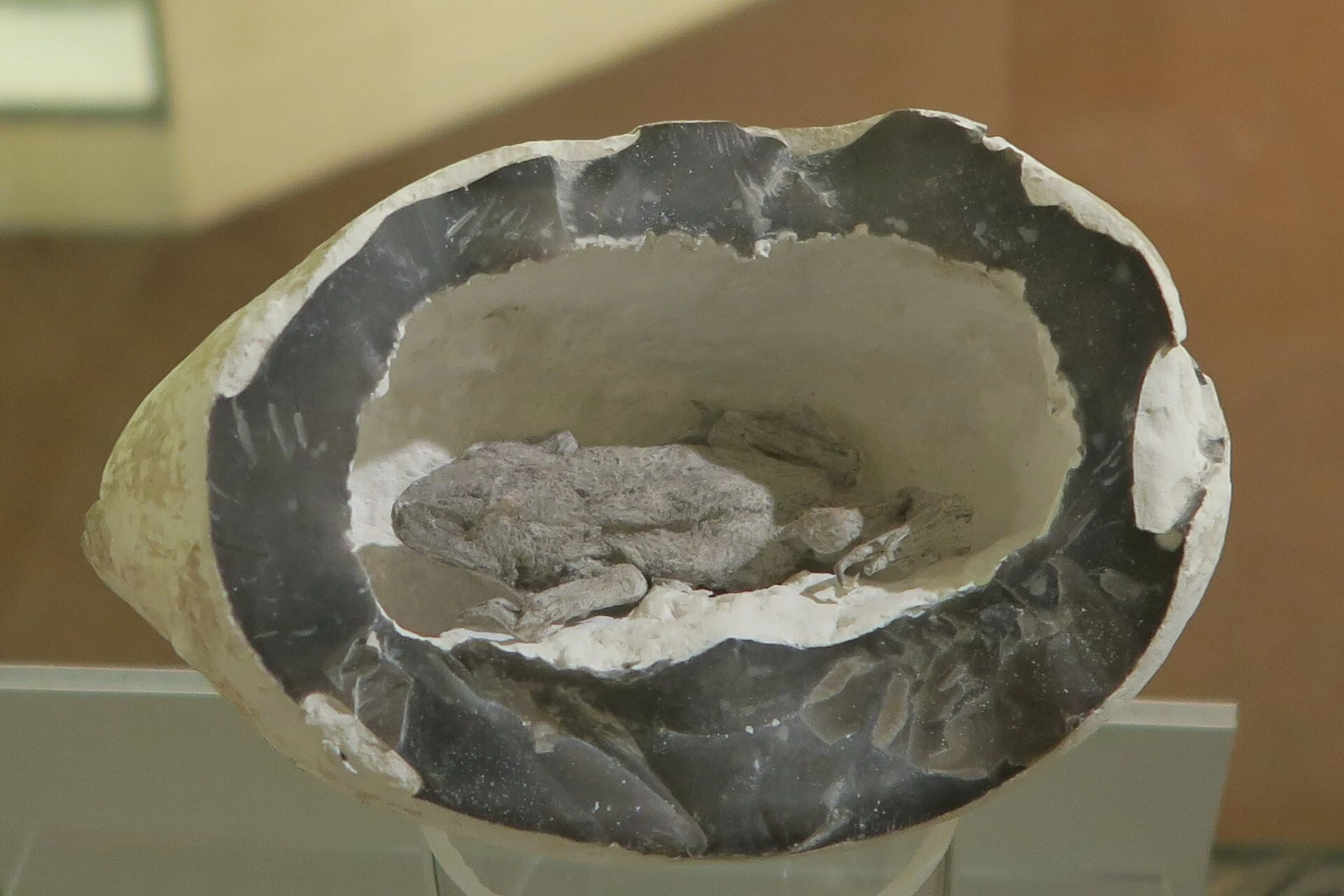
Another horrible example of fossil forgery/fraud is with
Archaeoraptor which was found to be a chimera of multiple different fossils put together to seem like yet another missing link.
The speculation that I have though is that as more research is done into
taphonomy(the study of how things fossilize, more or less) and molecular biology, the greater the capabilities are for fraud and forgery of fossils. Thanks to advances in molecular biology we have resources like
meat glue which is an enzyme that is widely available to allow for the molecular stitching of animal tissues. This is used to produce things like filets of meat from many different kinds of animals with no stitching or seams and to also make many of the boneless meat products you'll find in supermarkets. Here's an example picture showing sea bass and salmon filets having been fused together:

As far as taphonomy goes, the very research done in this field seeks to replicate the fossilization processes that life can and will undergo -- as is necessary for the scientific method. One process is incredibly convincing and can be done in a day or two and that's "artificial maturation". The process is simple enough, take something you want to be fossilized and put it in the right mixture of aggregate(i.e. sand). Once set up you put it under a good deal of heat and pressure and let it cook for a day or two. Here's some pictures from this
article that goes over it.

The best way to figure out if these artificial fossils are real or fake(when observing them outside of their context, which is a term for the place and stratum it was found and this can be lied about obviously) is going to be via isotopic analyses. Carbon-14 is a short-lived radio-isotope that would be the most obvious signature to look for. In samples that are supposed over a million years old there should be next to no carbon-14 measured. Another one would be a comparison of isotopes between tissues(assuming that you made a chimera) as the diet of an animal will determine the isotope ratio of its carbon, nitrogen and so on. The problem however is that any crafty forger can purposefully skew the isotopes of what his materials should have by influencing their diet and preventing their exposure to certain external sources. The only other good investigative method that I can think of involves scrutinizing microstructures and using polarized lens to look for oddities. Those two options require incompetence on the forgers' part though.
I can think of a few reasons to fake fossils for a larger, more political aim though. For any human fossils you can let your imagination run rampant but for other kinds of fossils I would imagine them drawing parallels to the "anthropocene(essentially means "age of man") mass extinction event" stuff I've heard about before and trying to make the rate of extinction we have now look better or worse than mass extinction events of the past. Of course there will always be the more individualized motives, like fame-seeking and so on. I'd personally bet that someone might try to make use of the discussion involving the "
Silurian Hypothesis" which involves intelligent civilizations millions of years before mankind existed.
TL;DR: Be wary of huge fossil claims in the future, the technology and knowledge to make very convincing forgeries is present and people have been successfully faking fossils for over a hundred years.


